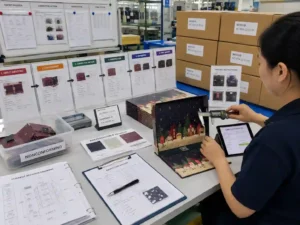
Reducing empty space inside export cartons is not simply about making cartons smaller. The correct approach is to remove unnecessary void while maintaining product support, compression strength, vibration resistance, and handling protection. To reduce carton void shipping damage, packaging teams should optimize carton dimensions, internal support, pallet loading patterns, and verified transit risks before approving the final packing method.

How Can You Reduce Empty Space Without Creating New Transit Risks?
The safest way to reduce carton void is to improve the fit between the product, inner protection, master carton, and pallet arrangement instead of removing protective space blindly. A smaller carton can reduce movement, but excessive compression or insufficient cushioning may increase damage during drops, vibration, and stacking.
For custom advent calendar packaging, the main goal is controlled clearance. The carton should provide enough room for protective materials and handling tolerance while preventing products from shifting during transportation.
What Should Be Checked Before Reducing Carton Void?
Before changing carton dimensions, packaging teams should review product measurements, component protection requirements, carton strength, and shipment conditions. The decision should be supported by drawings, samples, measurements, and packing records rather than visual estimates.
- Finished product dimensions after assembly, including drawers, doors, inserts, and decorative surfaces.
- Master carton internal dimensions and the actual clearance around the packed product.
- Movement risk during handling, vibration, and container transportation.
- Stacking pressure from pallet layers above.
- Humidity exposure and protection requirements for paper-based packaging.
How Do Master Carton Dimensions Affect Void Reduction?
Master carton size has a direct effect on both shipping efficiency and product protection. The best carton size is usually the smallest practical size that maintains proper support zones and avoids excessive pressure on the product.
| Carton condition | Potential benefit | Potential risk |
|---|---|---|
| Large empty carton | More tolerance for packing variation | Product movement, higher impact risk, lower pallet efficiency |
| Tight carton fit | Less movement and improved space utilization | Compression damage, surface marks, difficult packing |
| Controlled clearance | Balanced protection and transport efficiency | Requires accurate measurements and approval checks |
Packaging engineers normally validate the final carton size using actual samples or production-intent components. Small dimension changes can affect pallet patterns, container utilization, and handling performance.
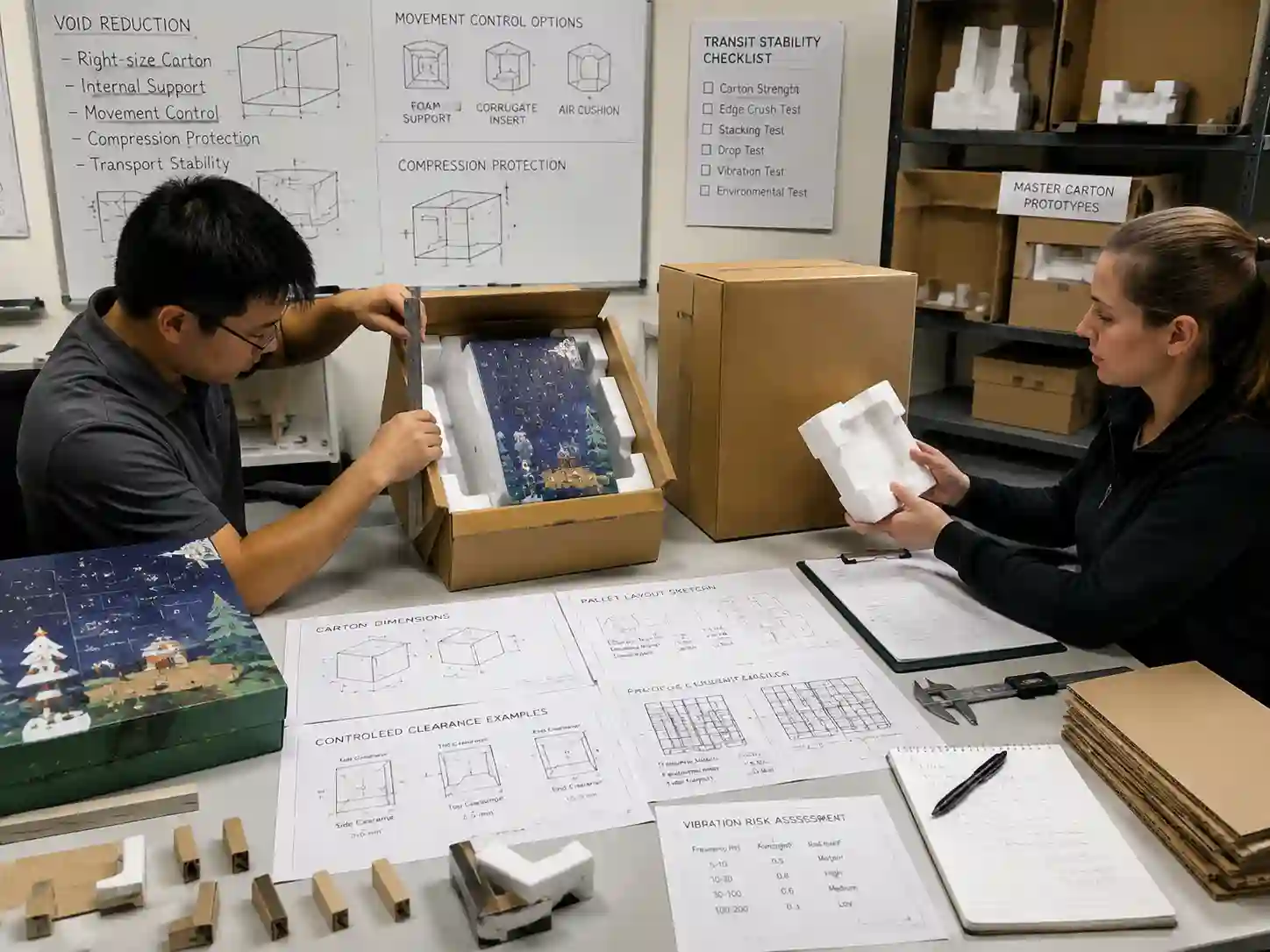
How Do You Remove Empty Space While Protecting Against Vibration and Drops?
Void reduction should focus on controlling product movement, not simply filling every gap. During transportation, repeated vibration can cause internal rubbing, surface damage, and component displacement even when the carton appears undamaged externally.
Practical methods include:
- Improve carton fit: Adjust carton length, width, or height so the product is supported without being compressed.
- Control internal movement: Use appropriate spacers, sleeves, corner protection, or fitted supports where movement is likely.
- Review stacking direction: Align cartons so compression loads travel through stronger areas of the packaging structure.
- Balance pallet loading: Avoid unstable patterns that create pressure differences between carton layers.
How Do Pallet Patterns Help Reduce Carton Void and Damage?
A carton optimization decision is incomplete until the pallet pattern is reviewed. A carton that saves space individually may create inefficient pallet gaps or unstable stacking if it does not match the overall loading plan.
| Loading factor | Verification method |
|---|---|
| Carton orientation | Compare actual pallet placement with approved pallet drawings |
| Layer stability | Check alignment, support points, and shifting risk |
| Pallet height | Measure finished pallet height against loading requirements |
| Weight distribution | Review carton weights and load balance records |
Project recommendations vary depending on carton size, product structure, destination handling conditions, and transportation method. A pallet pattern suitable for one calendar box format may not work for another.
How Can Humidity and Paper Packaging Risks Be Considered During Void Reduction?
Reducing carton space should not remove necessary protection against environmental conditions. Paper gift packaging can be affected by moisture exposure, surface friction, and deformation if packed without appropriate consideration.
Packaging reviews should consider:
- Whether protective materials maintain surface separation.
- Whether cartons allow stable stacking without excessive pressure.
- Whether storage and transportation conditions create humidity concerns.
- Whether destination handling requires additional protection measures.
What Evidence Should Buyers Request Before Approving a Reduced-Void Packing Method?
A reduced-space carton design should be supported by clear approval evidence. Buyers can verify the decision through packaging drawings, physical samples, inspection records, and supplier packing documentation.
- Approved carton dimension drawings.
- Photos or videos showing actual packing arrangement.
- Sample evaluation records showing product fit and movement checks.
- Pallet layout drawings and loading plans.
- Pre-shipment inspection records confirming the approved packing method.
These records help confirm that empty space reduction improves logistics efficiency without creating uncontrolled damage risks.

What Is a Practical Pre-Shipment Check for Reduced Void Cartons?
Before shipment, teams should confirm that production packing matches the approved carton and pallet plan.
- Verify master carton dimensions against approved records.
- Confirm internal protection placement and product orientation.
- Check carton quantity per carton and pallet layer.
- Inspect for carton deformation, excessive movement, or compression issues.
- Record final packing results for shipment approval.
Frequently Asked Questions
Does reducing carton size always lower shipping cost?
Not always. A smaller carton may improve space utilization, but the overall result depends on pallet efficiency, container loading, product protection requirements, and handling conditions.
Can filler material always be removed to reduce empty space?
No. Filler reduction should only happen after confirming that the product remains protected from movement, impact, and compression risks.
Who should approve changes to carton dimensions?
Approval normally involves packaging, purchasing, logistics, and quality stakeholders because carton changes can affect production packing, transportation, and receiving conditions.
Giftpackpro supports commercial buyers with custom advent calendar box development, packaging evaluation, and production coordination. For a project-specific carton structure or packing review, request a custom quote and discuss the required shipping conditions.