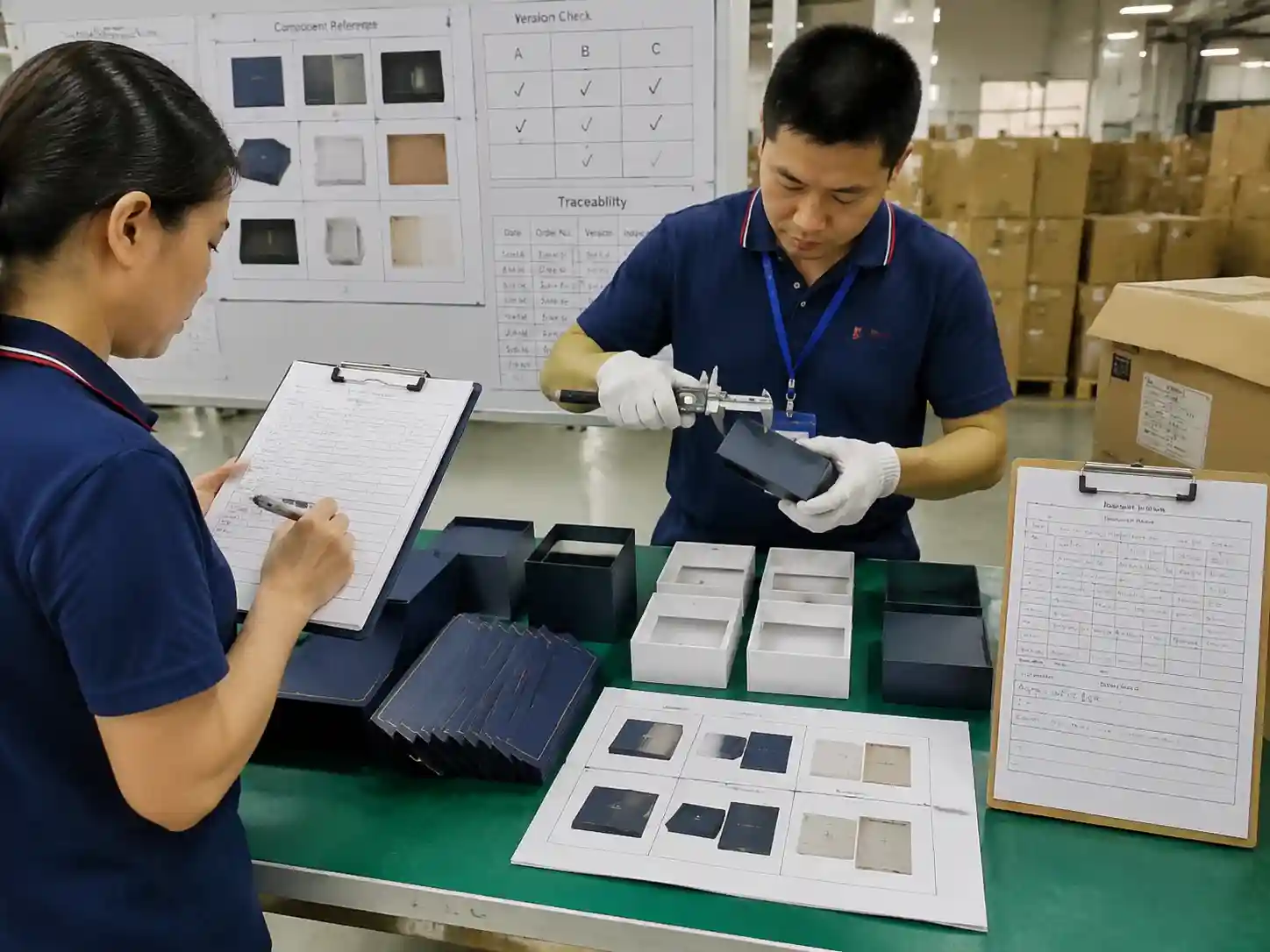
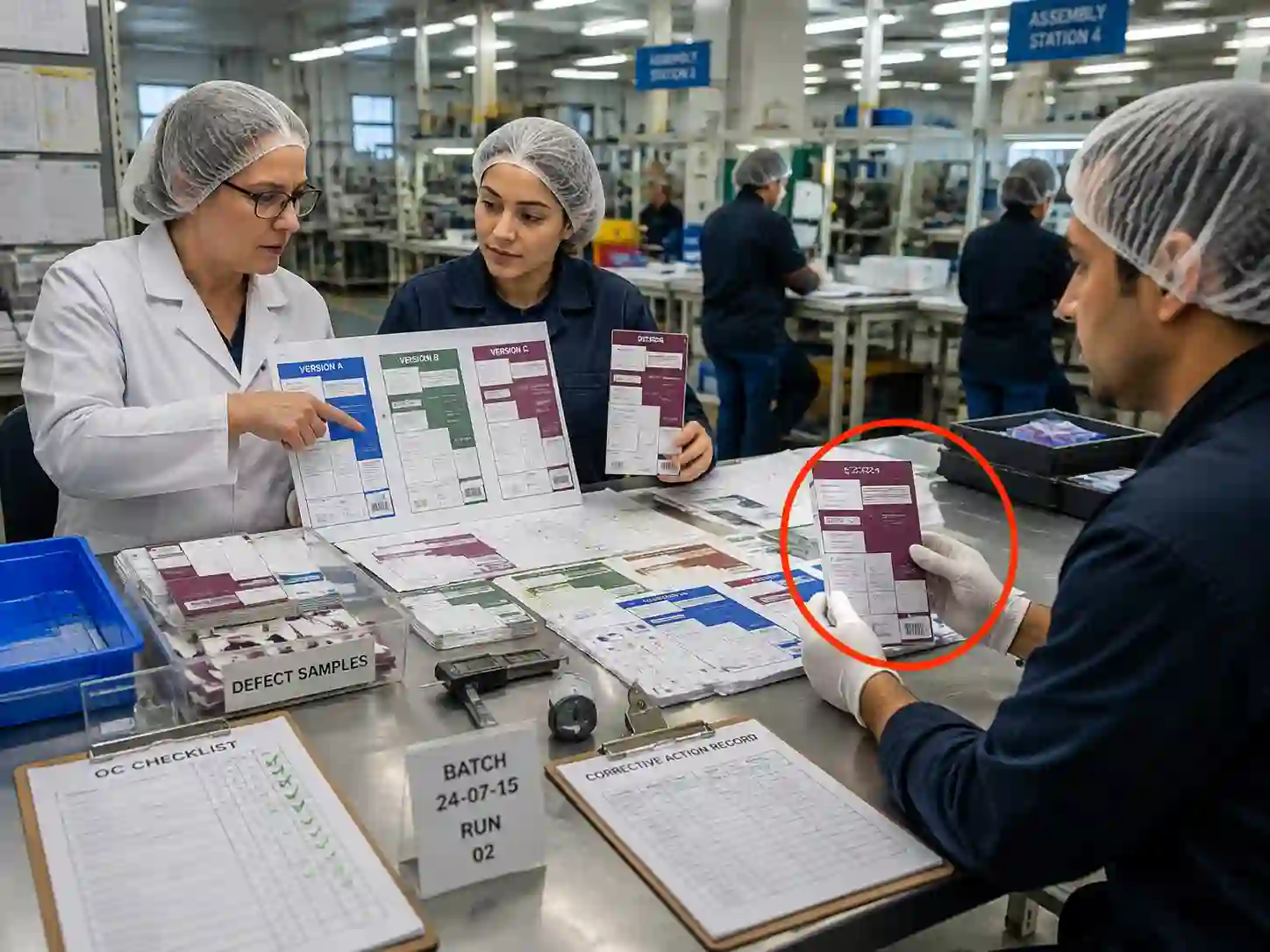
Quick answer: Factories prevent mixed artwork components in multi-version orders by separating approved artwork files, assigning version-specific identification, controlling material movement, and verifying components at each production stage. Effective mixed artwork component prevention combines artwork revision control, batch traceability, first-piece approval, in-process inspection, and final assembly checks. The exact control method depends on the number of versions, component complexity, production workflow, and customer approval requirements.
Why Do Multi-Version Packaging Orders Risk Mixed Artwork Components?
Multi-version packaging orders create a higher risk of component mixing because similar-looking parts may belong to different designs, markets, languages, product variants, or seasonal campaigns. A drawer front, door panel, sleeve, insert, or printed accessory can appear structurally identical while requiring different artwork.
The main causes of mixed artwork errors usually include:
- Multiple approved artwork versions running through the same production area.
- Similar components stored close together without clear identification.
- Manual assembly operators selecting the wrong printed component.
- Artwork revisions not fully removed from production circulation.
- Insufficient verification between printing, finishing, and assembly stages.
For complex advent calendar boxes and seasonal packaging, preventing artwork mix-ups requires both document control and physical production controls.
How Does Artwork Version Control Prevent Component Mixing?
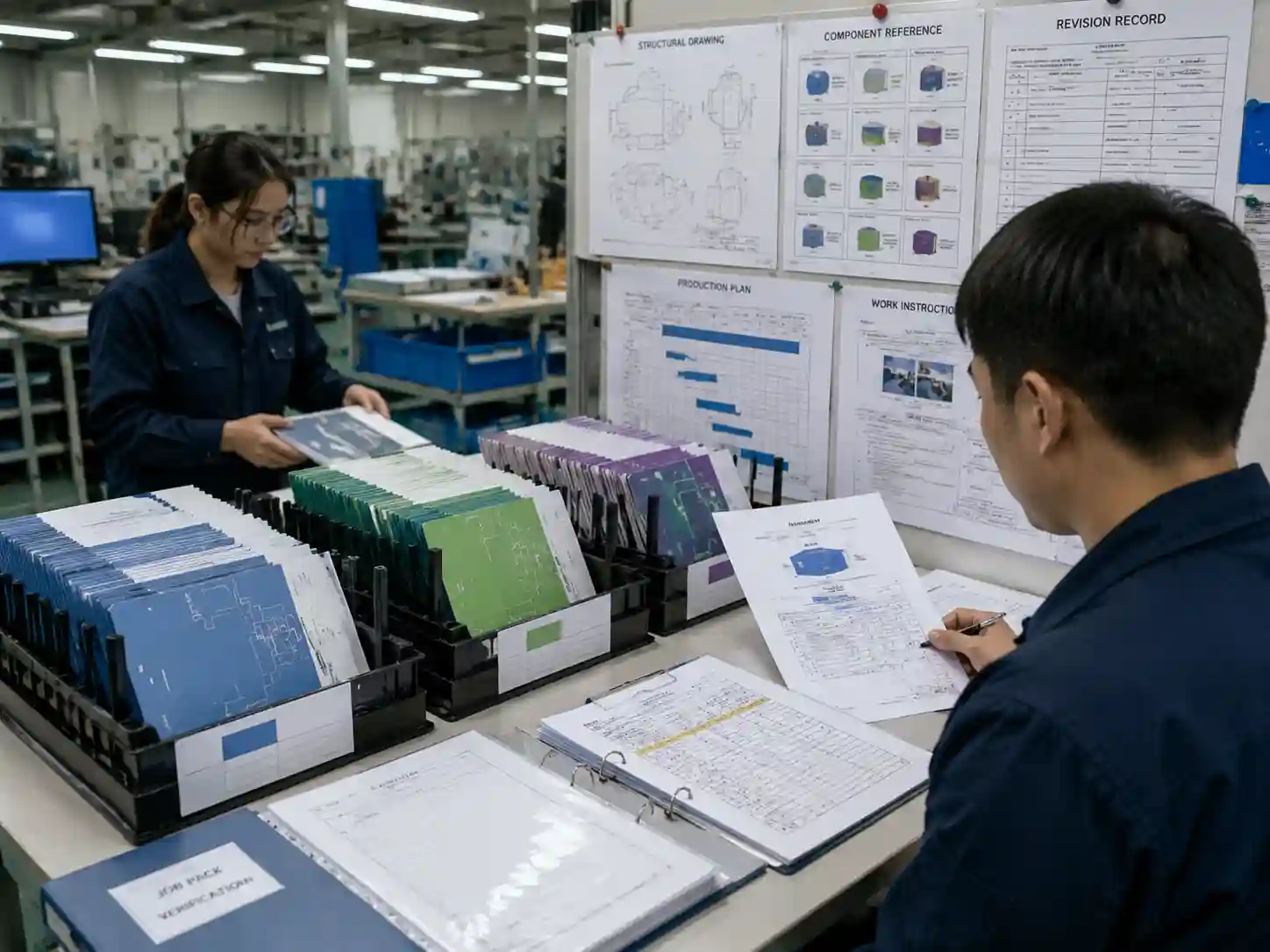
Artwork version control prevents mixed components by ensuring every approved design has a clear reference before production begins. Factories typically connect each printed component with an approved artwork file, revision record, and production identification method.
What Records Should Be Controlled?
Important records may include:
- Approved artwork file name and revision status.
- Component drawings showing the correct position and orientation.
- Production release records identifying approved versions.
- Sample approval references used for comparison.
- Change records showing replaced or cancelled artwork.
The purpose is not only to identify the correct version but also to prevent outdated or unapproved artwork from returning to production.
How Are Different Artwork Versions Physically Separated During Production?
Factories reduce mixing risk by creating controlled separation between artwork versions during printing, finishing, storage, and assembly. Physical separation makes it easier for operators and inspectors to identify the correct component before use.
Common production controls include:
- Dedicated staging areas for each artwork version.
- Version labels on cartons, trays, or component bundles.
- Separate work orders for different printed variations.
- Controlled release of components to assembly stations.
- Removal of rejected or outdated materials from active production areas.
For example, a 24-drawer advent calendar with multiple regional artwork versions may require each drawer front set to be identified separately before assembly. The identification method can vary by factory system and project requirements.
What Inspections Are Used for Mixed Artwork Component Prevention?
Inspection prevents mixed artwork components by verifying that the correct printed parts are used before large quantities are assembled. Checks should happen at critical points rather than only after finished products are packed.
| Inspection Stage | Control Purpose | Evidence Checked |
|---|---|---|
| Artwork release | Confirm approved version before production | Artwork records, revision files, approval documents |
| Printed component inspection | Verify correct graphics and layout | Color reference, artwork details, component identification |
| Assembly line check | Prevent wrong parts entering finished units | First-piece reference, operator checklist, component labels |
| Final quality inspection | Confirm completed units match requirements | Finished product samples, inspection records, defect reports |
What Defects Should Inspectors Look For?
Inspectors should check both visible artwork differences and process-related risks that indicate possible mixing. A defect checklist helps ensure consistent decisions across production teams.
| Defect Type | Inspection Focus | Possible Action |
|---|---|---|
| Wrong artwork version | Printed component does not match approved reference | Isolate affected quantity and investigate source |
| Mixed components in one set | Different designs combined in one calendar | Separate affected units and trace production records |
| Old revision used | Component does not match latest approval | Review document release control |
| Incorrect orientation | Graphics appear rotated or positioned incorrectly | Check assembly instructions and operator handling |
How Does Traceability Help Identify the Source of Artwork Mixing?
Traceability allows factories to identify where mixed artwork components entered the process. Instead of checking all production blindly, teams can review records from specific batches, stations, or material movements.
What Can a Traceability Record Include?
- Production date and workstation information.
- Component batch or carton identification.
- Inspection results and approval status.
- Operator or process records where applicable.
- Corrective action records for identified issues.
A typical investigation may compare the affected finished units with component storage records, assembly instructions, and inspection checkpoints to determine whether the issue started during printing, handling, or assembly.
What Changes When Orders Include Many Versions or Variants?
The recommended control level depends on project complexity. A single artwork version may require basic identification checks, while multiple versions need stronger separation and verification systems.
- Few versions: Clear labels and approval references may be sufficient.
- Multiple market versions: Separate documentation and controlled component release become more important.
- High component complexity: Additional inspection points may be needed before assembly completion.
Buyer approval requirements may also affect the process. Some projects require retained references, signed approval records, or specific inspection criteria before production release.
How Can Buyers Support Better Artwork Mixing Prevention?
Buyers can reduce production risk by providing clear artwork approvals, consistent naming systems, and complete version information before manufacturing begins.
- Confirm the final approved artwork before production release.
- Identify differences between versions clearly.
- Review component lists for each packaging variation.
- Maintain communication records for approved changes.
Working with a supplier that maintains structured production controls, such as custom advent calendar box services, helps create clearer responsibility between artwork approval and manufacturing execution.
FAQs About Mixed Artwork Component Prevention
Can mixed artwork components be detected after assembly?
Yes. Final inspection can identify visible artwork mismatches, but earlier process checks are usually more effective because they reduce the quantity of affected products and simplify correction.
Why are similar packaging versions more difficult to control?
Similar versions increase risk because differences may only appear in small graphics, language, numbering, or decorative details. Clear identification and inspection references are needed to avoid relying only on visual memory.
Does every multi-version order require the same inspection method?
No. The required control level depends on the number of versions, component structure, assembly method, and buyer approval requirements. Factories should adjust inspection points according to project risk.
Giftpackpro supports controlled custom packaging production through structured design references, production coordination, and quality-focused processes. For projects requiring multiple artwork versions, request a custom quote to discuss production requirements and control needs.