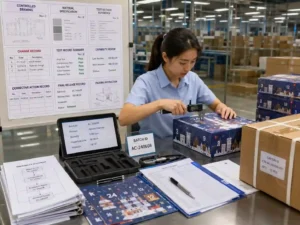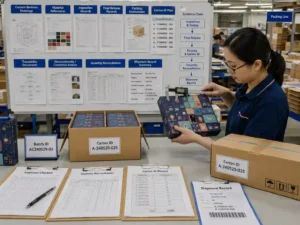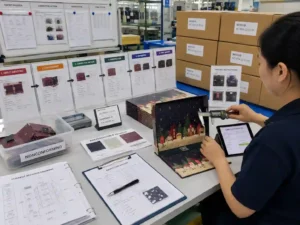
Quick answer: A pre-production loaded sample should be approved by testing the actual packaging with the final product configuration, not by reviewing an empty box alone. The approval process should confirm product fit, opening function, structural stability, visual appearance, and packing performance. Teams should compare the loaded sample against approved drawings, revision records, and sample references before signing off for production.

Why should a pre-production sample be approved with final products loaded?
A pre-production loaded sample is approved with final products inside because packaging performance depends on the interaction between the structure and the actual contents. An empty sample may look correct but fail when weight, shape, pressure, or repeated handling are introduced.
For custom advent calendar boxes, loaded approval helps verify practical details such as:
- Whether each compartment fits the intended product size.
- Whether drawers, doors, trays, or inserts operate correctly after loading.
- Whether products remain positioned correctly during handling.
- Whether the structure supports the actual product weight.
- Whether opening sequences work as expected without damaging the packaging.
The loaded sample should represent the approved production direction, including the intended structure, materials, artwork version, and product arrangement where applicable.
What should be checked during pre production loaded sample approval?
The approval should cover four main areas: product fit, functional performance, visual quality, and documentation control. Each check should have a clear reference or approval record.
How do you verify product fit and loading accuracy?
Product fit is verified by loading the intended products into the sample and checking clearance, movement, and accessibility. The sample should confirm that products can be inserted and removed without excessive force or unwanted movement.
Typical checks include:
- Product dimensions compared with compartment dimensions.
- Clearance around products to avoid compression or loose movement.
- Product orientation and placement requirements.
- Finger access and opening convenience.
- Consistency between sample loading method and planned production packing.
Measurements, product references, and loading photos can provide evidence when different teams review the approval remotely.
How do you test structure and handling performance?
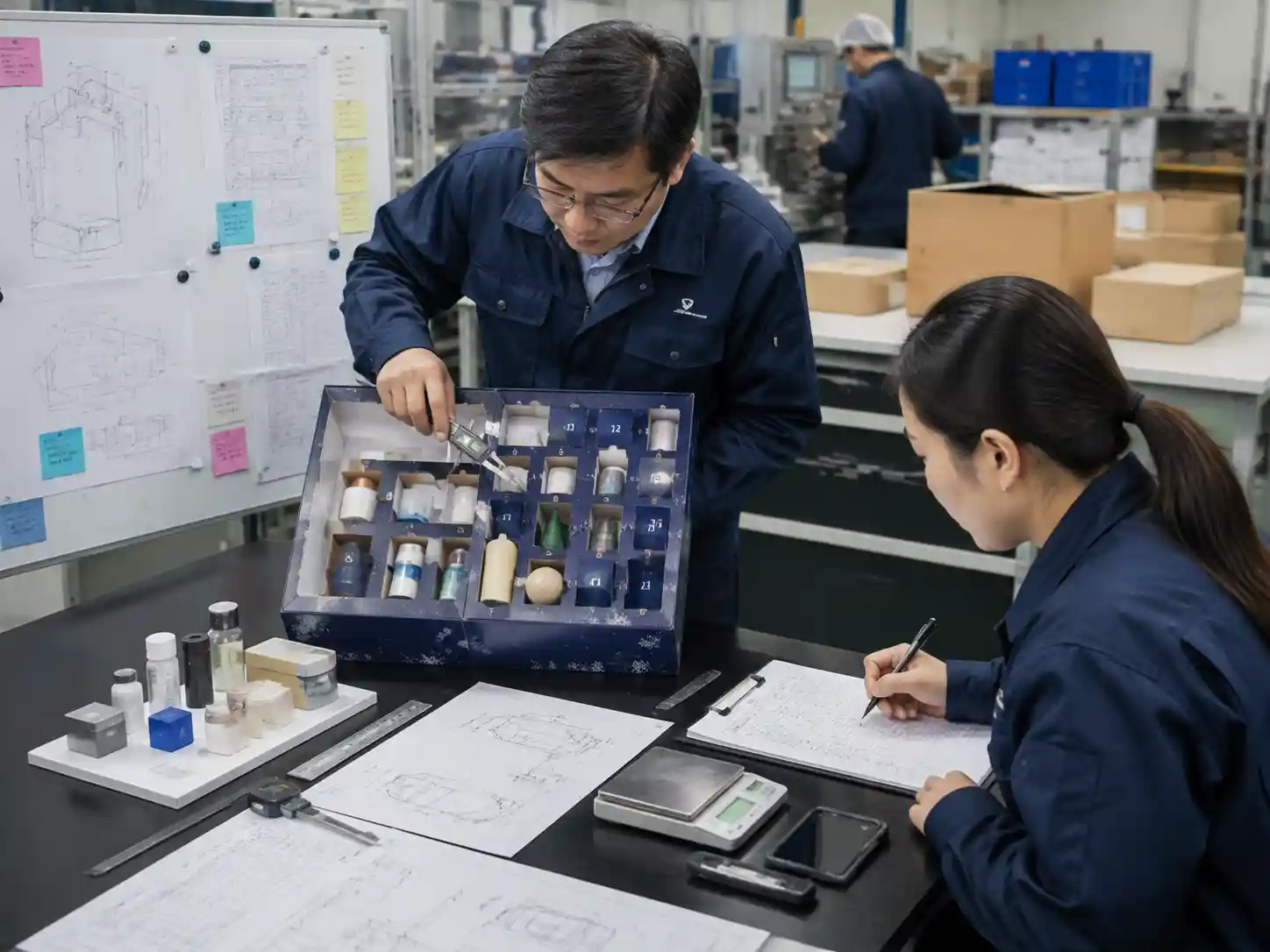
Structural approval should focus on how the package behaves when carrying the real product load. The purpose is to identify functional problems before mass production begins.
Engineering teams may review:
- Drawer movement and alignment after loading.
- Door opening and closing performance.
- Insert retention strength.
- Panel flatness and deformation.
- Stability during normal handling.
Project-dependent testing may vary depending on product weight, packaging style, and distribution requirements. Any additional handling or transport checks should be agreed according to the project risk level.
What documents should support the loaded sample approval?
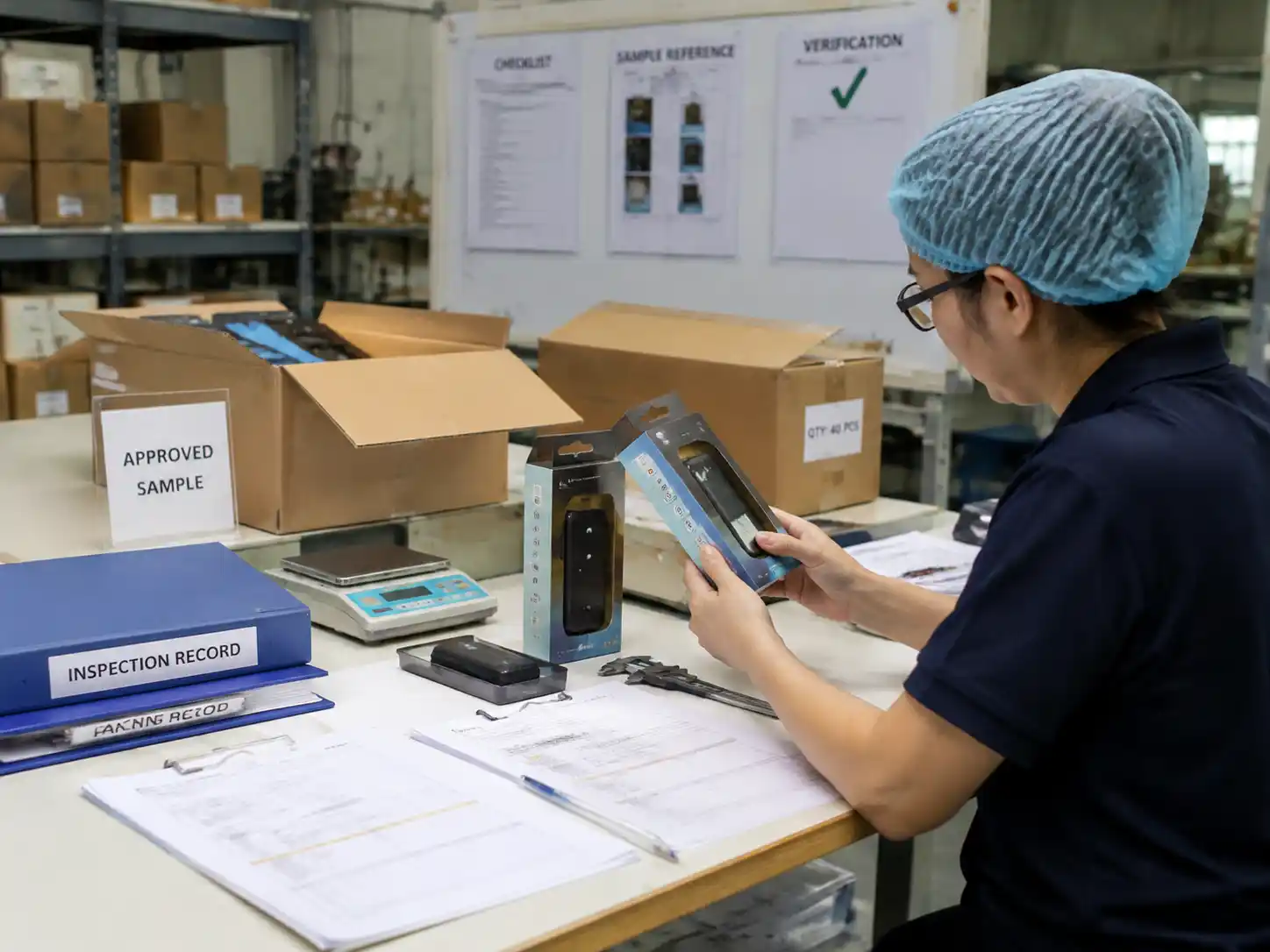
A loaded sample approval should be supported by controlled documents so that production teams can understand exactly what was approved. The approval record should connect the physical sample with the latest design information.
Useful supporting records include:
| Approval Item | Purpose | Evidence |
|---|---|---|
| Sample revision record | Confirms the correct sample version was reviewed | Revision number, date, change notes |
| Loaded sample photos | Shows actual product fit and arrangement | Images of internal and external views |
| Measurement records | Confirms critical dimensions | Dimension checks and inspection notes |
| Approval form | Records final decision | Sign-off by responsible reviewers |
Who should approve a loaded pre-production sample?
The approval responsibility depends on the project structure, but the final decision should include input from the teams responsible for product fit, packaging performance, and production requirements.
- Product developers confirm product compatibility and user requirements.
- Packaging engineers verify structure and technical performance.
- Purchasing teams confirm supplier alignment with approved specifications.
- Quality teams review inspection points and acceptance records.
- Project managers coordinate approval timing and revision control.
Buyer approval should be based on the approved sample condition, not only digital drawings or previous prototype versions.
What is the difference between a prototype sample and a loaded pre-production sample?
A prototype sample is generally used to evaluate early concepts, structure, or design direction. A pre-production loaded sample is closer to the final production condition and is used for confirmation before manufacturing release.
| Sample Stage | Main Purpose | Approval Focus |
|---|---|---|
| Prototype sample | Evaluate early design ideas | Structure concept and feasibility |
| Production-method sample | Review manufacturing approach | Materials, finishes, and process suitability |
| Loaded pre-production sample | Confirm final packaging performance | Fit, function, appearance, and production readiness |
What common risks are found before final approval?
Loaded sample reviews often identify problems that are not visible during empty sample inspection. Finding these issues before production helps prevent avoidable changes after manufacturing starts.
- Products shifting inside compartments.
- Insufficient clearance causing loading difficulties.
- Structural stress caused by actual product weight.
- Misalignment after repeated opening and closing.
- Differences between approved samples and production instructions.
When differences are identified, the revision should be recorded before the next approval stage. A clear change history helps prevent confusion between old samples, updated samples, and the final production reference.
What should be included in the final approval checklist?
A final checklist ensures the loaded sample decision is based on complete information rather than visual appearance alone.
- Final product samples loaded correctly.
- Approved structural drawings available.
- Latest artwork and revision records confirmed.
- Critical measurements checked.
- Opening and closing functions verified.
- Quality concerns documented and resolved.
- Responsible teams completed sign-off.
- Approved sample identified as the production reference.
How does loaded sample approval support production release?
After approval, the accepted sample can become a reference for production control, often working together with approved drawings, inspection requirements, and a golden sample where used by the project.
The purpose is to create a clear design freeze point so manufacturing teams understand which structure, appearance, and loading condition have been accepted.
Giftpackpro supports commercial buyers with custom advent calendar box services, helping teams manage sampling, approval, and production communication for custom paper gift packaging projects. To review packaging options for your project, request a custom quote.