Quick answer: Hot foil and cold foil create different visual and production results for premium advent calendar packaging. Hot foil is often preferred when a design requires sharp metallic detail, strong contrast, or compatibility with embossing. Cold foil can be more suitable when large metallic areas, faster inline processing, or integration with printed graphics are priorities. The better choice depends on artwork complexity, material structure, handling requirements, and quality expectations.
What is the difference between hot foil and cold foil for premium calendars?
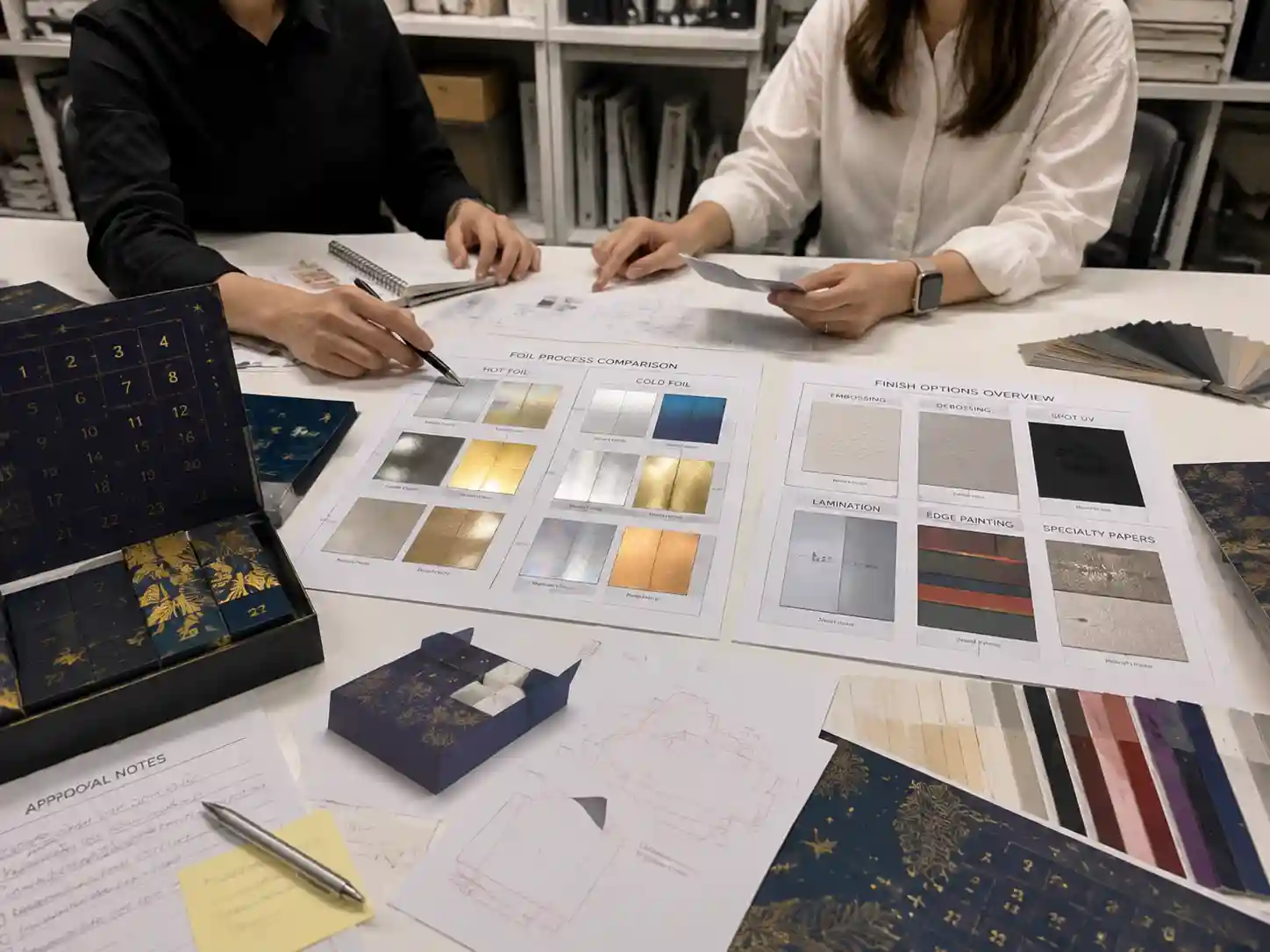
Hot foil uses heat and pressure to transfer a metallic foil layer onto the packaging surface, while cold foil uses adhesive and printing processes to apply metallic effects without a heated stamping die. The main difference is how the metallic effect is created and how it interacts with other finishing processes.
For premium advent calendar boxes, the decision usually involves more than appearance. Packaging teams need to consider:
- fine artwork detail and registration accuracy
- interaction with embossing, spot UV, and lamination
- surface durability during assembly and handling
- inspection requirements before mass production
When is hot foil better than cold foil for premium calendars?
Hot foil is usually the stronger choice when a calendar design needs highly defined metallic details, tactile effects, or a premium stamped appearance. It is commonly considered for logos, patterns, borders, lettering, and decorative elements where precision is important.
Hot foil may be preferred when:
- The artwork contains small metallic details: the stamping process can create clean edges for fine decorative elements when properly engineered.
- The design combines foil with embossing: foil stamping can be coordinated with raised or recessed structures to create a stronger tactile effect.
- The packaging requires a controlled luxury appearance: the metallic layer can provide a distinct contrast against matte, textured, or coated papers.
However, the final result depends on paper type, board surface, foil selection, artwork size, and supplier process control. A production sample is important before approval.
When can cold foil be a better option?
Cold foil can be a better solution when the project requires broader metallic coverage, integration with printed colors, or a more streamlined printing workflow. It is often evaluated for designs where metallic areas are part of a larger printed composition.
Cold foil may be suitable when:
- large metallic backgrounds or gradients are required
- metallic effects need to align closely with printed graphics
- the design uses multiple printed elements over a metallic base
The achievable appearance depends on ink coverage, printing accuracy, adhesive performance, and the selected substrate. Buyers should review physical samples rather than relying only on digital artwork previews.
How do hot foil and cold foil compare for packaging quality risks?
The main quality risks differ between the two processes. Both require approval samples, production checks, and inspection records to confirm the finish performs as expected.
| Area | Hot Foil Considerations | Cold Foil Considerations |
|---|---|---|
| Detail accuracy | Suitable for precise stamped elements when tooling and pressure are controlled. | Depends heavily on printing registration and adhesive application. |
| Emboss compatibility | Often selected when foil and embossing need to work together. | Requires evaluation based on printing sequence and structure. |
| Surface durability | Check adhesion, scratching, and handling resistance after finishing. | Check metallic coverage, ink bonding, and surface protection. |
| Artwork flexibility | Strong for selected decorative areas. | Useful for wider metallic graphic applications. |
What checks should buyers complete before choosing foil?
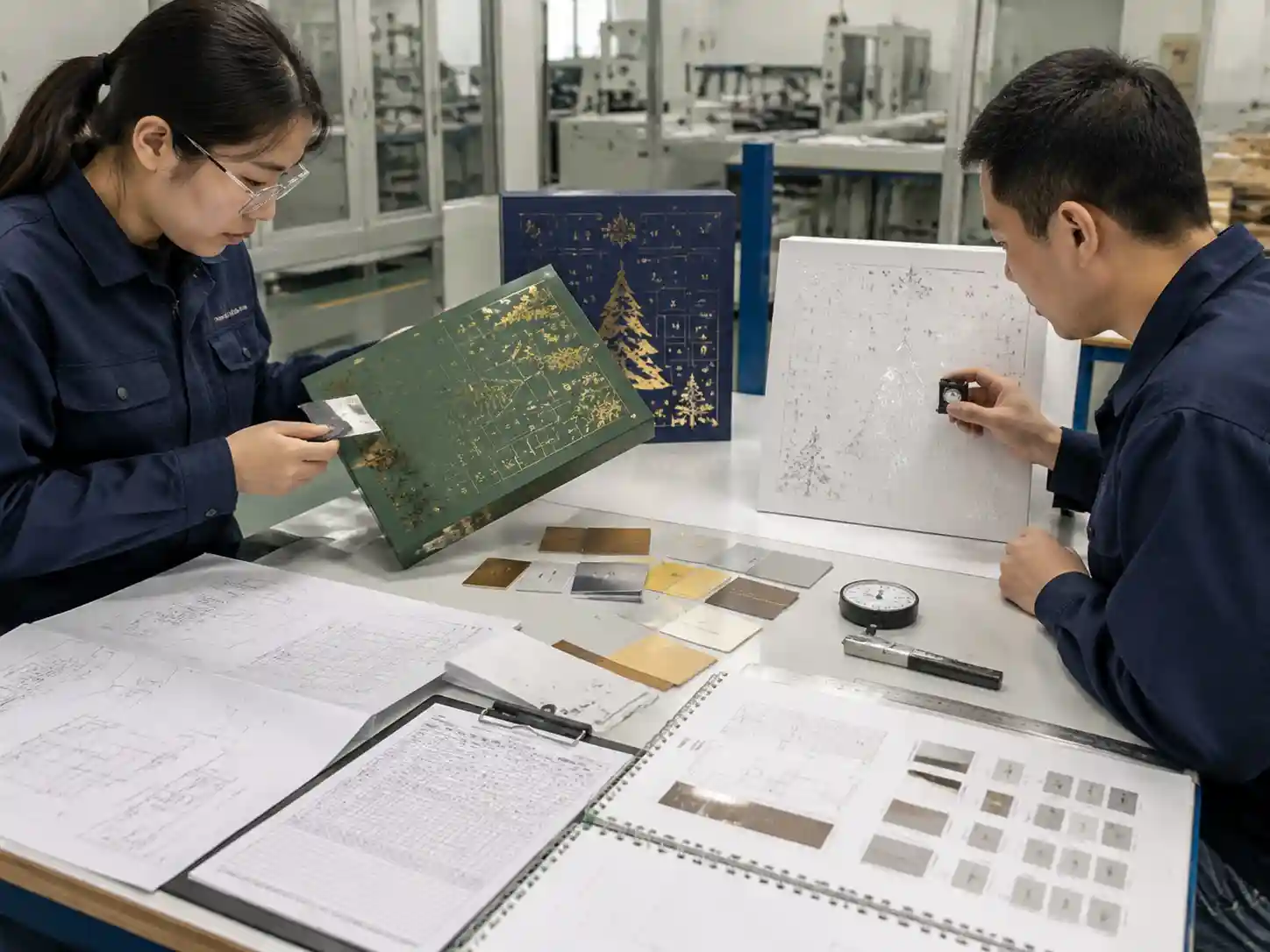
Buyers should verify the foil process through physical samples, production drawings, and supplier inspection records before approving the final finish.
Which adhesion checks are important?
- Confirm foil bonding to the selected paper or coated surface.
- Review whether lamination or coating affects foil adhesion.
- Inspect folded areas where stress may affect the finish.
- Check whether repeated handling creates scratching or lifting.
Which artwork and production checks are needed?
- Review foil registration against printed graphics.
- Confirm whether embossing depth affects foil detail.
- Check fine lines, small text, and edge definition on approval samples.
- Record approved samples and finishing specifications for production reference.
These checks help separate verified production information from assumptions based only on appearance.
How should teams select between hot foil and cold foil?
The best choice depends on the design objective and packaging conditions. A premium calendar with limited metallic highlights and tactile effects may benefit from hot foil, while a design requiring extensive metallic coverage integrated with printing may be better suited to cold foil.
Example finish selection:
- Luxury rigid advent calendar with embossed logo: hot foil may provide clearer detail and stronger tactile impact.
- Calendar with metallic background graphics: cold foil may offer better integration with printed artwork.
- Calendar requiring heavy handling: both options should be reviewed with lamination, coating, and surface durability checks.
Giftpackpro supports custom advent calendar packaging projects where finish selection is evaluated alongside structure, materials, and production requirements. Explore custom advent calendar box products or learn more about custom advent calendar box services before preparing your specification.
FAQs About Hot Foil vs Cold Foil Calendars
Does hot foil always look more premium than cold foil?
No. Premium appearance depends on the complete packaging design, including artwork, material choice, coating, registration, and quality control. Cold foil can also create high-end metallic effects when properly integrated.
Can foil be combined with embossing and spot UV?
Yes, but the sequence and compatibility need to be reviewed during sampling. Embossing, spot UV, foil, and lamination can affect each other, so approval should be based on physical samples.
Should buyers approve foil from digital artwork?
No. Digital previews cannot fully represent metallic reflection, surface texture, or adhesion performance. Physical samples and inspection records provide more reliable approval evidence.
For premium calendar projects requiring the right balance of appearance, durability, and production control, request a custom quote with your finish requirements and artwork details.