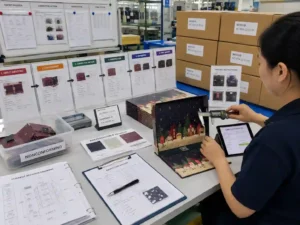
Quick answer: Anti-scratch laminations generally improve surface protection during hand assembly by reducing visible marks from handling, folding, and packing contact. However, performance depends on film structure, adhesive bonding, board condition, finishing combinations, and assembly methods. For premium advent calendar packaging, suppliers should verify lamination adhesion, folding behavior, foil and spot UV compatibility, and surface appearance through samples and production inspections before approval.
How does anti scratch lamination assembly affect finished packaging quality?
Anti scratch lamination assembly affects whether a premium package maintains its intended appearance after repeated handling during production. The laminate layer can reduce scuff visibility, but it does not eliminate all risks from sharp tools, excessive pressure, poor folding conditions, or incompatible finishing processes.
During hand assembly, operators commonly handle panels, drawer fronts, sleeves, lids, and folded structures multiple times. A suitable anti-scratch film helps protect printed surfaces from light abrasion, fingerprints, and contact marks during these stages.
What factors determine anti-scratch lamination performance during assembly?
The main factors are film quality, adhesive performance, surface preparation, and the interaction between lamination and other decorative finishes. Each project requires validation because packaging structures and finishing combinations vary.
| Factor | Assembly risk | Verification approach |
|---|---|---|
| Lamination adhesion | Film lifting, edge separation, or weak bonding after folding | Review laminated samples, check folded areas, and inspect edges after handling |
| Surface resistance | Visible marks from manual assembly or stacking contact | Compare finished samples under normal production lighting |
| Finish compatibility | Problems around foil, embossing, or spot UV areas | Review finish layouts and inspect combined-effect samples |
| Board and paper condition | Uneven appearance or bonding variation | Confirm material selection and review production samples |
Can anti-scratch lamination prevent scuffing on hand-assembled advent calendar boxes?
Anti-scratch lamination can reduce many common surface marks, but scuff resistance depends on the type of contact and the full packaging process. It is most effective when the laminate is correctly matched with the printed surface and structural requirements.
For example, drawer-style advent calendars may experience repeated contact between panels during assembly. Folded sleeves may also rub against other surfaces while being positioned. In these situations, a protective laminate layer can help maintain a cleaner appearance, but tight tolerances, sharp edges, and rough handling conditions still need evaluation.
How should suppliers check lamination before production release?
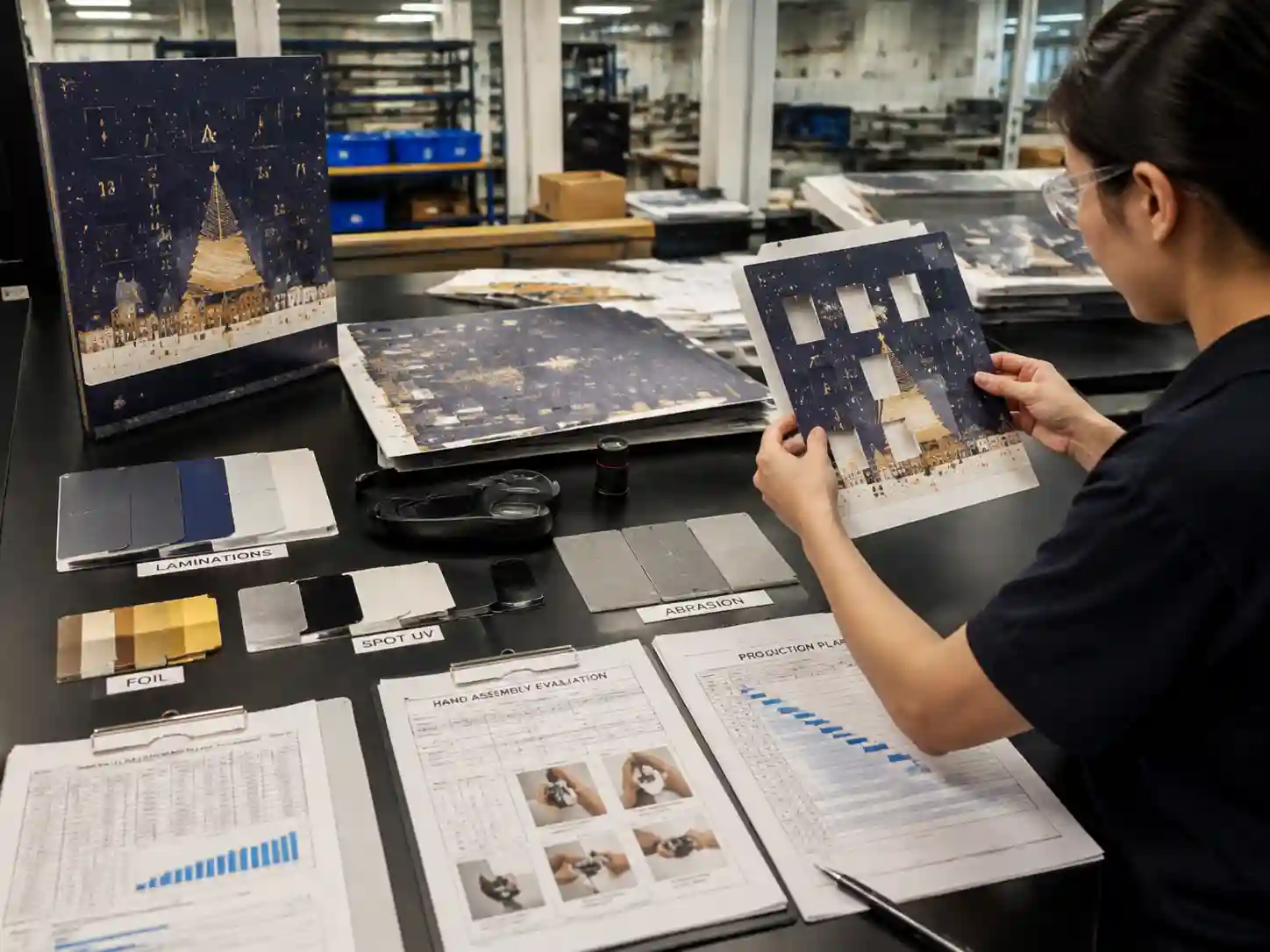
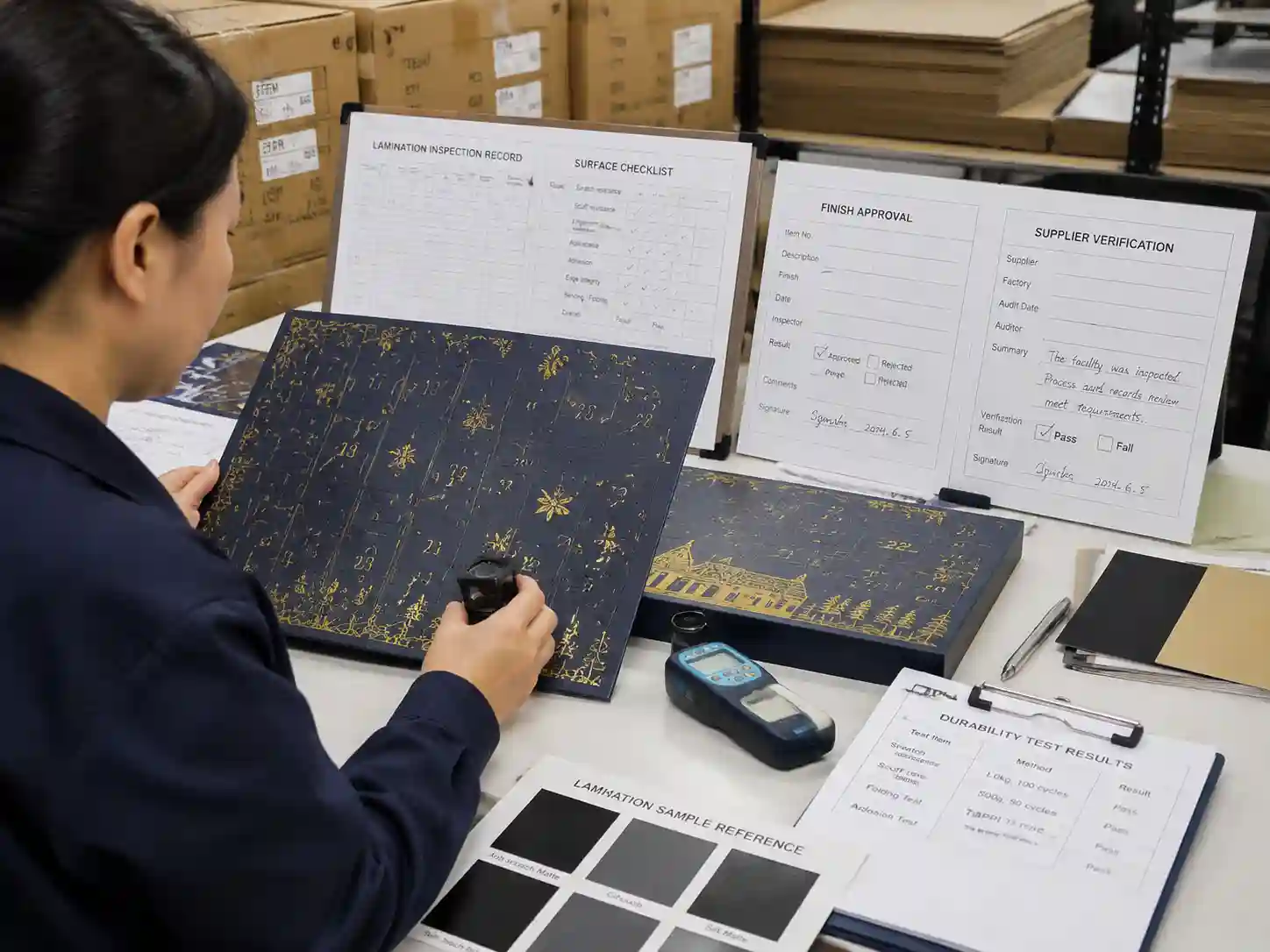
Suppliers should verify the laminate through physical samples, finish reviews, and documented inspections rather than relying only on material descriptions.
- Check laminated sample panels after folding and manual handling.
- Inspect edges and corners where peeling or stress marks may appear.
- Review areas where foil, embossing, or spot UV overlap with the laminated surface.
- Compare approved samples with production units during quality inspection.
- Record finish approvals, revision notes, and inspection results for traceability.
For commercial packaging projects, drawings, sample approvals, measurements, and supplier inspection records provide stronger evidence than a general claim that a laminate is “scratch resistant.”
How does anti-scratch lamination interact with foil, embossing, and spot UV?
Anti-scratch lamination should be considered as part of the complete finishing system. Decorative effects added before or after lamination can change the surface feel, appearance, and durability of the final package.
Foil stamping requires accurate registration between printed graphics and metallic details. Embossing creates physical height differences that may affect how surfaces are handled. Spot UV adds gloss contrast but may introduce additional areas where finish compatibility needs review.
When combining these effects, packaging teams should approve physical samples that represent the final construction rather than evaluating each finish separately.
What assembly checks help reduce lamination-related quality issues?
A practical inspection checklist helps identify problems before full production quantities are completed.
| Inspection point | Buyer or QC approval question |
|---|---|
| Film bonding | Are laminated areas secure after folding and handling? |
| Appearance | Does the surface maintain a consistent finish under inspection lighting? |
| Decorative alignment | Are foil, embossing, and spot UV areas correctly positioned? |
| Assembly handling | Can operators complete assembly without creating visible marks? |
What varies by project when selecting anti-scratch lamination?
Recommendations vary depending on the packaging structure, board material, artwork complexity, assembly method, and expected handling environment. A large rigid advent calendar with multiple folding panels may require different validation from a smaller flat-fold structure.
Project teams should separate confirmed information from project decisions:
- Verifiable facts: laminate type, approved samples, finish layout, inspection records, and measured production results.
- Project-dependent recommendations: whether anti-scratch lamination is necessary, which finish combination is suitable, and how much handling protection is required.
- Buyer approvals: final acceptance of appearance, tactile feel, decorative effects, and production samples.
Giftpackpro supports commercial packaging development through custom advent calendar box services and custom advent calendar box products, helping teams evaluate finishing choices alongside structural requirements.
FAQ: Does anti-scratch lamination remove the need for careful assembly?
No. The laminate improves surface durability, but correct assembly methods, clean handling practices, and production controls remain important for premium packaging.
FAQ: Should anti-scratch lamination be approved using samples?
Yes. Physical samples allow teams to evaluate appearance, folding behavior, finish compatibility, and handling performance before production approval.
FAQ: Can anti-scratch lamination affect other decorative finishes?
It can. Foil, embossing, spot UV, and other effects should be reviewed together because combined finishes may behave differently from individual processes.
For packaging projects requiring controlled surface performance and finishing coordination, request a custom quote to discuss suitable materials, samples, and production requirements.