
Calculating the loaded weight of a multi-compartment advent calendar requires adding the weight of all products, inserts, internal structures, and the outer package while accounting for production tolerances. The most reliable method uses actual product samples, cavity layouts, and approved packaging components to confirm the final assembled weight before structural decisions are finalized.
How Do You Calculate the Loaded Weight of a Multi-Compartment Advent Calendar?
The basic loaded weight calculation is the total of all packed components inside the finished calendar. The calculation should include product weight, insert weight, internal supports, box structure, and any additional packaging materials that remain with the shipment.
The general calculation method is:
Loaded weight = Product contents + Insert components + Internal supports + Outer packaging structure + Allowance for variation
For engineering purposes, the calculation should be based on the actual compartment arrangement rather than only the empty box weight. A calendar with many small cavities may have a different weight distribution from one with fewer but heavier products.
What Measurements Are Needed Before Calculating Loaded Weight?
Accurate weight calculation starts with collecting product and packaging measurements. Product samples, insert drawings, and structural specifications provide the data needed for a realistic estimate.
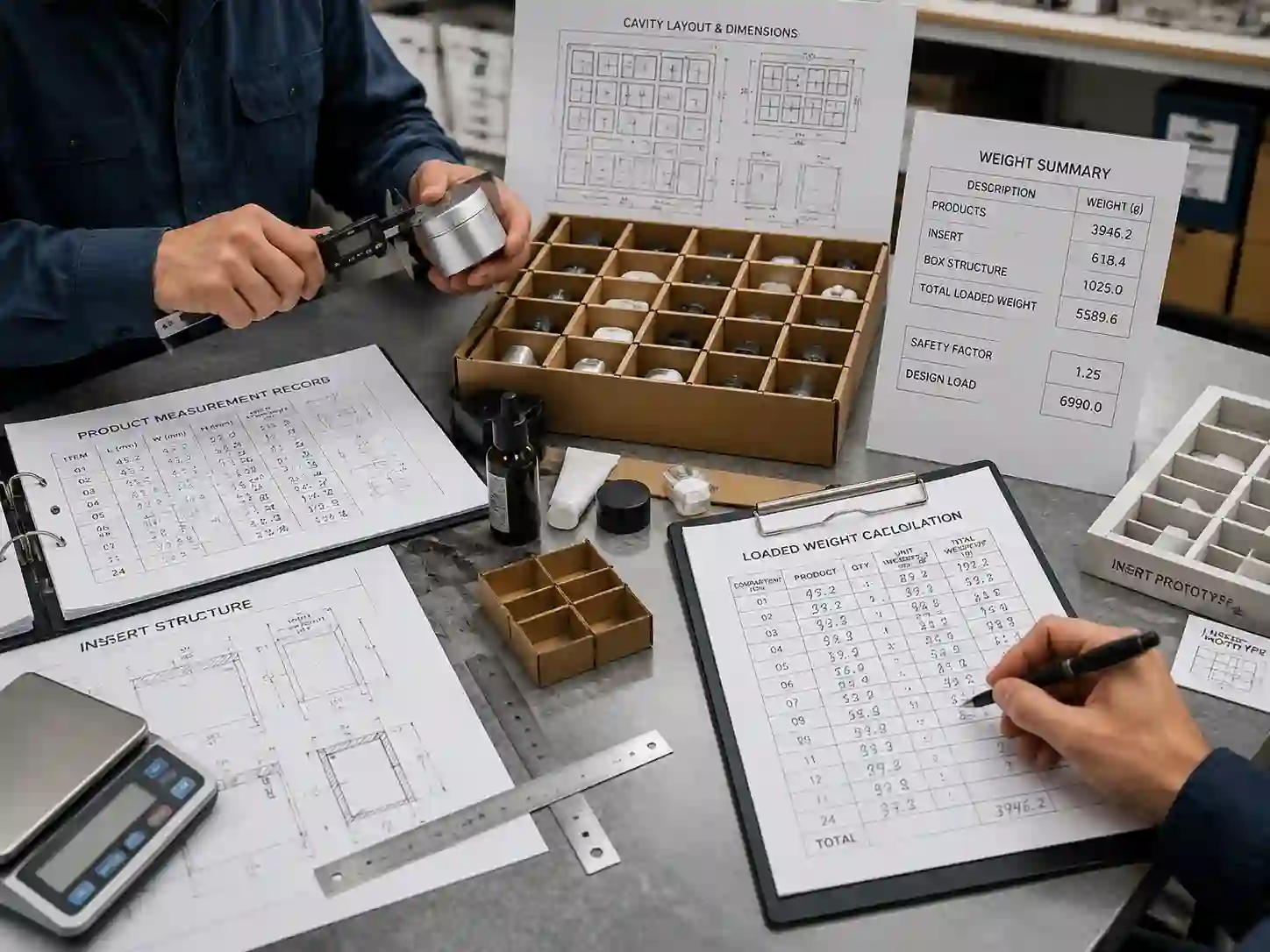
- Individual product weight for every compartment position
- Quantity of each product type inside the calendar
- Insert material weight, including paperboard, PET, EVA, foam, or molded components
- Outer box material weight and structural components
- Additional parts such as trays, ribbons, magnets, drawers, or support layers when applicable
| Measurement Item | Purpose | Verification Method |
|---|---|---|
| Product unit weight | Determines the main load inside each cavity | Weigh actual production or approved samples |
| Insert weight | Calculates internal packaging contribution | Measure finished insert samples |
| Box structure weight | Includes board, wrapping paper, and reinforcement parts | Measure assembled empty packaging |
| Weight variation | Accounts for normal production differences | Compare multiple samples |
How Should Product Weight Be Recorded Across Multiple Compartments?
Each compartment should be recorded separately when products have different sizes or weights. A compartment weight matrix helps engineers understand where concentrated loads occur and whether specific areas require additional reinforcement.
A typical recording process includes:
- Number each cavity according to the insert drawing or layout plan.
- Measure the actual product weight assigned to each cavity.
- Record the product orientation and loading position.
- Add the insert and support weight separately.
- Calculate the total assembled weight after all compartments are filled.
This approach is important because two calendars with the same number of compartments can have different structural requirements if the product distribution is uneven.
How Do Insert Design and Tolerance Affect Loaded Weight?
Insert design affects loaded weight because different materials and structures contribute different amounts of mass. A thick molded insert, reinforced paperboard divider, or multi-layer support tray will add more weight than a simple paperboard partition.
Project-dependent factors include:
- Insert material selection
- Number of support layers
- Clearance required around products
- Compression allowance for fragile items
- Variation in product dimensions and filling position
Engineers should validate the estimated weight using loaded samples because theoretical calculations may not include small differences caused by adhesive, finishing layers, or assembly components.
What Is the Recommended Loaded Sample Checklist?
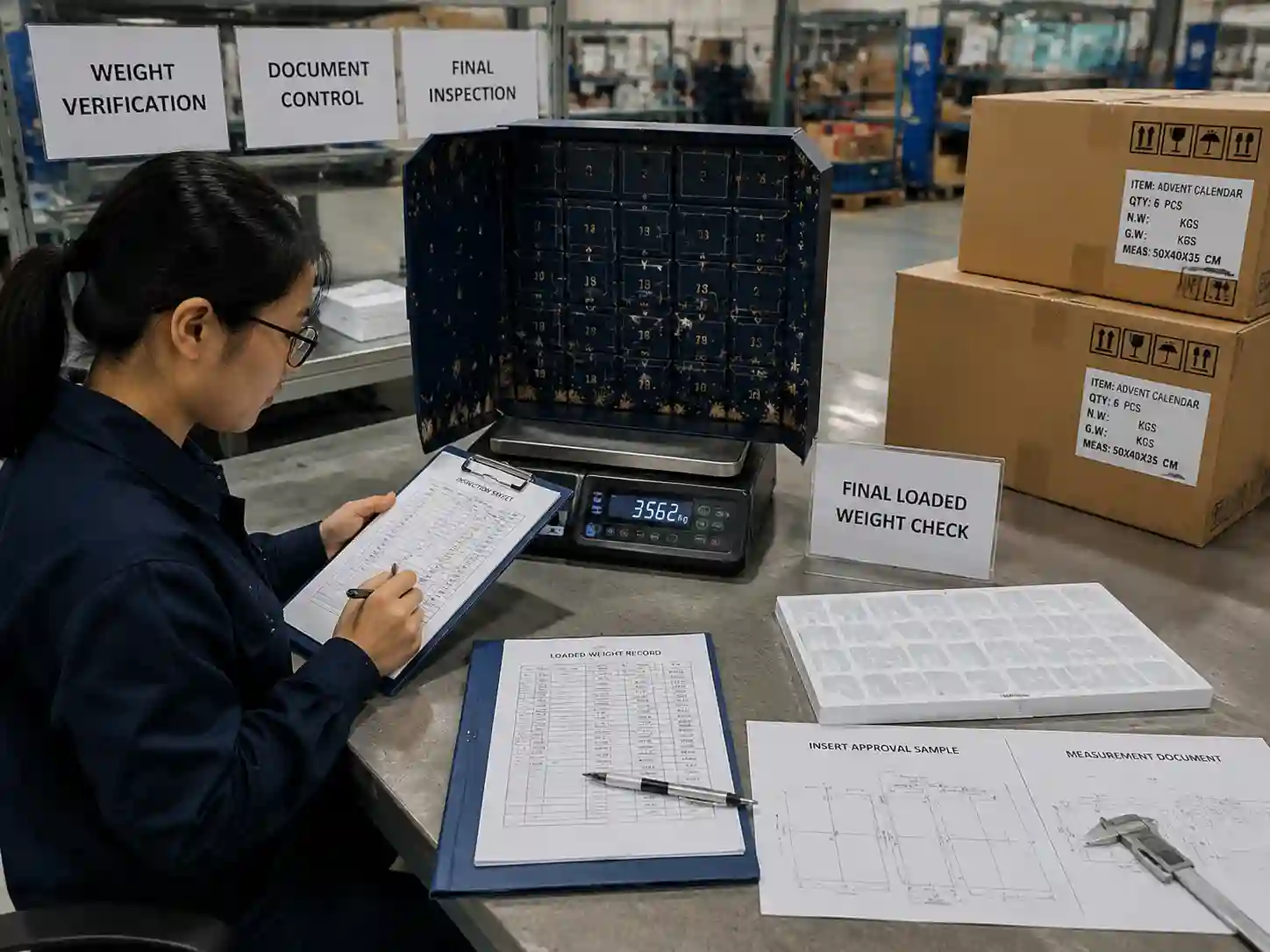
A loaded sample inspection provides physical evidence that the calculated weight matches the finished packaging condition. The sample should represent the approved product arrangement and insert design.
- Confirm every compartment contains the intended product weight.
- Check that products fit without excessive movement.
- Measure the complete assembled calendar weight.
- Record the empty box weight and loaded box weight separately.
- Review cavity drawings against the physical sample.
- Keep approval records showing the final weight calculation method.

How Can Buyers Verify the Loaded Weight Calculation?
Buyers can verify the calculation by comparing supplier records with physical samples, measurement sheets, and approved packaging drawings. The calculation should be traceable from individual compartment data to the final assembled package.
Useful verification documents include:
- Product weight list by cavity number
- Insert specification drawings
- Sample measurement records
- Final assembled weight inspection sheets
- Approval records for product orientation and loading sequence
These records help prevent unexpected changes in handling requirements, packaging strength decisions, or shipping preparation.
What Risks Occur If Loaded Weight Is Estimated Incorrectly?
Incorrect loaded weight estimation can affect structural performance, product protection, and packaging decisions. The risk increases when heavy items are concentrated in limited areas or when insert strength is not matched to the actual load.
Common risks include:
- Excessive pressure on specific compartments
- Insert deformation during handling
- Difficulty closing doors, drawers, or folding structures
- Unexpected changes between prototype and production samples
Using measured samples and documented approvals reduces uncertainty before bulk manufacturing decisions are made.
Frequently Asked Questions About Loaded Advent Calendar Weight Calculation
Can loaded weight be calculated without product samples?
An estimate can be created from product specifications, but physical samples provide more reliable results because actual weights, tolerances, and packaging components may vary.
Should insert weight be included in the final calculation?
Yes. The insert is part of the finished packaging system and should be included when calculating the complete assembled weight.
Does compartment quantity determine the final loaded weight?
Not by itself. The number of compartments affects the structure, but the actual product weights and material choices determine the final loaded weight.
Giftpackpro supports custom advent calendar packaging development with measurement-based structure planning, insert validation, and production documentation. For projects requiring accurate loaded weight evaluation, contact our team through the request a custom quote page.