
Quick answer: To measure 24 products for a custom advent calendar insert, record each product’s actual length, width, height, shape, weight, opening direction, and handling requirements before designing cavities. The insert design should include functional clearance, manufacturing tolerance, product protection needs, and sample validation. Accurate measurements help prevent tight fits, movement during handling, and production changes after approval.
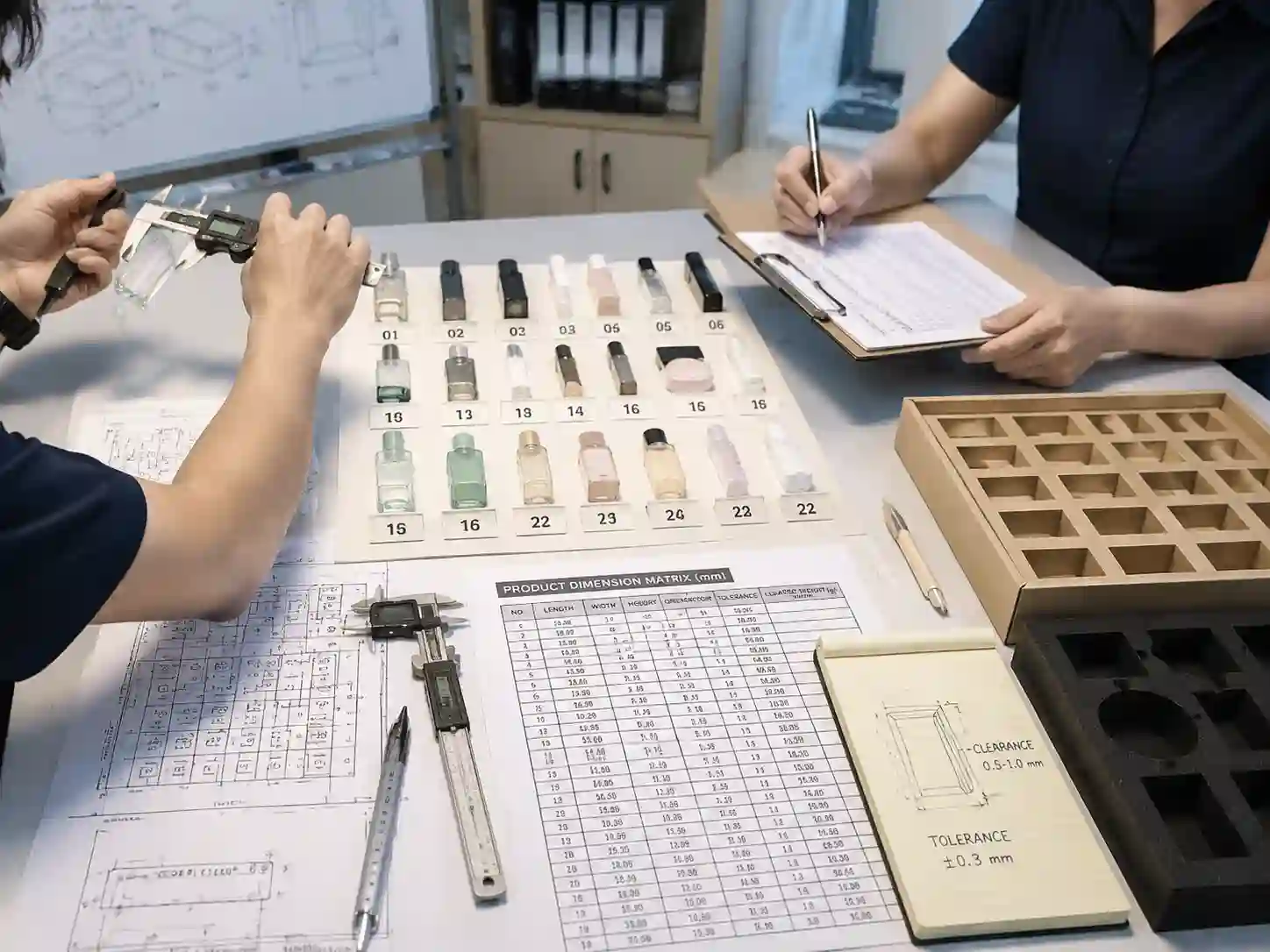
Why do you need accurate product measurements before designing an advent calendar insert?
Product measurement defines the cavity size, insert structure, and final packaging dimensions. A custom insert cannot be designed from approximate product sizes because small differences can affect fit, appearance, and assembly.
For a 24-product advent calendar, every compartment should be reviewed individually because products may have different shapes, weights, surfaces, and usage requirements. A supplier normally needs physical samples, technical drawings, or verified dimension data before creating the insert layout.
What product information should be collected before measurement?
The measurement process should begin with a product specification sheet. The following information is commonly required:
- Maximum external dimensions: length, width, and height
- Product shape: rectangular, cylindrical, irregular, flexible, or fragile
- Product weight and center of gravity
- Packaging condition: bare product, retail container, bottle, tube, box, or pouch
- Required product orientation inside the cavity
- Opening or removal direction for the consumer or operator
These records create a reference between product development teams, packaging engineers, and sampling teams.
How do you measure 24 products for an advent calendar insert?
To measure products for advent calendar insert design, measure the actual loaded product condition first, then add appropriate clearance based on the insert material, production process, and handling requirements.
-
Measure the maximum outer dimensions.
Use calibrated rulers, digital calipers, or measurement tools to capture the widest, longest, and tallest points. Rounded items should be measured at their maximum diameter and height.
-
Record product orientation.
Confirm whether each item should stand vertically, lie flat, or sit at an angle. Orientation affects cavity depth, opening design, and the overall insert layout.
-
Calculate functional clearance.
The cavity should not match the product size exactly. Clearance is required for product variation, material compression, loading efficiency, and removal.
-
Review loaded weight.
Heavy products may require stronger support areas, thicker insert structures, or different materials compared with lightweight samples.
-
Validate with physical samples.
A prototype insert should be tested with actual products before final production approval.
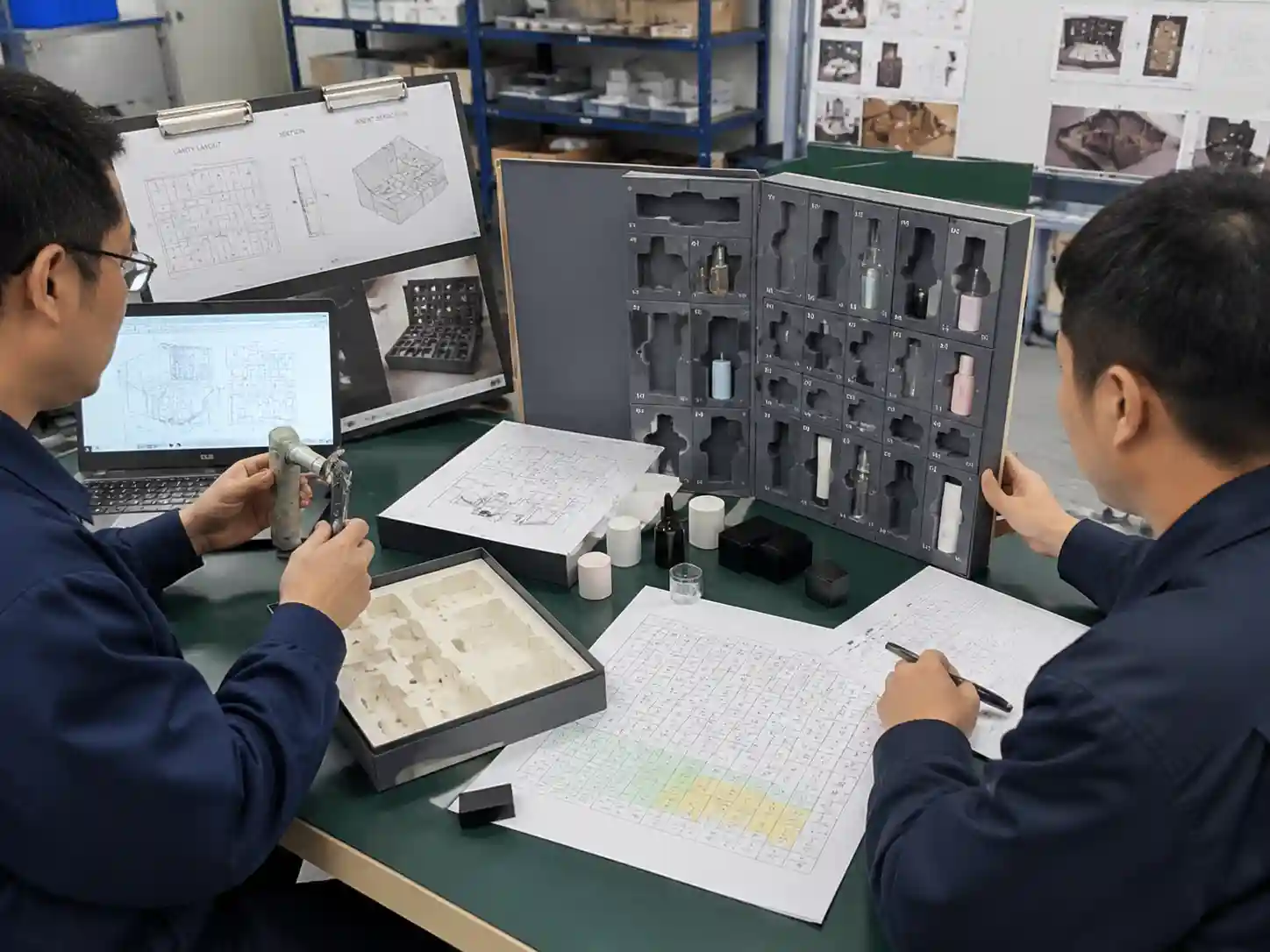
What dimensions and tolerances should be checked for each cavity?
Each cavity should be reviewed using a dimension control table. The exact allowance varies by product type, insert material, and packaging structure.
| Measurement Item | Purpose | Validation Method |
|---|---|---|
| Product length, width, height | Defines cavity base dimensions | Physical measurement or approved drawing |
| Product diameter or irregular profile | Controls round or special-shaped cavities | Profile measurement and sample fitting |
| Clearance allowance | Allows loading and removal | Prototype cavity testing |
| Product weight | Checks insert support requirements | Loaded sample inspection |
| Orientation requirement | Controls visual presentation and fit | Assembly review |
Measurements should be recorded in a controlled document so that engineering drawings, insert samples, and final approvals reference the same information.
How much clearance should an advent calendar insert cavity have?
Clearance is project-dependent and should be determined after considering the product surface, insert material, and loading method. There is no single clearance value suitable for every advent calendar insert.
For example, a rigid bottle, cosmetic container, or boxed item may require different cavity treatment compared with a lightweight pouch or small accessory. Insert materials such as paperboard, EVA, foam, or molded components also influence compression and holding strength.
Recommended clearance should be confirmed through sample fitting rather than relying only on calculations.
How do you validate a 24-cavity insert before production?
A loaded sample test verifies whether all 24 products fit correctly and whether the insert performs as intended.
What should be included in a loaded-sample checklist?
- All 24 cavities tested with the actual products
- Product loading sequence confirmed
- No excessive movement during handling
- No damage or surface marking from the insert
- Products can be removed without difficulty
- Insert maintains position inside the outer box
- Final dimensions match approved structural drawings
Inspection records, product measurement sheets, cavity drawings, and sample approval documents provide evidence that the insert design matches the product requirements.
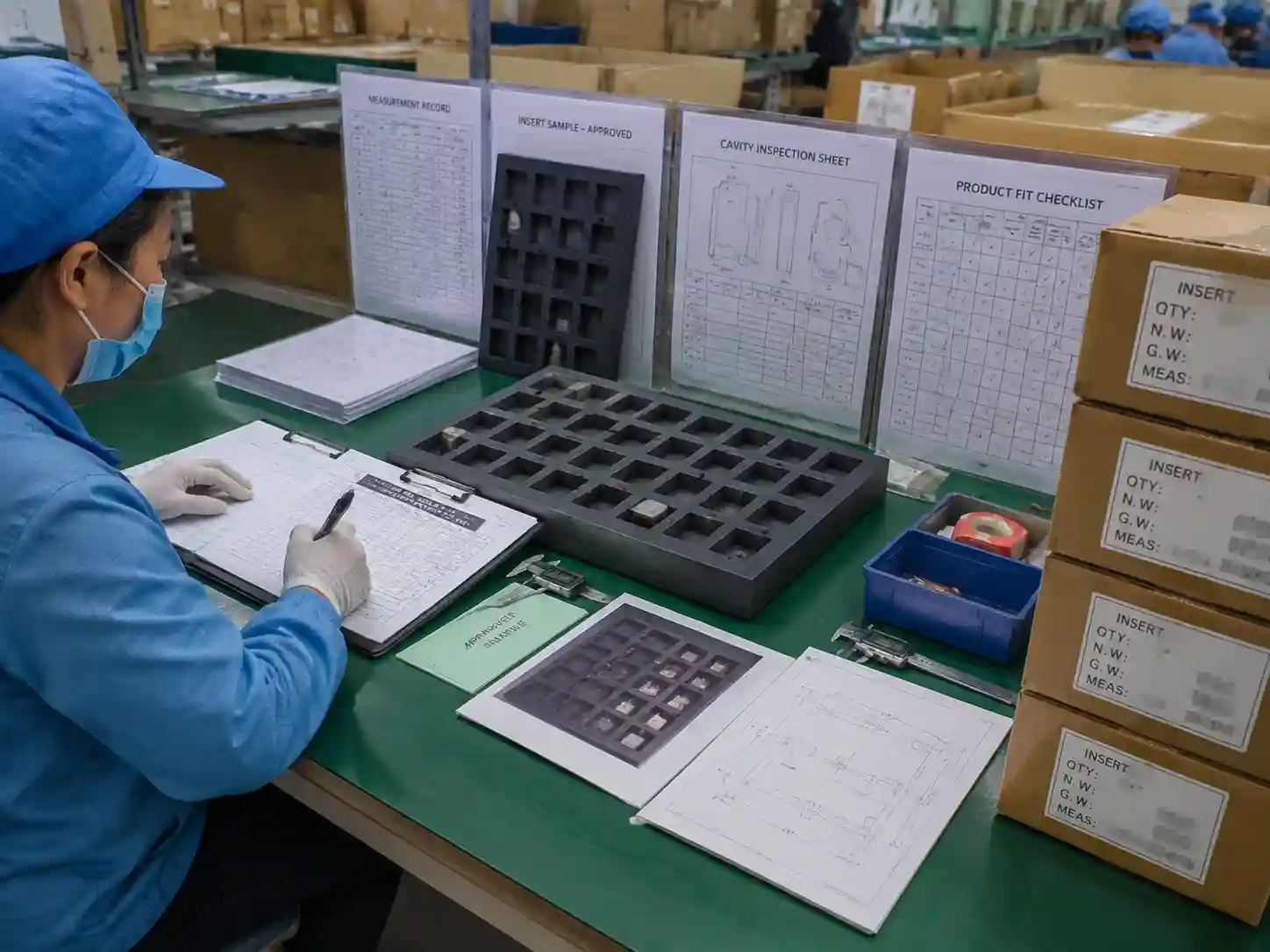
What risks happen when product measurements are inaccurate?
Incorrect measurements can create problems during sampling and production, including cavities that are too tight, products moving inside compartments, uneven presentation, or additional engineering changes.
Common causes include measuring only the product body without accessories, ignoring packaging variation, using nominal dimensions instead of actual samples, or failing to test the loaded insert.
Separating verified measurements from assumptions helps teams identify which specifications are confirmed and which require further approval.
What information should buyers approve before final insert production?
Before production approval, buyers should confirm the final product dimension list, cavity layout, insert drawing, loaded sample results, and any project-specific tolerances.
These approvals create a clear reference for packaging development and reduce misunderstandings between product teams and packaging suppliers. For complete custom packaging development, buyers can review custom advent calendar box services or explore custom advent calendar box products.
FAQs about measuring products for advent calendar inserts
Can product packaging dimensions be used instead of actual product measurements?
Packaging dimensions can be used as a reference, but actual product samples are preferred because closures, labels, caps, and surface shapes may affect cavity design.
Should all 24 products have the same clearance?
No. Clearance depends on product shape, weight, surface protection needs, and insert material. Different cavities may require different design considerations.
Why is a physical sample test necessary after digital measurement?
Digital dimensions confirm specifications, but physical testing verifies loading, removal, movement, and real-world fit conditions.
For help developing a measured insert solution for a custom advent calendar project, request a custom quote with your product dimensions and packaging requirements.


