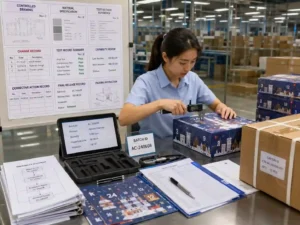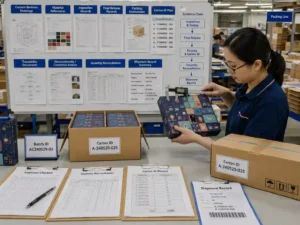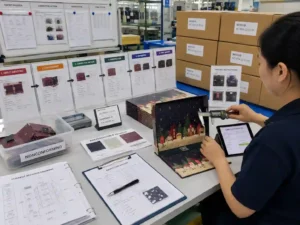
A complete advent calendar box cost breakdown should separate every major cost driver that affects the final quotation, including board materials, box structure, inserts, printing, finishing, assembly, quality control, packing, and project-specific requirements. Buyers should compare quotations by matching specifications line by line rather than comparing only the total price. A clear cost breakdown helps confirm whether suppliers are quoting the same packaging solution.
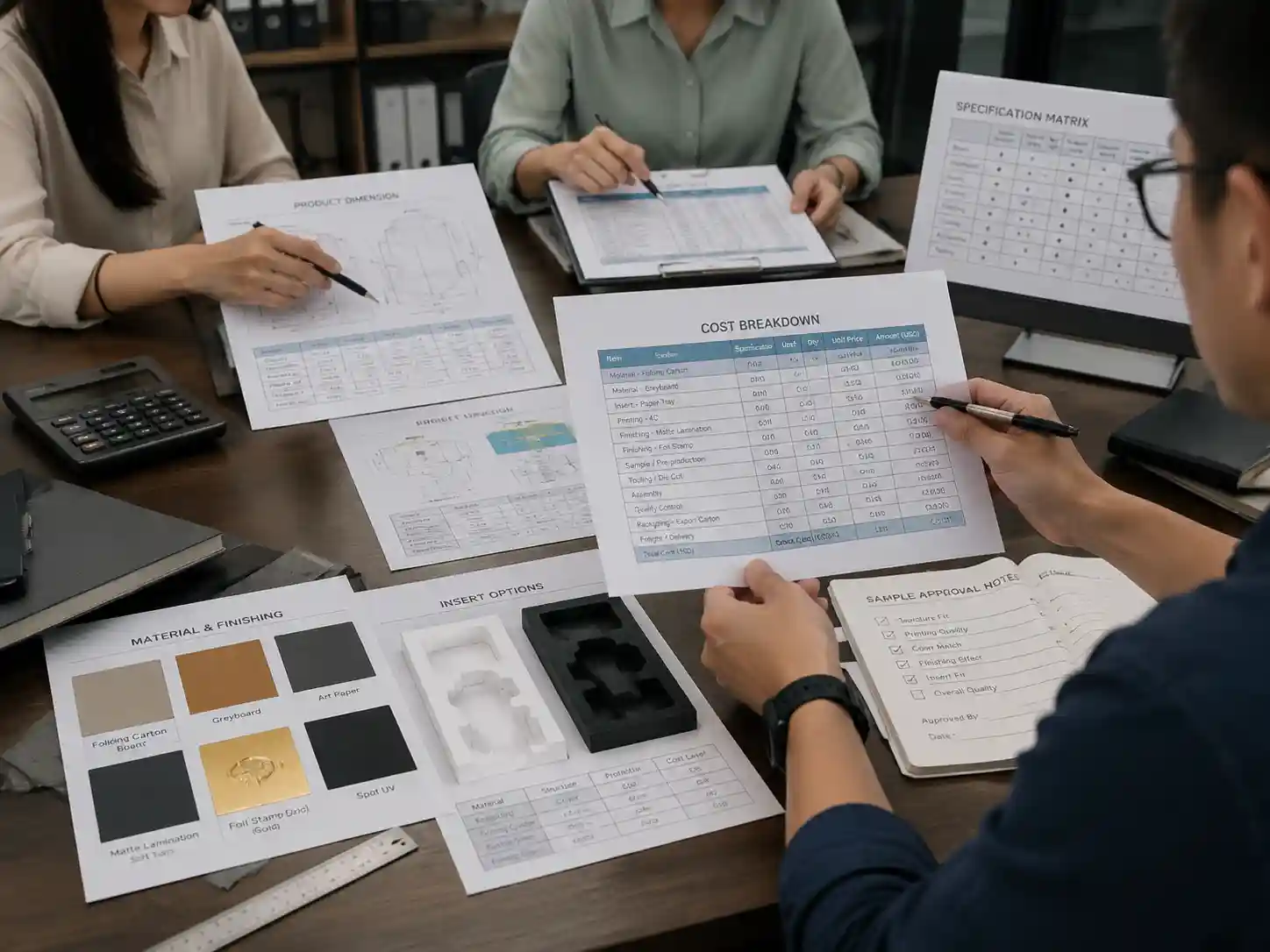
What items should be included in an advent calendar box cost breakdown?
An advent calendar box cost breakdown should include all cost elements that can change according to the approved packaging specification. The purpose is to make each quotation traceable and allow buyers to identify differences between suppliers.
| Cost category | What should be reviewed | How buyers can verify |
|---|---|---|
| Box structure | Drawer, door, book-style, folding, rigid, or other construction type; dimensions and layers | Review technical drawings, dielines, and approved samples |
| Board and paper materials | Greyboard thickness, paper wrap, specialty papers, backing materials, and weight requirements | Check material samples and specification sheets |
| Insert system | Paperboard, EVA, PET, foam, molded pulp, or custom compartment solutions | Confirm insert drawings, product fit tests, and sample approval records |
| Printing and finishing | Printing method, colors, lamination, foil stamping, embossing, spot UV, or other finishes | Compare artwork files, finish samples, and production references |
| Assembly and production processes | Manual assembly requirements, gluing, folding, fitting, and production complexity | Review process notes and supplier quotation details |
| Quality control | Inspection points, sample checking, dimensional checks, and appearance standards | Confirm QC checklist and approval documents |
| Export packing | Carton method, protection materials, shipping marks, and packing configuration | Review packing specifications and carton information |
Why should buyers separate material, structure, and production costs?
Separating cost categories helps buyers understand why two suppliers may quote different prices for products that appear similar. A lower quotation may use a different board grade, simpler insert structure, fewer finishing steps, or a different assembly method.
For example, two advent calendar boxes may have the same outside dimensions but different internal construction. One may require a multi-piece insert with precise compartments, while another may use a simpler divider system. The structural difference affects material usage, tooling, production time, and inspection requirements.
How should buyers review board and material costs?
Board and paper costs should be reviewed against the approved specification, not only the supplier’s material description. Buyers should confirm thickness, surface paper, color requirements, and any special material features.
- Confirm the main board type and thickness.
- Check whether wrapping paper, specialty paper, or laminated surfaces are included.
- Verify whether reinforcement layers or supporting structures are required.
- Compare material samples with quotation descriptions.
Material verification should be supported by physical samples, specification sheets, or supplier documentation. This prevents unexpected changes after quotation approval.
What printing and finishing costs should be shown in the quotation?
Printing and finishing costs should identify each decoration process separately because different techniques affect both price and production complexity.
| Process | Buyer check |
|---|---|
| Printing | Confirm artwork coverage, color method, and whether inside and outside printing are included. |
| Lamination | Check matte, gloss, soft-touch, or other surface protection requirements. |
| Special effects | Confirm foil stamping, embossing, debossing, or spot coating areas. |
| Color approval | Review approved samples, proofs, or reference standards before production. |
These details should be approved through artwork files, finish samples, and production approval records. Visual appearance differences are often caused by specification gaps rather than supplier pricing alone.
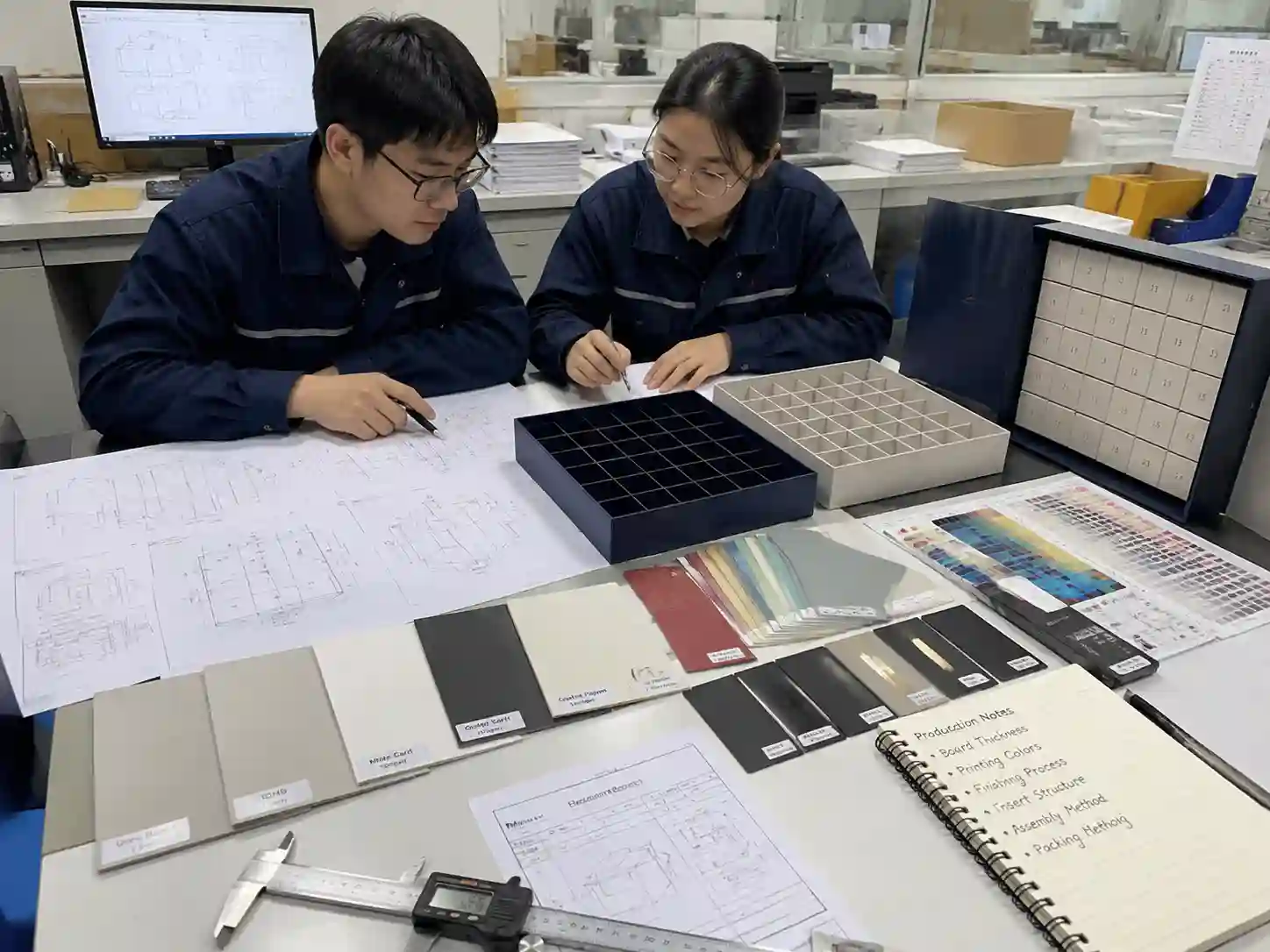
How should buyers compare supplier quotations line by line?
Buyers should create a quotation comparison sheet that matches identical specifications across suppliers. The goal is to compare equivalent packaging solutions rather than simply choosing the lowest number.
- Structure: Are suppliers quoting the same box style and dimensions?
- Materials: Are board grades and paper specifications equivalent?
- Insert: Are compartment layouts and protection requirements identical?
- Finishing: Are all printing effects included?
- Packing: Are shipping protection methods comparable?
| Quotation comparison item | Common risk if unclear | Recommended buyer action |
|---|---|---|
| Specification scope | Different suppliers quote different products | Attach drawings, dimensions, and reference samples |
| Included processes | Extra charges appear after approval | Request a detailed process list |
| Sample reference | Mass production differs from expectations | Link quotation details to approved samples |
| Packing method | Shipping damage risk or unexpected packing cost | Confirm carton and protection requirements |
Which project details can change the final advent calendar box cost?
The final cost depends on project-specific requirements. Buyers should separate fixed quotation information from items that still require approval.
Which costs are usually specification-driven?
Structure type, dimensions, materials, printing coverage, finishing methods, insert design, and packing requirements are normally determined by the approved packaging specification.
Which costs require buyer approval before confirmation?
Artwork changes, sample revisions, material substitutions, finishing adjustments, and packaging improvements should be approved before they are included in the final production quotation.
Buyers should keep records of drawings, revision notes, sample approvals, and quotation updates so each cost change has a clear reason.
What quotation documents should buyers request from suppliers?
A reliable quotation package should include enough information for technical and purchasing teams to review the offer. Useful documents include:
- Detailed quotation sheet with separated cost items.
- Packaging specification summary.
- Structural drawings or reference documents.
- Material and finishing descriptions.
- Sample approval records when available.
- Packing information for shipment preparation.
These records help purchasing teams compare suppliers and reduce misunderstandings during production.
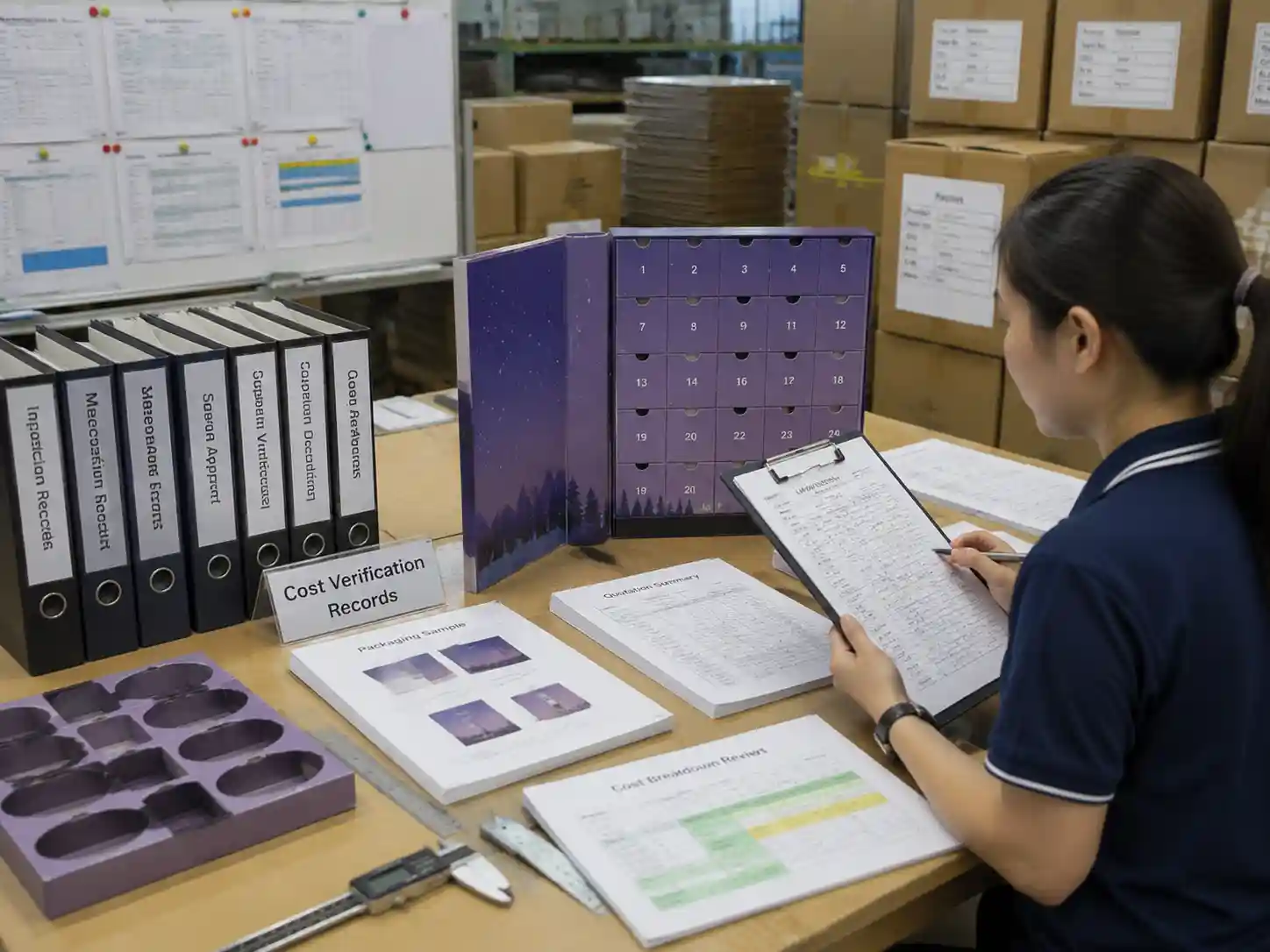
How does a cost breakdown help control RFQ decisions?
A structured cost breakdown creates a clear boundary between requested specifications and supplier assumptions. It allows buyers to negotiate specific areas, such as materials, finishing, or packing, without changing the entire project scope.
For custom packaging projects, the most reliable comparison comes from matching quotation details with technical drawings, samples, measurements, and approval records. A complete breakdown supports better supplier evaluation and reduces unexpected changes after order confirmation.
Giftpackpro supports commercial buyers with custom advent calendar box services and helps organize packaging requirements from specification review to quotation preparation. For a project-specific discussion, request a custom quote with your packaging details and reference information.