
Quick answer: Cosmetic advent calendar boxes retail campaign planning requires buyers to make structure, insert, artwork, production, and logistics decisions before requesting samples or quotations. The best packaging solution depends on SKU mix, retail display requirements, product protection, campaign positioning, and shipping conditions. Buyers should compare rigid boxes, drawer boxes, door-opening boxes, folding cartons, and fold-out structures based on product fit, cost, lead time, and customer experience. A clear RFQ, approved prototype, and supplier QC process help reduce production risks before mass manufacturing.
Retail cosmetic campaigns depend on packaging that performs three jobs at the same time: protect multiple beauty products, create a premium unboxing experience, and support efficient retail or e-commerce distribution. For buyers sourcing cosmetic advent calendar boxes retail campaign planning projects, packaging decisions should begin months before launch dates because structure development, sampling, artwork approval, and bulk production require careful coordination.
Giftpackpro supports overseas brands, wholesalers, retailers, and purchasing teams with custom advent calendar boxes manufacturer solutions designed around structure, inserts, printing, finishing, and export requirements.

What should buyers decide before planning cosmetic advent calendar packaging?
Buyers should first define the retail purpose, product assortment, and customer experience before selecting a box structure. The same cosmetic advent calendar box may require different engineering depending on whether it is sold in premium retail stores, online marketplaces, promotional campaigns, or seasonal gift programs.
Before contacting a supplier, buyers should prepare:
- Number of compartments and product quantity
- SKU dimensions, including tubes, mini bottles, palettes, jars, and accessories
- Target retail price and packaging budget
- Required launch date and production schedule
- Sales channel requirements, including retail shelf display or e-commerce shipping
- Preferred materials, finishes, and sustainability expectations
Buyer tip: Cosmetic products are rarely identical in size. A successful advent calendar design normally starts with a product-fit review rather than choosing a box style first.
Which advent calendar box structure is best for retail campaigns?
The best structure depends on product weight, premium positioning, display requirements, and budget. Rigid, drawer, door-opening, folding, and fold-out structures each provide different advantages for cosmetic campaigns.
| Structure | Best For | Main Advantages | Buyer Considerations |
|---|---|---|---|
| Rigid box | Premium cosmetics, luxury gift sets | Strong construction, high-end appearance, excellent finishing options | Higher material cost and larger shipping volume |
| Drawer box | Beauty collections with multiple compartments | Smooth opening experience, strong product organization | Requires accurate drawer tolerance testing |
| Door-opening box | Retail storytelling and visual merchandising | Large display surface and attractive opening experience | Hinge strength and panel alignment must be tested |
| Folding carton | Large quantity campaigns and cost-sensitive projects | Lower shipping volume and efficient production | Requires careful board selection for strength |
| Fold-out structure | Interactive premium campaigns | Creates strong visual impact with multiple panels | More complex dieline and assembly requirements |
Should brands choose rigid or paperboard cosmetic advent calendar boxes?
Rigid boxes are usually selected when premium presentation is the priority, while paperboard folding cartons are often preferred for higher-volume campaigns requiring lower transportation costs. The correct choice depends on product value, retail environment, and campaign objectives.
Rigid structures typically use greyboard wrapped with printed paper and can support finishes such as foil stamping, embossing, spot UV, matte lamination, and gloss lamination. Paperboard structures use printed folding carton materials and may offer better efficiency for large retail programs.
Factory tip: A packaging supplier should evaluate structure strength together with the insert system. A premium outer box cannot compensate for an insert that allows cosmetic products to move during transport.
How do inserts affect cosmetic advent calendar performance?
Insert design determines product protection, presentation quality, and assembly efficiency. Cosmetic advent calendar inserts must handle mixed SKU sizes while preventing movement, scratches, and damage.
Common insert options include:
- Paper insert: suitable for lightweight products and environmentally focused designs.
- PET tray: useful for precise positioning of mini bottles, jars, and cosmetic containers.
- EVA insert: provides soft protection for premium products and fragile items.
- Foam insert: commonly used when cushioning and product stability are priorities.
- Molded pulp insert: suitable for brands looking for fiber-based protective solutions.
For cosmetic campaigns, insert testing should include bottle diameter checks, tube length checks, palette protection, compartment access, and customer opening experience.
QC tip: A supplier should test actual production samples inside the insert instead of relying only on digital dimensions. Small tolerance differences can affect final assembly.
How should artwork and customization decisions be planned?
Artwork planning should begin after structure confirmation because dielines, folding areas, and finishing positions affect the final appearance. Buyers should review packaging artwork together with the factory before mass printing.
Important customization decisions include:
- Dieline confirmation before artwork production
- CMYK printing or Pantone color matching requirements
- Logo placement and retail visibility
- Foil stamping, embossing, spot UV, and coating selection
- Matte lamination or gloss lamination preferences
- Interior printing and customer opening experience
Color consistency is especially important for cosmetic brands because packaging often needs to match existing product lines, campaign materials, and retail displays. Buyers should request printing proofs or pre-production samples before approving bulk production.
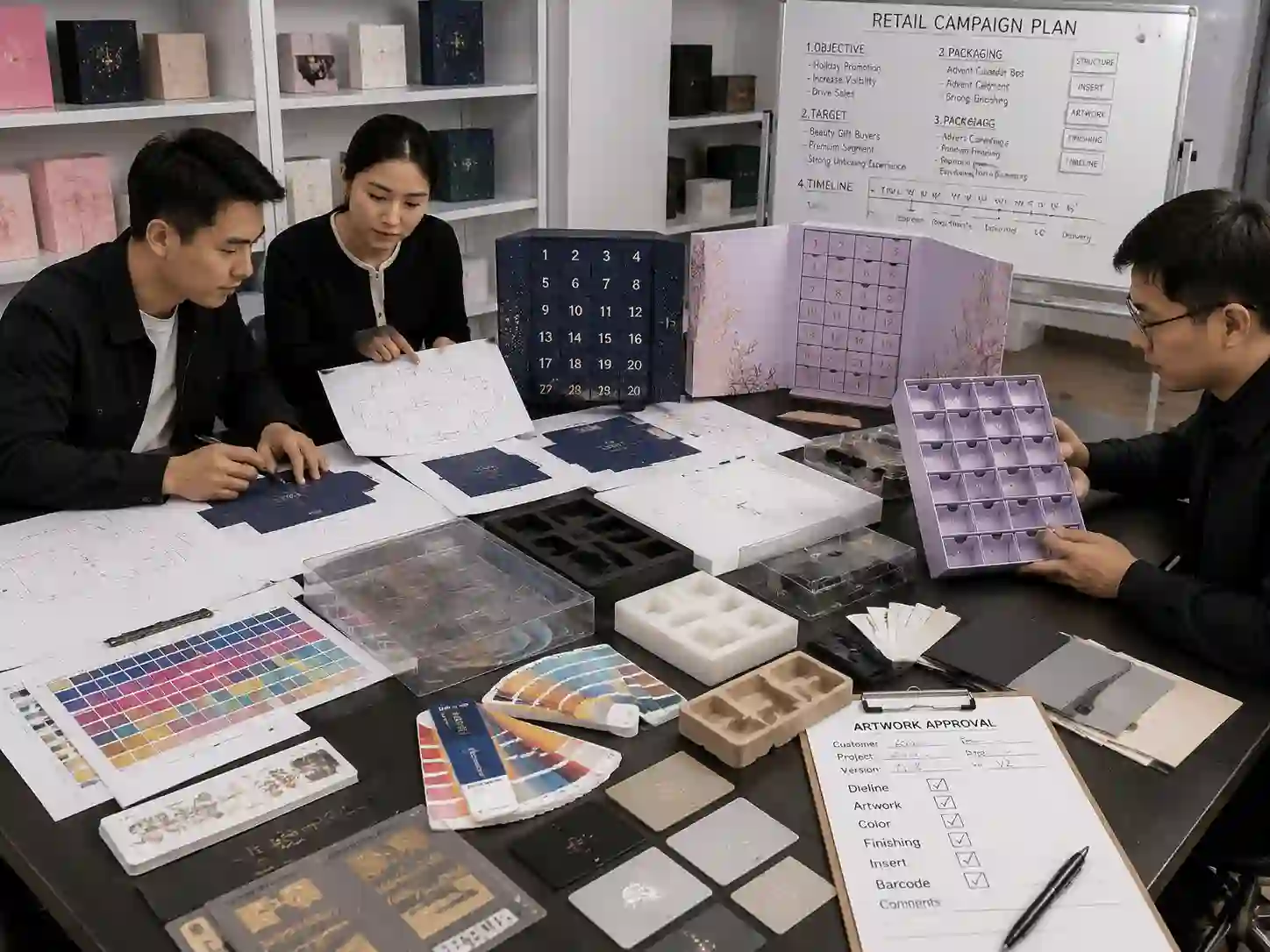
What sampling process should buyers expect before mass production?
A professional sampling process reduces production risk by confirming structure, appearance, and product compatibility before manufacturing thousands of units.
- Dieline review: confirm dimensions, folding direction, and assembly method.
- Material confirmation: check greyboard, paperboard, inserts, and finishing samples.
- Prototype production: create a physical sample for structure evaluation.
- Product-fit testing: test actual cosmetic items inside compartments.
- Pre-production sample approval: confirm printing, color, finishing, and assembly details.
Buyer tip: The approved sample should become the production reference. Changes after approval may affect cost, lead time, and final quality.
How do MOQ, cost, and lead time affect retail campaign planning?
MOQ, production quantity, and timeline directly influence packaging cost and supplier recommendations. Buyers should not compare quotations only by unit price because structure complexity, materials, inserts, finishing, and packing methods all affect total project cost.
| Cost Factor | How It Influences Pricing |
|---|---|
| Structure complexity | Drawer, door-opening, and fold-out designs require more engineering and assembly work. |
| Material selection | Greyboard thickness, paper grade, and insert material change cost and durability. |
| Printing and finishing | Special finishes increase setup requirements and production processes. |
| MOQ quantity | Larger orders usually improve production efficiency, while smaller orders may require higher unit costs. |
| Export packing | Cartons, protection materials, pallet requirements, and shipping methods affect final cost. |
Lead time normally includes design confirmation, sampling, material preparation, printing, assembly, inspection, and export packing. Buyers planning seasonal retail campaigns should build approval time into the schedule.
How should buyers compare cosmetic advent calendar box suppliers?
Supplier comparison should focus on manufacturing capability, communication quality, and quality control processes rather than price alone.
- Can the supplier provide accurate prototypes?
- Can they support custom inserts for mixed cosmetic SKUs?
- Do they review dielines before production?
- Can they provide printing proof and pre-production approval?
- Do they understand export packing requirements?
- Can they provide clear quotations with material and process details?
Buyers can review Giftpackpro’s custom advent calendar box services and learn more about factory capabilities through the Giftpackpro packaging factory information before starting a project.
What QC checks are important before shipment?
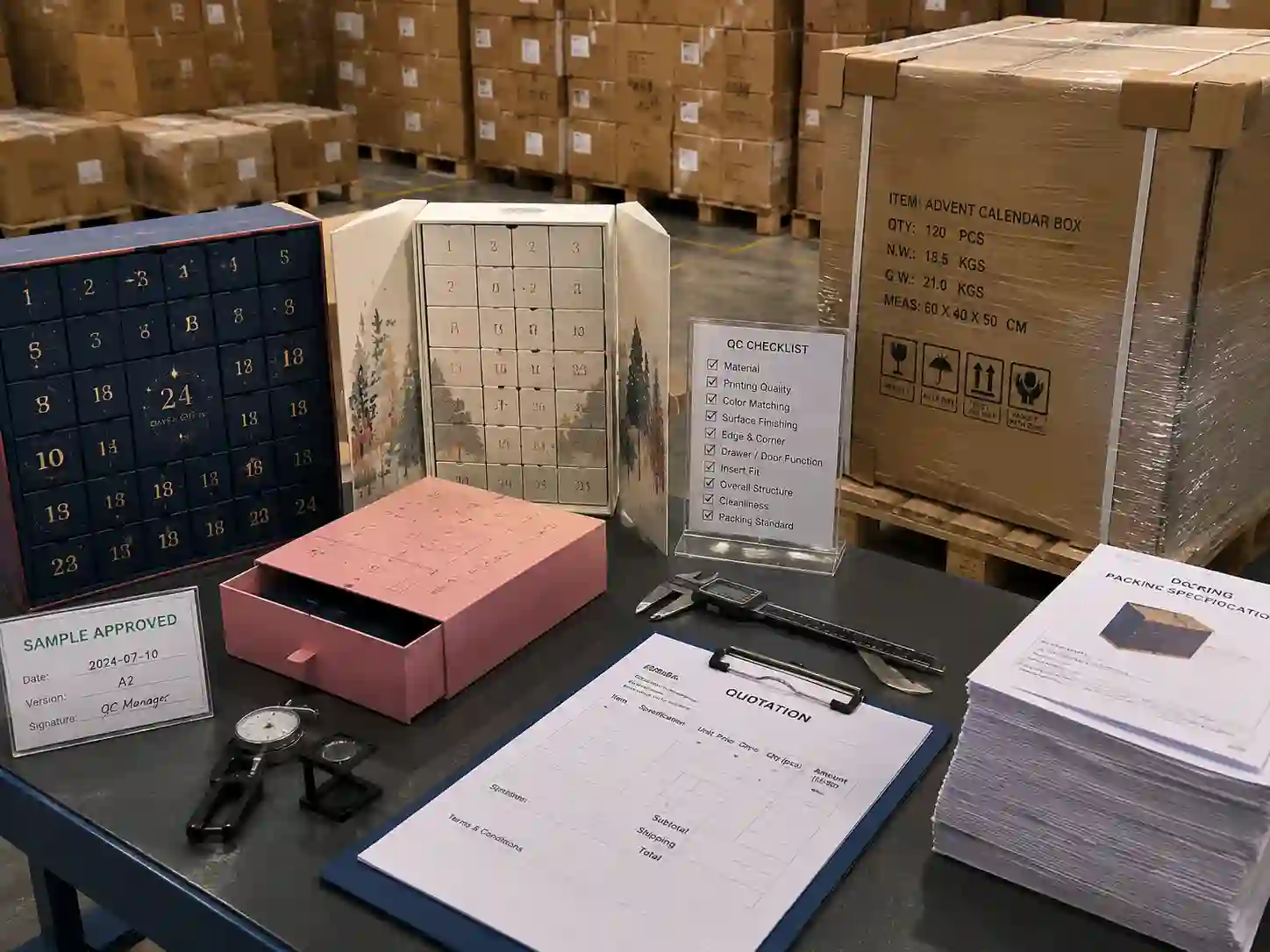
Cosmetic advent calendar packaging requires more than visual inspection. QC should confirm structure performance, print quality, insert accuracy, and export readiness.
- Box dimensions and assembly tolerance
- Drawer movement and door-opening function
- Insert position and product fit
- Printing color consistency
- Surface finishing quality
- Glue strength and structural stability
- Carton protection and pallet preparation
- Shipping marks and packing documentation
QC tip: Final inspection should check random samples from completed production batches, not only the first approved sample.
What information should buyers prepare for a quotation request?
A complete RFQ helps suppliers provide accurate pricing and realistic production schedules. Buyers requesting a quotation should prepare:
- Box size or product dimensions
- Quantity and expected MOQ range
- Preferred structure type
- Product photos or SKU list
- Insert requirements
- Artwork status and printing requirements
- Finishing preferences
- Delivery destination and export packing requirements
- Required sample date and production deadline
Before requesting pricing, buyers can review additional advent calendar box buying guides to understand structure comparisons, production planning, and supplier evaluation methods.
What common mistakes should buyers avoid?
The most common mistakes happen when packaging decisions are made without considering manufacturing and logistics together.
- Choosing a structure before testing actual cosmetic products
- Ignoring insert requirements until late production stages
- Approving artwork before checking the dieline
- Comparing suppliers only by unit price
- Skipping physical samples before bulk production
- Underestimating export packing requirements
FAQ: Cosmetic advent calendar boxes retail campaign planning
Are rigid boxes better for cosmetic advent calendar campaigns?
Rigid boxes are often preferred for premium cosmetic campaigns because they provide stronger structure and luxury presentation. However, paperboard and folding carton solutions may be better for larger-volume retail programs.
How early should buyers start sampling?
Buyers should begin sampling early enough to allow time for structure adjustments, insert testing, artwork approval, and production scheduling before the retail launch date.
Can cosmetic advent calendar boxes include different product sizes?
Yes. Custom inserts are designed specifically for mixed products such as tubes, mini bottles, palettes, jars, and accessories. Product dimensions should be confirmed before insert production.
What makes a supplier suitable for international cosmetic packaging projects?
A suitable supplier should demonstrate experience with sampling, material selection, QC inspection, export packing, and clear quotation preparation.
How to start your cosmetic advent calendar box project?
For a successful retail campaign, prepare your product dimensions, target quantity, structure preference, insert requirements, artwork details, and delivery schedule before contacting a packaging supplier.
Giftpackpro helps brands and purchasing teams develop custom solutions from prototype review to bulk production. If you are preparing a seasonal cosmetic launch, you can request a custom quote with your project details and receive guidance on structure, materials, sampling, and production planning.
Choosing the right structure early is the foundation of effective cosmetic advent calendar boxes retail campaign planning. A clear specification, tested sample, and controlled production process help buyers achieve reliable packaging quality for retail and e-commerce campaigns.


