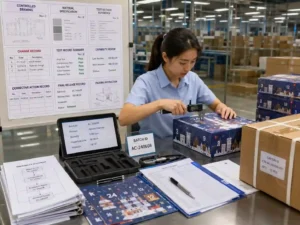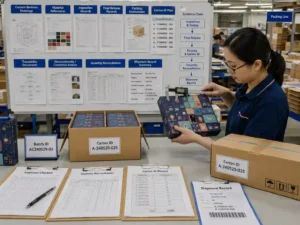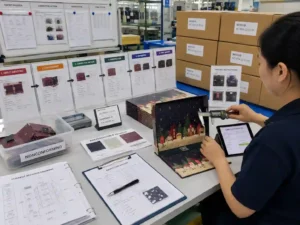
Quick answer: The cosmetic advent calendar boxes sampling process allows buyers to verify the box structure, insert fit, materials, printing, finishing, and assembly performance before mass production. A professional sample should confirm whether cosmetic products such as mini bottles, tubes, palettes, and mixed-size SKUs fit securely while meeting retail presentation requirements. Before requesting a sample, buyers should prepare product dimensions, artwork files, quantity expectations, target materials, and packaging requirements. Working through a structured sampling process helps reduce production risks, quotation changes, and quality issues before bulk manufacturing.
For overseas brands, wholesalers, retail buyers, and purchasing teams, sampling is not only a visual review step. It is a technical approval stage that connects design concepts with factory production capability. A reliable supplier should use the sample process to confirm dielines, inserts, printing specifications, assembly methods, and export requirements.
What is the cosmetic advent calendar boxes sampling process?
The cosmetic advent calendar boxes sampling process is the step-by-step procedure used to create and approve a physical prototype before bulk production. It normally includes design review, structural development, material selection, prototype production, sample inspection, revision, and final approval.
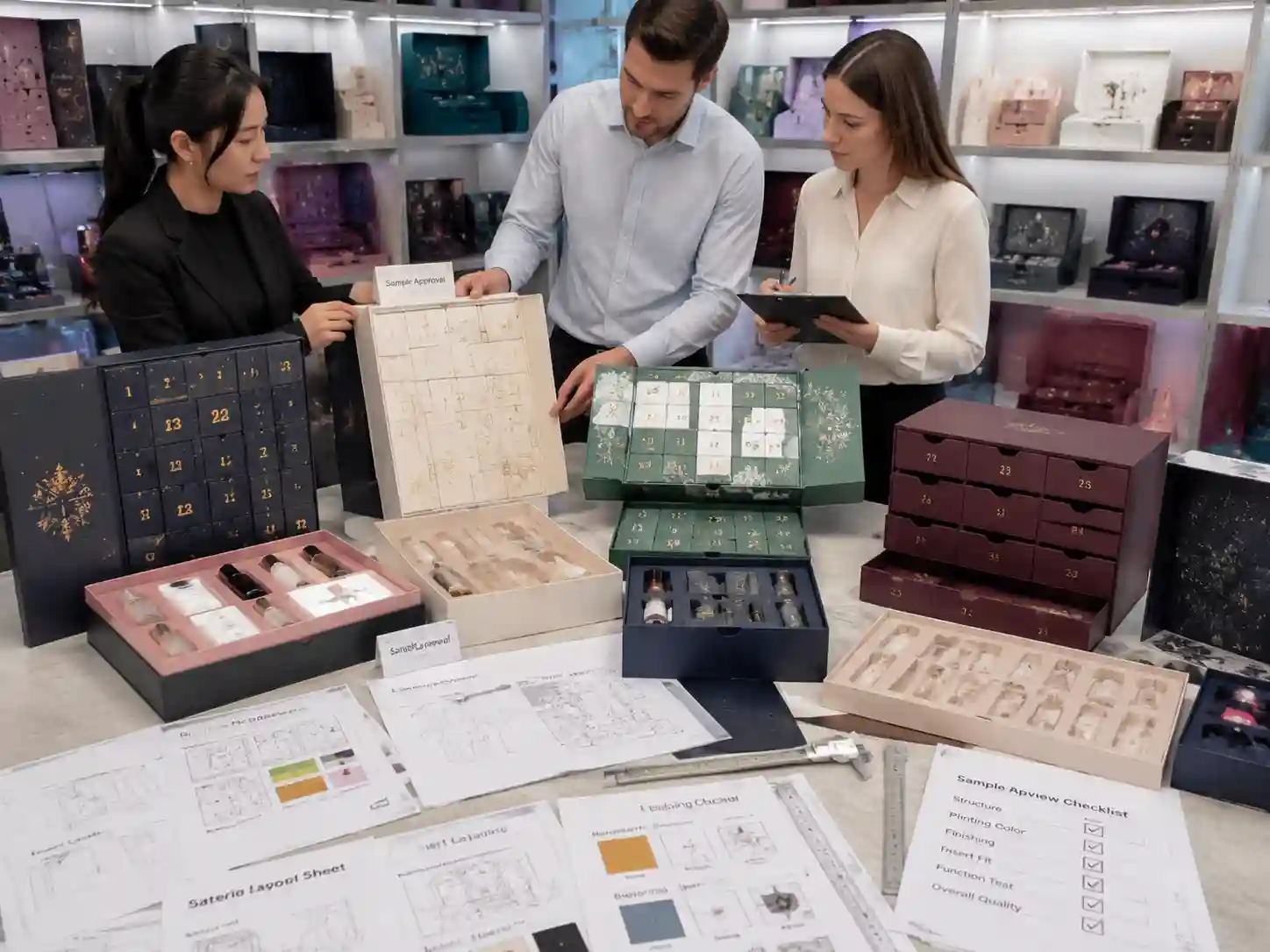
For custom advent calendar boxes, the sample is the first opportunity for buyers to check whether the packaging works with the actual cosmetic products. A digital drawing may look correct, but only a physical sample can confirm drawer movement, door-opening strength, compartment size, insert protection, and premium appearance.
Why should cosmetic brands approve a sample before mass production?
Buyers should approve a sample before mass production because cosmetic packaging often contains multiple product formats with different protection requirements. A single advent calendar may include small glass bottles, plastic tubes, makeup palettes, jars, and accessories that require different compartment solutions.
- Mixed SKU sizes must fit without excessive movement.
- Fragile products need suitable protection from impact and compression.
- Retail presentation must look consistent when customers open each compartment.
- Premium finishing must match the approved artwork direction.
- Production teams need a confirmed reference sample for QC inspection.
Buyer tip: Treat the approved sample as the production reference. Any changes after approval, including material replacement, insert adjustment, or artwork modification, should be reviewed before bulk production begins.
Which packaging options should buyers compare during sampling?
The best structure depends on product weight, retail positioning, budget, and campaign requirements. During sampling, buyers should compare different box structures instead of choosing only by appearance.
| Box Structure | Sampling Focus | Suitable Applications | Main Buyer Consideration |
|---|---|---|---|
| Rigid box | Board thickness, wrapping quality, corner accuracy, premium feel | Luxury cosmetic sets, influencer collections, premium retail gifts | Higher perceived value but usually higher material and labor cost |
| Drawer box | Drawer movement, pull strength, insert alignment | Mini bottles, skincare sets, makeup collections | Requires accurate tolerances for smooth operation |
| Door-opening box | Hinge strength, opening angle, magnetic or locking performance | Premium launches and presentation-focused campaigns | Structure must remain stable after repeated opening |
| Folding carton | Paperboard strength, folding accuracy, print quality | Cost-controlled seasonal programs and large quantities | Lower cost but requires careful material selection |
Many buyers review custom advent calendar box products before sampling to understand available structures, insert styles, and finishing options. Comparing options early helps purchasing teams prepare more accurate supplier discussions.
What information should buyers prepare before requesting a sample?
Buyers should provide complete packaging information before sampling because missing specifications often create delays, additional sampling costs, or incorrect prototypes.
Sample preparation checklist for buyers
- Product dimensions and weight for every cosmetic item.
- Number of compartments required and compartment arrangement.
- Preferred structure: rigid box, drawer box, door-opening box, or folding carton.
- Material preference, such as greyboard, paperboard, PET tray, EVA insert, foam, or molded pulp.
- Artwork files, dielines, CMYK requirements, or Pantone references.
- Finishing requirements including foil stamping, embossing, spot UV, matte lamination, or gloss lamination.
- Expected order quantity and target delivery schedule.
- Retail environment information, including e-commerce shipping needs or store display requirements.
Factory tip: Providing product samples or accurate product drawings can significantly improve insert development because cosmetic packaging depends heavily on exact product dimensions.
How does the sample development process work in a packaging factory?
A professional supplier normally follows several technical steps before sending a sample for approval. Each step reduces uncertainty before mass production.
- Requirement review: The factory reviews product dimensions, artwork, structure, quantity, and application requirements.
- Dieline development: Engineers create or adjust the dieline to match the selected structure and compartment layout.
- Material selection: The factory confirms paperboard, greyboard thickness, wrapping paper, and insert materials.
- Prototype production: A physical sample is produced using the proposed manufacturing method.
- Sample inspection: Buyers and factory teams check appearance, function, protection, and specification accuracy.
- Revision and approval: Required changes are completed before the pre-production sample is confirmed.
The sampling stage is also where suppliers identify manufacturing risks. For example, a large cosmetic palette may require additional support, while narrow tubes may need tighter insert tolerances to prevent movement.
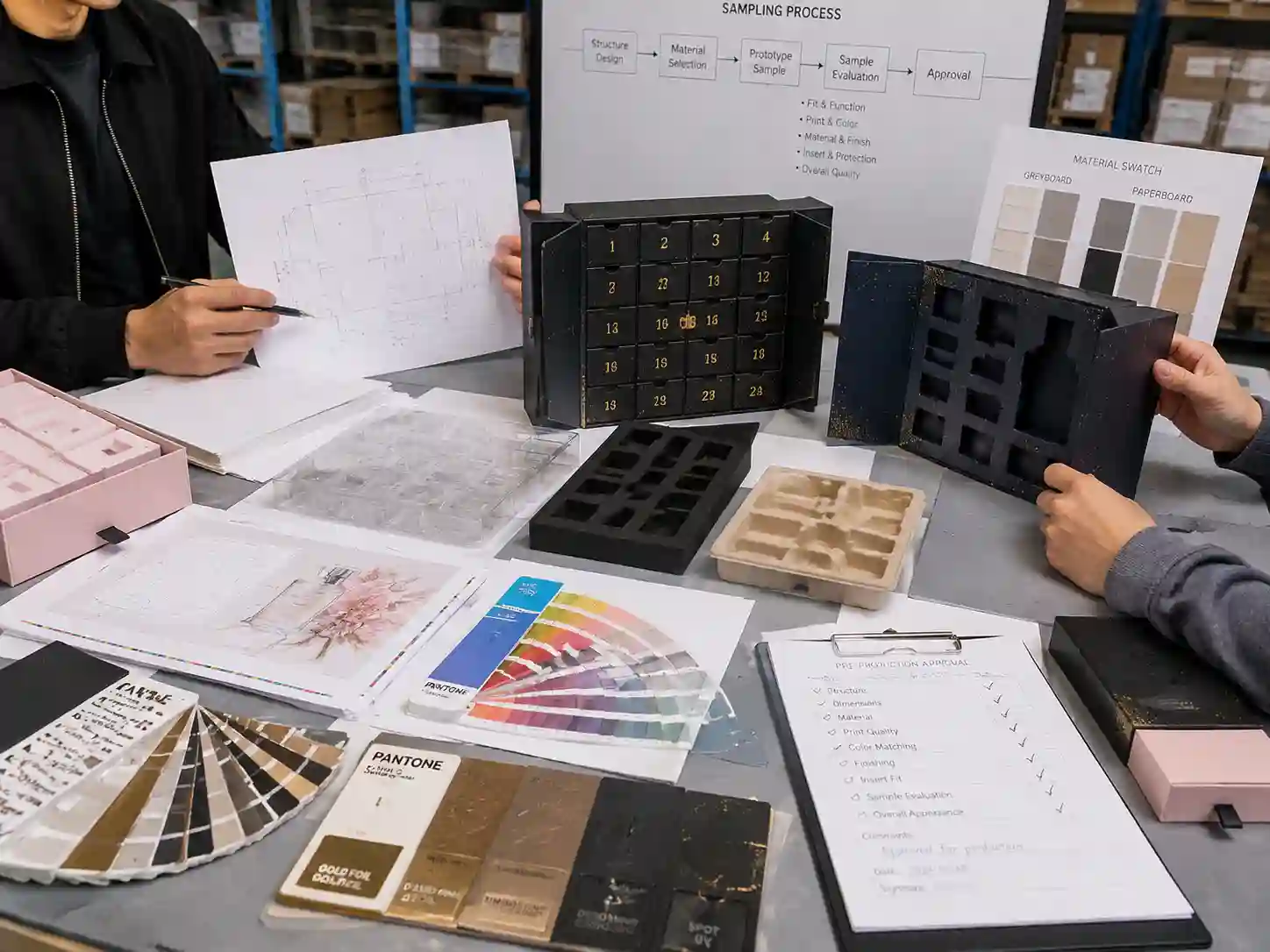
Which materials and customization details should be checked during sampling?
Material and finishing decisions directly affect appearance, durability, and production cost. Buyers should review these details during sampling rather than waiting until bulk production.
| Item | What Buyers Should Check |
|---|---|
| Greyboard and paperboard | Thickness, stiffness, surface quality, and suitability for the box structure |
| Insert system | Fit accuracy, protection level, appearance, and compatibility with product sizes |
| Printing | Color consistency, CMYK output, Pantone matching requirements, and proof approval |
| Finishing | Foil stamping, embossing, spot UV, lamination effect, and surface durability |
| Assembly | Drawer movement, lid alignment, folding accuracy, and opening performance |
For beauty packaging, color consistency is especially important because cosmetic brands often rely on precise visual identity. A difference between approved artwork and bulk printing can affect retail presentation, online photography, and customer expectations.
How do sampling decisions affect MOQ, cost, and lead time?
Sampling decisions influence the final quotation because structure complexity, materials, inserts, finishing, and production methods all affect manufacturing cost.
- More complicated structures usually require more engineering time and assembly labor.
- Custom inserts may require additional tooling or prototype adjustments.
- Premium finishes can increase production steps and inspection requirements.
- Large quantity orders may reduce average unit cost but require earlier planning.
MOQ is not only a supplier requirement. It is connected to production efficiency, material purchasing, printing setup, and factory scheduling. Buyers comparing quotations should check whether the supplier includes sampling fees, tooling costs, packaging costs, and shipping requirements.
For detailed supplier communication and planning, buyers can review more advent calendar box buying guides covering MOQ, quotation preparation, production, and export considerations.
How should buyers check a cosmetic advent calendar box sample?
Buyers should inspect samples using both visual and functional checks. A beautiful sample that cannot protect products during shipping may create problems during retail launch.
Sample approval checklist
- Confirm all cosmetic products fit correctly inside compartments.
- Check whether inserts prevent movement during handling.
- Inspect printing color against approved CMYK or Pantone references.
- Check foil, embossing, UV coating, and lamination quality.
- Test drawer opening, door movement, and closing strength.
- Review corners, edges, glue points, and assembly accuracy.
- Confirm packaging dimensions for export cartons and warehouse handling.
QC tip: Buyers should photograph approved samples from multiple angles and keep measurement records. These references help factories maintain consistency during mass production inspections.
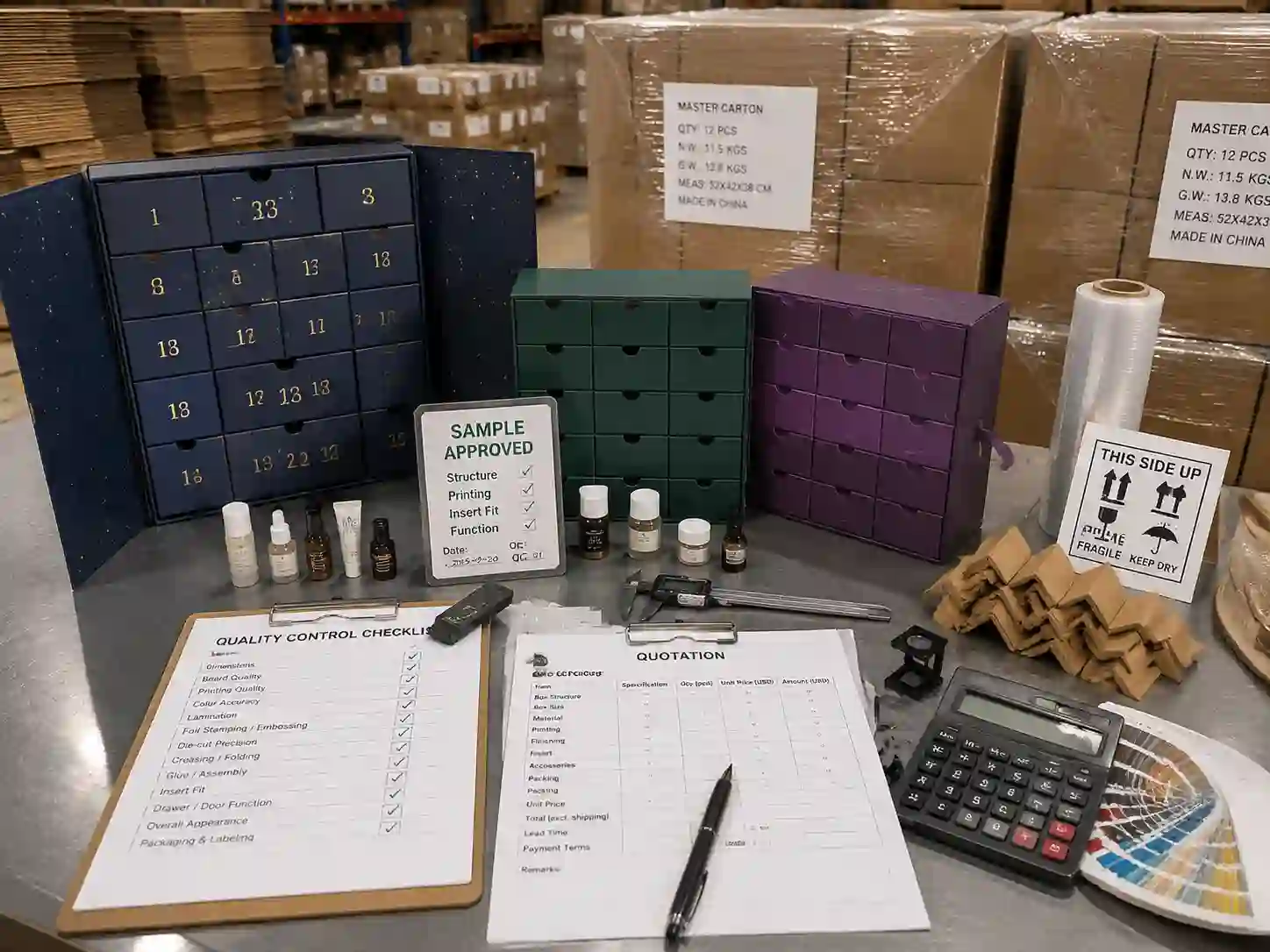
How do buyers compare suppliers for sampling reliability?
The best supplier is not always the one offering the lowest sample price. Buyers should evaluate technical communication, sample accuracy, production knowledge, and quality control capability.
| Supplier Evaluation Area | Questions Buyers Should Ask |
|---|---|
| Technical capability | Can the supplier recommend suitable structures and inserts? |
| Sampling process | Does the supplier provide clear approval steps and revision handling? |
| Production control | How are printing, assembly, and material checks managed? |
| Export experience | Can the supplier prepare export cartons, pallet packing, and shipping marks? |
| Communication | Can the supplier explain cost drivers and production risks clearly? |
Buyers looking for a long-term packaging partner should review supplier background, factory capability, and service process. You can learn more about Giftpackpro packaging factory and available custom advent calendar box services before preparing a project discussion.
What should buyers include in an RFQ after sample approval?
A complete quotation request helps suppliers provide more accurate pricing and timelines. Buyers should include the approved sample requirements together with commercial details.
- Final box structure and dimensions.
- Approved material specifications.
- Insert design and product arrangement.
- Artwork and finishing requirements.
- Required quantity or expected MOQ range.
- Target delivery date and shipping destination.
- Export packing requirements, including cartons, pallets, and shipping marks.
Before requesting pricing, buyers can prepare project details and use request a custom quote to discuss sampling, production, and packaging requirements.
FAQ: Cosmetic advent calendar boxes sampling process
How long does a cosmetic advent calendar box sample usually take?
Sampling time depends on structure complexity, material availability, printing requirements, and revision rounds. Simple prototypes may require less development time, while premium rigid structures with customized inserts usually require more testing.
Should buyers create samples before final artwork approval?
Initial structural samples can be developed before final artwork to confirm size and function. Final printed samples are recommended when color, finishing, and retail presentation are critical.
Can one sample confirm the entire mass production quality?
A sample establishes the approved reference standard, but bulk production still requires ongoing QC checks for materials, printing, assembly, and packing consistency.
What is the biggest sampling mistake buyers make?
The most common mistake is approving appearance without testing product fit, assembly function, and shipping protection. Cosmetic packaging must work as both a presentation box and a protective solution.
Prepare your cosmetic advent calendar box sample project
The cosmetic advent calendar boxes sampling process is the foundation for successful bulk production. Buyers who prepare accurate product information, compare structures, test inserts, approve materials, and confirm QC standards can reduce production risks and improve supplier communication.
Before contacting Giftpackpro, prepare your product dimensions, artwork status, preferred structure, insert requirements, quantity, and delivery expectations. A clear RFQ helps the factory recommend the right packaging solution and provide a more accurate quotation.
Explore our custom advent calendar boxes manufacturer solutions or start your project discussion through request a custom quote for sampling and production planning.