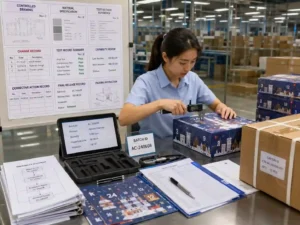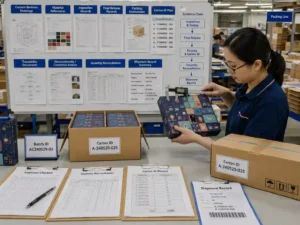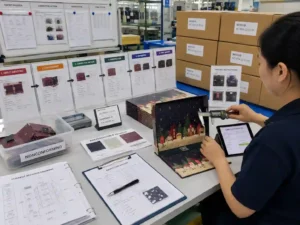
Quick answer: The correct advent calendar box compartment space depends on the product size, insert design, opening experience, protection requirements, and production method. For B2B buyers, each compartment should usually be designed from the actual product dimensions plus tolerance for easy loading, removal, and shipping protection. A factory should confirm compartment measurements through a dieline, blank sample, printed sample, and product-fit test before mass production. Incorrect space planning can increase insert costs, cause assembly issues, damage products, or create unnecessary packaging volume.
When developing custom advent calendar boxes manufacturer solutions, buyers should prepare product dimensions, quantity per box, insert requirements, and expected retail positioning before requesting a quotation.

How much advent calendar box compartment space does each product need?
The required compartment space should be based on the product size, shape, weight, protection level, and how customers will remove the item. A compartment is not simply a hole cut into an insert; it is an engineered space that must balance product fit, visual presentation, assembly efficiency, and shipping safety.
For custom advent calendar boxes, factories normally calculate compartment size using:
- Product dimensions: length, width, height, diameter, and irregular shapes.
- Loading tolerance: extra space needed for workers or automated assembly lines to place products efficiently.
- Protection requirement: additional support for fragile items such as glass bottles, candles, or delicate gifts.
- Insert material: paper insert, PET tray, EVA insert, foam, or molded pulp each requires different tolerances.
- Retail presentation: the product should appear centered and premium when the compartment opens.
Factory tip: Buyers should avoid designing compartments only from product measurements. A 30 mm product does not always need a 30 mm compartment. The final size depends on product movement, insert thickness, and packing method.
Which compartment sizes work for different advent calendar box applications?
Different product categories require different compartment approaches. Cosmetic products may need precise fitting, while tea, chocolate, and gift samples may require easier loading and more flexible spacing.
| Product Application | Common Compartment Considerations | Recommended Insert Options |
|---|---|---|
| Cosmetics and skincare | Precise fit, bottle protection, premium presentation | EVA insert, PET tray, molded pulp |
| Chocolate and confectionery | Food-contact considerations, easy removal, stable positioning | Paper insert, PET tray, food-contact verified materials |
| Candles and home fragrance | Higher weight support and stronger compartments | Rigid divider, molded pulp, EVA support |
| Jewelry and accessories | Small compartments with luxury appearance | Foam insert, velvet-style support, paper structure |
| Tea, coffee, and beverage samples | Multiple sizes and efficient loading | Paperboard divider, custom tray |
For example, a rigid box with 24 small cosmetic compartments may require tighter tolerance than a folding carton containing lightweight tea sachets. The compartment design directly affects the box structure, insert cost, assembly time, and final quotation.
Should buyers choose rigid boxes, drawer boxes, door-opening boxes, or folding cartons for compartment layouts?
The box structure affects how much usable compartment space is available. Buyers should compare the internal layout before selecting the final packaging style.
| Box Structure | Compartment Space Advantage | Main Buyer Consideration |
|---|---|---|
| Rigid box | Strong support and premium compartment presentation | Higher material cost but suitable for luxury products |
| Drawer box | Large internal tray area and smooth opening experience | Requires accurate drawer and insert tolerance |
| Door-opening box | Good visibility for multiple compartments | Hinge strength and panel alignment must be checked |
| Folding carton | Flexible layout with lower production cost | Requires careful paperboard strength planning |
A supplier should evaluate the relationship between box structure and compartment depth before creating a quotation. A deeper compartment may require thicker greyboard, stronger inserts, or different assembly methods.
What insert materials affect advent calendar box compartment space?
The insert material determines both the available space and the protection level. Buyers should select inserts based on product requirements rather than choosing the lowest-cost option.

Paper inserts
Paper inserts are lightweight and cost-effective for simple products. They work well for tea bags, cards, small gifts, and products with low protection requirements. However, paper dividers may need reinforcement for heavier items.
PET trays
PET trays provide accurate product positioning and are commonly used when every compartment requires consistent dimensions. They are suitable for products needing clean presentation and fast assembly.
EVA inserts and foam inserts
EVA and foam inserts provide cushioning and premium presentation. They are useful for cosmetics, jewelry, electronics accessories, and fragile products, but they usually increase material and cutting costs.
Molded pulp inserts
Molded pulp can provide strong product support with a more sustainable positioning. Buyers should confirm the available cavity size and surface requirements during sampling.
Buyer tip: Request insert samples together with the box prototype. A compartment that looks correct on a drawing may require adjustment after real products are placed inside.
How should buyers check compartment space during sampling?
Sampling is the most important stage for confirming compartment dimensions. Professional suppliers normally check blank samples, printed samples, and pre-production samples before bulk manufacturing.
- Blank sample check: Confirm the basic structure, folding method, drawer movement, door opening, and internal dimensions.
- Insert fitting test: Place actual products inside every compartment to check loading and removal.
- Printed sample review: Confirm artwork alignment, printing position, finishing effects, and overall appearance.
- Pre-production sample approval: Approve the final version before mass production begins.
The supplier should also verify dieline accuracy, insert positioning, assembly tolerance, and product movement. Small dimensional changes can influence the final customer experience.
What information should buyers prepare before requesting an advent calendar box quotation?
A complete RFQ helps factories calculate accurate costs and recommend suitable compartment solutions. Buyers should prepare:
- Product name and application.
- Product dimensions and weight for each item.
- Number of compartments required.
- Preferred box structure: rigid box, drawer box, door-opening box, or folding carton.
- Insert requirement: paper insert, PET tray, EVA insert, foam, or molded pulp.
- Artwork requirements including CMYK, Pantone, foil stamping, embossing, spot UV, matte lamination, or gloss lamination.
- Target quantity and expected MOQ.
- Required sample date and bulk production timeline.
- Shipping destination and export packing requirements.
Providing these details allows suppliers to prepare a realistic quotation covering materials, tooling, sampling, labor, QC, export carton requirements, and lead time.
What are common mistakes when planning advent calendar box compartment space?
Many packaging problems happen because compartment planning starts before product testing. Buyers can reduce risk by avoiding these common mistakes:
| Mistake | Why It Causes Problems | Better Approach |
|---|---|---|
| Using only product measurements | No allowance for inserts or loading tolerance | Test real products in prototype samples |
| Choosing inserts too late | Insert thickness changes internal space | Select insert materials during structure development |
| Ignoring shipping conditions | Products may move or become damaged | Perform packing and transportation checks |
| Approving artwork before structure | Printing may not match final dimensions | Confirm dieline before artwork approval |
How do QC and export packing affect compartment performance?
Compartment accuracy must continue through mass production. A professional QC process checks more than printing quality; it verifies that every box performs as approved.
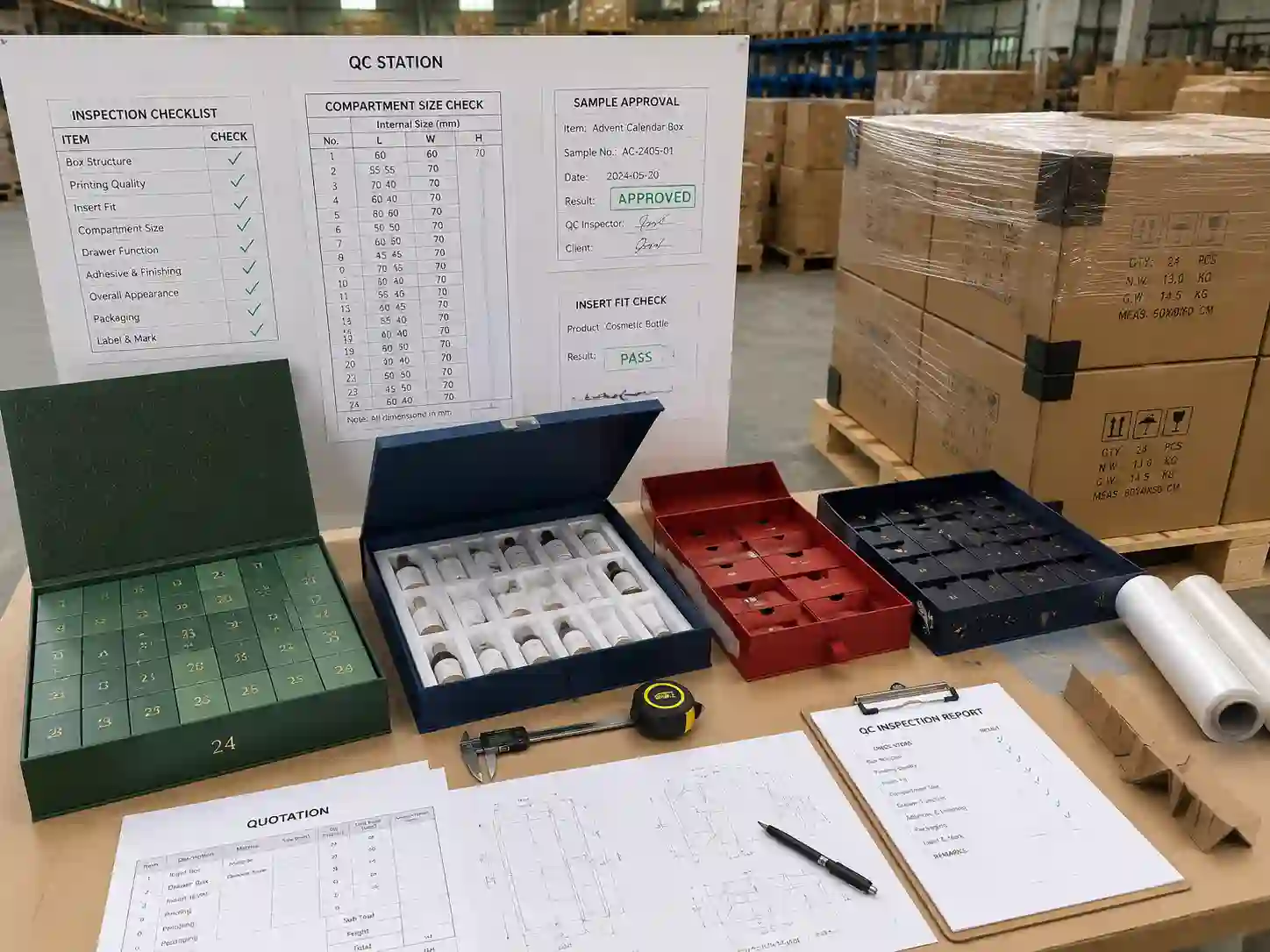
- Compartment dimensions match the approved sample.
- Insert placement is consistent across production batches.
- Products fit correctly without excessive movement.
- Box opening functions correctly.
- Finished boxes are protected inside export cartons.
- Shipping marks and pallet packing are prepared correctly.
QC tip: Buyers should request inspection photos or approval records before shipment, especially for large seasonal orders where replacement production may affect launch schedules.
For international shipments, buyers should also confirm export carton strength, pallet protection, corner protectors, and wrapping methods. Proper export packing helps maintain the approved compartment structure during transportation.
How does compartment space influence cost and lead time?
The compartment layout affects several quotation factors, including insert tooling, material usage, assembly labor, and packing efficiency. More compartments do not always mean higher cost, but complex layouts usually require more engineering and sampling work.
Common cost drivers include:
- Number of compartments.
- Insert material and production method.
- Product fitting requirements.
- Box structure complexity.
- Sampling revisions.
- Assembly difficulty.
A supplier experienced in custom advent calendar box services can help buyers balance product protection, appearance, and production cost before final approval.
How can buyers choose the right advent calendar box supplier?
The right supplier should provide more than a finished box. Buyers should evaluate whether the factory can support structure development, sampling, insert testing, production control, and export preparation.
Before selecting a supplier, check:
- Experience with custom advent calendar box products.
- Ability to create accurate dielines and prototypes.
- Support for material and insert recommendations.
- Clear sample approval process.
- Reliable QC procedures.
- Transparent quotation details.
- Communication ability during production.
Buyers can review custom advent calendar box products and learn more about Giftpackpro packaging factory capabilities before preparing a project brief.
FAQ: Advent calendar box compartment space questions from buyers
Can a factory change compartment size after sampling?
Yes. Sampling exists to identify problems before mass production. Suppliers can adjust dielines, inserts, depth, or spacing after product-fit testing.
Is a larger compartment always better?
No. Excess space can reduce presentation quality, increase material usage, and allow products to move during shipping. The correct size provides enough tolerance without unnecessary volume.
Should buyers send actual products for sample testing?
Yes. Sending real products is recommended when dimensions, weight, fragility, or appearance requirements are important.
How early should buyers discuss compartment design?
Compartment planning should begin before artwork approval and bulk production. Early discussion helps control sample revisions, MOQ planning, and production lead time.
Prepare your compartment requirements before requesting a quotation
Before contacting Giftpackpro, buyers should prepare product dimensions, compartment quantity, insert preference, box structure, artwork files, target quantity, delivery schedule, and shipping requirements. These details help create a more accurate sample and quotation process.
For professional support with compartment planning, sampling, and production preparation, buyers can request a custom quote or explore more advent calendar box buying guides for sourcing guidance.
The right advent calendar box compartment space is created through product testing, engineering review, and supplier communication. A well-planned compartment design improves product protection, retail presentation, production efficiency, and export reliability.