
Quick answer: Insert design can significantly affect advent calendar box cost because inserts influence material usage, production processes, assembly labor, tooling, sampling time, packing efficiency, and quality control requirements. A simple paper insert may add limited cost, while a customized PET tray, EVA insert, foam structure, or molded pulp solution can increase development and manufacturing costs. For B2B buyers, the best cost decision is not choosing the cheapest insert, but selecting the right insert structure that protects products, supports efficient production, and matches the target retail application.
For brands preparing an RFQ, understanding how insert design affects box cost helps avoid unexpected quotation changes after sampling. The insert is not only an internal accessory; it is part of the packaging engineering system that connects product fit, box structure, assembly process, shipping performance, and customer presentation.
How much does insert design affect advent calendar box cost?
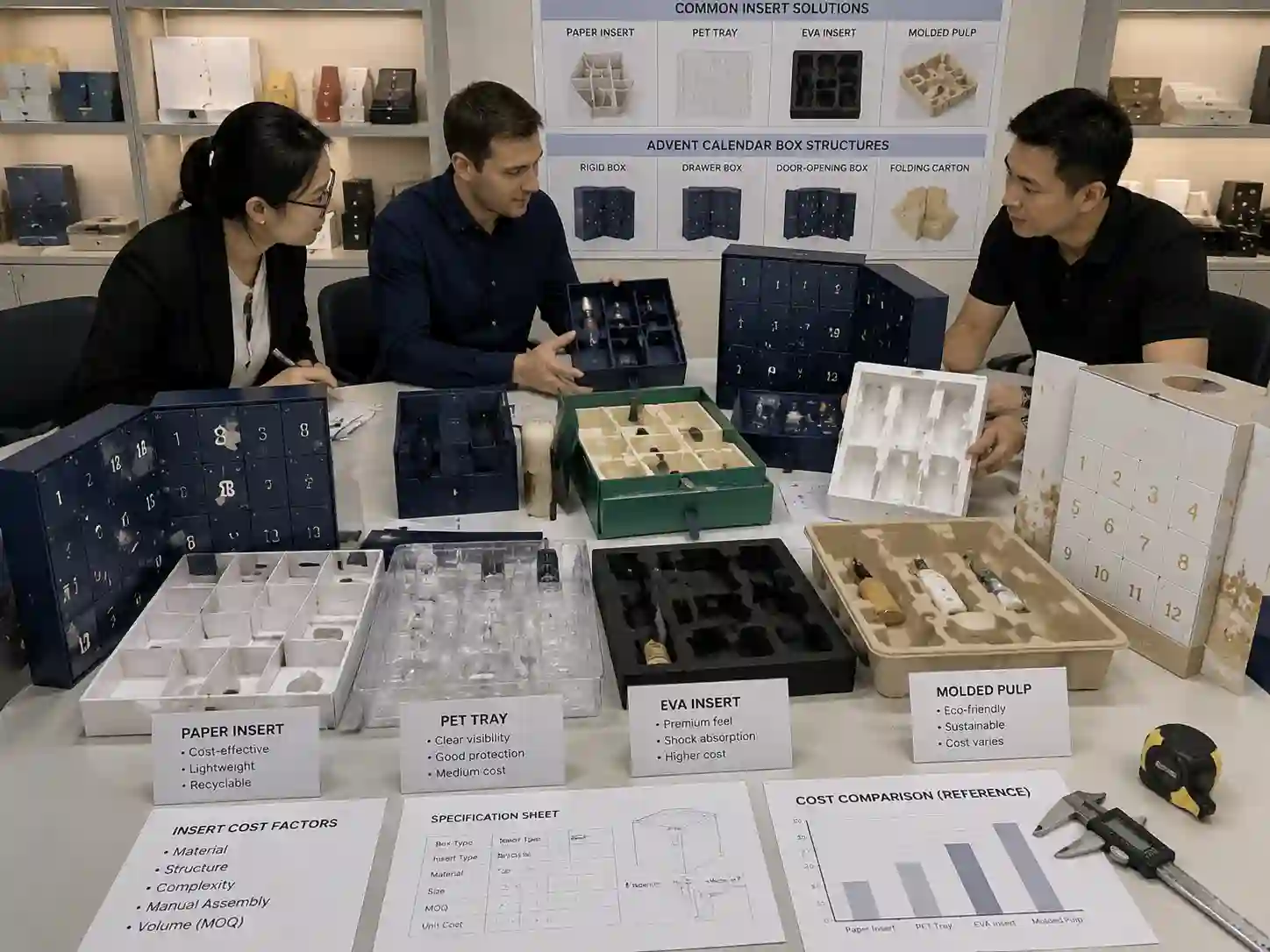
Insert design affects advent calendar box cost through five main areas: material selection, manufacturing complexity, assembly labor, sampling requirements, and export packing efficiency. Buyers should evaluate the complete packaging system instead of comparing only the outer box price.
| Insert option | Typical application | Main cost drivers | Cost impact consideration |
|---|---|---|---|
| Paper insert | Lightweight gifts, tea, chocolates, small accessories | Paperboard thickness, die-cutting, folding, assembly | Usually the most economical option for high-volume production |
| PET tray | Cosmetics, bottles, irregular products | Mold development, material thickness, forming process | Higher setup cost but accurate product positioning |
| EVA insert | Premium gifts, jewelry, fragile items | Foam cutting, color choice, fitting accuracy | Higher labor and material cost |
| Foam insert | Protection-focused packaging | Cutting process, density, finishing requirements | Useful for delicate products but increases cost |
| Molded pulp insert | Eco-focused packaging solutions | Mold tooling, pulp forming, drying process | Suitable for larger projects requiring sustainability goals |
Buyer tip: A lower-cost insert may not always reduce total packaging cost. If poor product positioning causes damage, slower packing, or higher QC rejection rates, the overall project cost can increase.
Which advent calendar box structures are most affected by insert design?
Rigid boxes, drawer boxes, and door-opening boxes are usually more sensitive to insert design because their premium appearance depends on precise internal layouts. Folding cartons may have lower structural cost, but complex compartment designs can still increase production time.
How do different box structures influence insert costs?
- Rigid box: Often paired with premium inserts because brands use these structures for cosmetics, luxury gifts, jewelry, and seasonal collections. The rigid construction provides a strong presentation base but requires accurate insert sizing.
- Drawer box: Drawer movement requires careful clearance between the inner tray, outer sleeve, and insert. Poor tolerances can create friction or loose product positioning.
- Door-opening box: Multi-door structures often require multiple compartments and stronger internal support to maintain appearance during opening.
- Folding carton: Usually easier to manufacture, but complex paper inserts or multi-level compartments can still increase die-cutting and assembly labor.
For buyers reviewing custom advent calendar box products, the insert should be evaluated together with the box structure, product size, opening experience, and packing method.
Why does insert complexity increase manufacturing cost?
Insert complexity increases cost because every additional component requires engineering review, tooling preparation, production handling, and inspection. A simple flat paper divider and a molded insert may look similar from the outside, but their manufacturing processes are very different.
What factory processes are affected by insert design?
- Dieline development: Engineers need product dimensions, tolerances, and compartment layouts before creating accurate dielines.
- Material testing: Paperboard, PET, EVA, foam, and molded pulp require different thickness calculations and fitting tests.
- Prototype sampling: Complex inserts usually require multiple sample adjustments before approval.
- Assembly planning: More insert parts can increase manual labor and packing time.
- Quality inspection: QC teams must check product fit, movement, appearance, and protection performance.
Factory tip: When preparing a quotation, suppliers need more than the outer box size. Product dimensions, weight, quantity per compartment, insert material preference, and packing requirements directly influence the final cost.
How can buyers reduce insert-related packaging costs?
Buyers can reduce insert costs by optimizing the design before sampling, selecting suitable materials, and avoiding unnecessary internal complexity. Cost control should happen during packaging development, not after mass production begins.
Cost-control decisions for custom advent calendar boxes
- Use standard paper insert structures when product protection requirements allow.
- Combine similar product sizes into shared compartment designs.
- Avoid excessive layers or decorative internal parts that do not improve function.
- Confirm product dimensions before creating the insert dieline.
- Balance premium appearance with efficient assembly processes.
- Request early prototype testing before approving bulk production.
Many buyers working with a custom advent calendar boxes manufacturer reduce costs by finalizing product fit and insert structure before artwork and finishing decisions are completed.
How do insert materials compare for B2B buyers?
The best insert material depends on product protection, brand positioning, production volume, and shipping requirements. There is no universal lowest-cost insert because the right solution depends on the application.
| Buyer requirement | Recommended insert approach | Reason |
|---|---|---|
| Lowest production cost | Paper insert | Simple processing and efficient bulk production |
| Premium cosmetic presentation | EVA or PET tray | Better positioning and luxury appearance |
| Fragile products | Foam, EVA, or molded pulp | Improved protection during handling and shipping |
| Large retail quantity | Optimized paperboard insert | Better labor and packing efficiency |
| Sustainability-focused projects | Molded pulp or recyclable paper solutions | Supports environmental packaging goals |
Buyers can also review sustainability guidance from official sources such as FSC responsible forest management information when evaluating paper-based packaging materials.
What should buyers prepare before requesting an advent calendar box quotation?
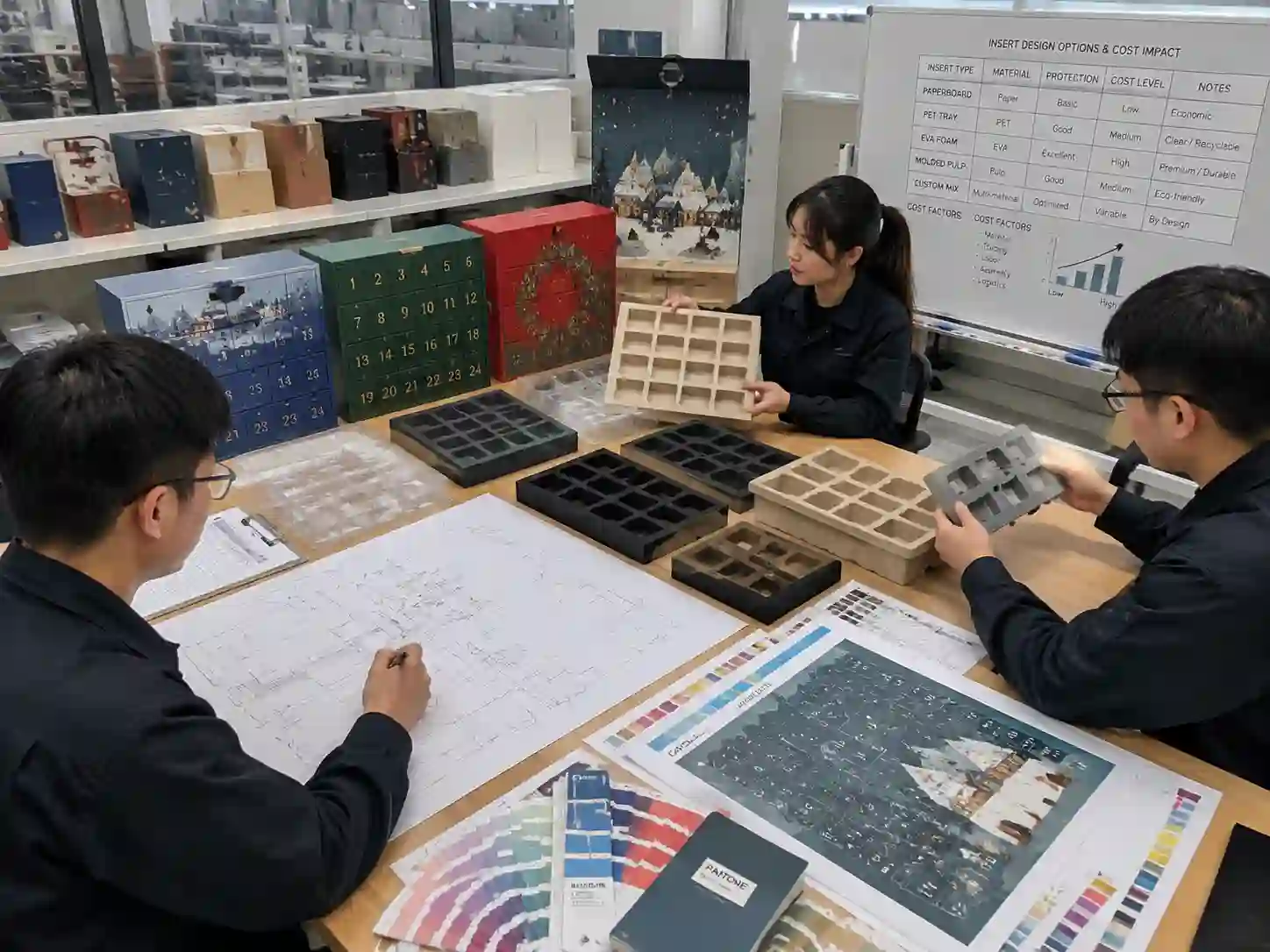
A complete RFQ allows suppliers to calculate insert design costs more accurately. Missing product information often creates quotation revisions after sampling.
Insert and packaging RFQ checklist
- Product category and application (cosmetics, chocolate, tea, candles, jewelry, toys, gifts, or other products)
- Product dimensions, weight, quantity, and compartment requirements
- Preferred box structure: rigid box, drawer box, door-opening box, or folding carton
- Insert preference: paper insert, PET tray, EVA, foam, molded pulp, or supplier recommendation
- Artwork files, printing requirements, and finishing options
- Required quantity and target MOQ
- Sample requirements and approval timeline
- Export packing requirements, carton quantity, pallet requirements, and shipping destination
Working with experienced suppliers through custom advent calendar box services helps buyers evaluate structure, inserts, sampling, and production planning before committing to bulk orders.
How do sampling and QC affect insert-related costs?
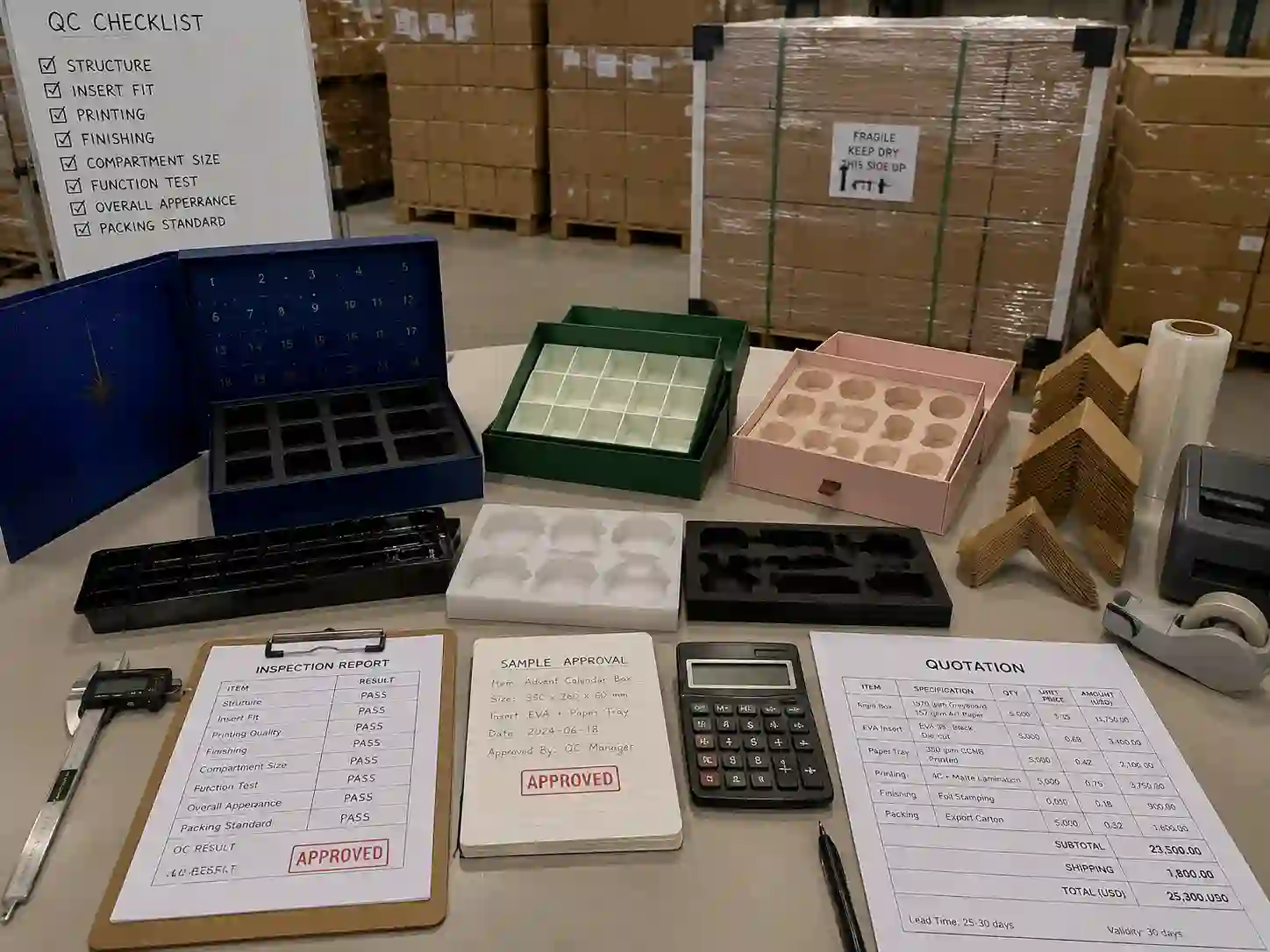
Sampling is one of the most important cost-control stages because insert problems are cheaper to solve before mass production. A pre-production sample allows buyers and factories to verify product fit, insert strength, appearance, and assembly performance.
Insert sample approval checklist
- Product fits correctly without excessive movement.
- Compartments match approved product quantities.
- Insert material does not damage product surfaces.
- Box opening and closing functions correctly.
- Insert remains stable during handling tests.
- Printing, finishing, and artwork details match approved specifications.
QC tip: Insert inspection should be included in the same quality control process as box inspection. A visually attractive advent calendar box can still fail if internal compartments are loose, damaged, or incorrectly assembled.
How does insert design influence export packing and shipping cost?
Insert design can affect export packing because it changes box strength, carton loading efficiency, product protection, and shipping volume. A well-designed insert can reduce movement inside the package and lower the risk of damage during transportation.
During export preparation, suppliers should review:
- Master carton size and loading quantity.
- Protection methods such as corner protectors and pallet wrap.
- Shipping marks and carton identification.
- Stacking performance during warehouse handling.
- Final inspection before shipment.
International buyers can also reference logistics testing approaches from organizations such as ISTA packaging testing resources when defining shipping performance expectations.
How should buyers compare suppliers for insert design and quotations?
Buyers should compare suppliers based on engineering capability, sample quality, communication, QC process, and quotation transparency rather than only the lowest unit price.
Supplier comparison decision guide
| Supplier evaluation point | Questions buyers should ask |
|---|---|
| Insert engineering | Can the supplier recommend suitable insert materials and test product fit? |
| Sampling process | Does the supplier provide prototype and pre-production sample approval? |
| Quotation detail | Are material, insert, printing, finishing, labor, and packing costs clearly separated? |
| Production control | Does the supplier perform QC checks during production and before shipment? |
| Export experience | Can the supplier support export cartons, pallet loading, and shipping preparation? |
Giftpackpro helps overseas buyers prepare custom seasonal packaging projects by reviewing structure, insert requirements, artwork, sampling, and production details through a factory-side approach. Buyers can learn more through Giftpackpro packaging factory and explore additional advent calendar box buying guides for sourcing decisions.
FAQ: Insert design and advent calendar box cost
Does a more complicated insert always mean a higher-quality advent calendar box?
No. A complicated insert is only valuable when it improves product protection, presentation, or packing efficiency. The correct design depends on the product and sales channel.
Which insert is cheapest for bulk advent calendar box production?
Paper inserts are usually the most economical option, but the final cost depends on size, quantity, assembly method, and product requirements.
Should buyers finalize inserts before requesting a quotation?
Yes. Providing product dimensions and insert requirements helps suppliers prepare more accurate quotations and avoid cost changes after sampling.
Can insert design affect lead time?
Yes. Complex inserts may require additional engineering, tooling, sampling rounds, and approval time before mass production begins.
What should buyers prepare before asking Giftpackpro for a sample or quotation?
Before contacting Giftpackpro, buyers should prepare product dimensions, target quantity, preferred box structure, insert requirements, artwork status, finishing preferences, and shipping expectations. This information helps suppliers recommend the right packaging solution and prepare a more accurate quotation.
To discuss your project requirements, prepare your product specifications and request a custom quote for insert design, sampling, and custom advent calendar box production planning.


