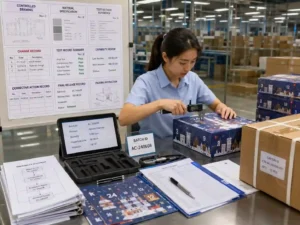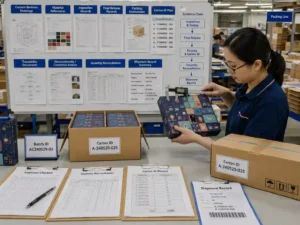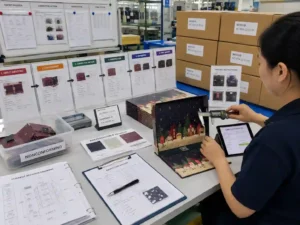
Quick answer: To pack heavy products in advent calendar boxes, buyers need to select a strong box structure, engineer the insert system around product weight and movement, confirm material strength through sampling, and control assembly and shipping risks before mass production. Heavy products such as cosmetics bottles, candles, beverages, chocolate sets, jewelry cases, and gift items usually require stronger greyboard structures, reinforced paperboard, EVA or molded pulp inserts, accurate dielines, and export packing tests. A reliable supplier should review product dimensions, weight, protection requirements, artwork, MOQ, lead time, and quotation details before production.
For brands and retailers sourcing custom advent calendar boxes manufacturer solutions, heavy products require more than an attractive exterior. The packaging must protect the contents, maintain a premium appearance, survive transportation, and support efficient assembly during bulk production.
What should buyers understand before packing heavy products in advent calendar boxes?
Heavy products require packaging engineering before design decisions are finalized. The box structure, insert design, material thickness, and shipping method must work together to prevent deformation, product movement, and customer complaints.
When buyers plan custom advent calendar boxes for heavier items, the first information to prepare includes:
- Product weight per compartment
- Product dimensions and shape
- Fragility level and surface protection requirements
- Total calendar box weight after loading
- Retail display requirements
- Shipping destination and export requirements
- Expected order quantity and production schedule
Buyer tip: A packaging supplier should evaluate the loaded box, not only the empty structure. A box that looks strong before filling may perform differently after 24 or more compartments are loaded with heavy products.

Which advent calendar box structures work best for heavy products?
The best structure depends on product weight, opening experience, and logistics requirements. Rigid boxes and reinforced drawer structures are commonly selected for heavier products because they provide better support and premium presentation.
| Box Structure | Heavy Product Suitability | Main Advantages | Buyer Considerations |
|---|---|---|---|
| Rigid Box | High | Strong greyboard construction, premium appearance, excellent support | Higher material cost and longer production preparation |
| Drawer Box | High | Good weight distribution and easy access design | Requires accurate drawer tolerance testing |
| Door-Opening Box | Medium to High | Creates premium reveal experience with multiple compartments | Hinge strength and door alignment need testing |
| Folding Carton | Medium | Lower cost and easier logistics | May require stronger board grade or reinforcement |
Should heavy products use rigid advent calendar boxes?
Rigid advent calendar boxes are often preferred for heavy products because the greyboard structure provides better compression resistance than standard folding cartons. They are suitable for premium cosmetics, candles, beverage gift sets, and larger gift items where appearance and protection are both important.
However, rigid construction alone does not solve every problem. A weak insert system can still allow products to move, scratch surfaces, or create pressure points during transportation.
How do you choose inserts for heavy advent calendar products?
The insert is the main component controlling product stability. For heavy items, buyers should choose inserts based on product weight, shape, contact points, and protection requirements.
Which insert materials are suitable for heavier products?
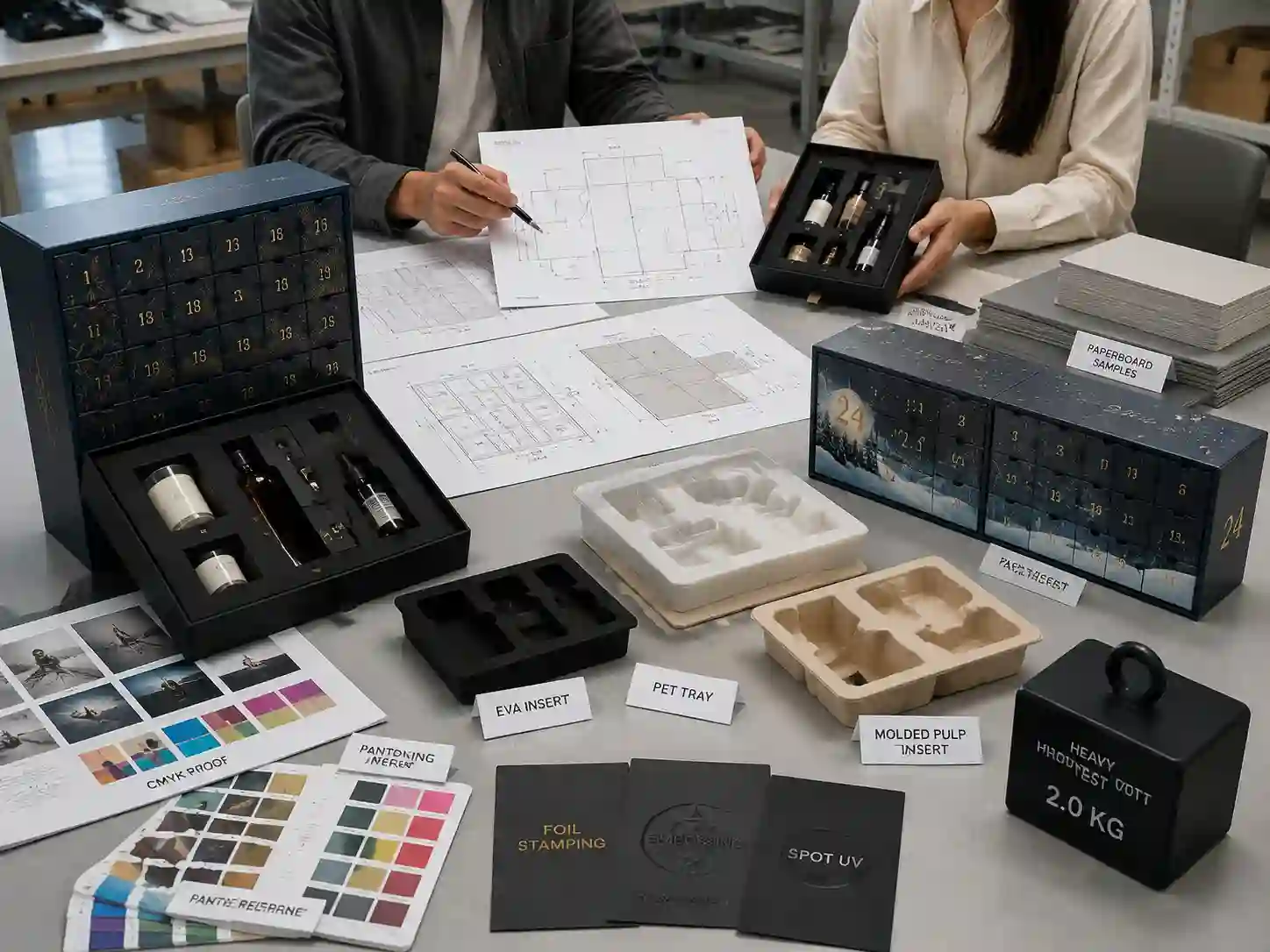
- Paper inserts: Suitable for lightweight products and organized compartments. They are cost-effective but may need reinforcement for heavier items.
- PET trays: Useful for products requiring accurate positioning, especially cosmetics, small bottles, and retail gift sets.
- EVA inserts: Suitable for premium products because they provide cushioning and precise fitting.
- Foam inserts: Used when shock absorption and surface protection are priorities.
- Molded pulp inserts: Useful for sustainable packaging projects requiring product-specific cavities.
Factory tip: Insert design should start from the actual product sample. Using only product drawings may create tolerance problems because real products can have different caps, labels, finishes, and weight distribution.
How should buyers test product fit before mass production?
Heavy product packaging should always go through prototype and pre-production sample testing before bulk manufacturing. Sampling confirms whether the structure, insert, and assembly process can handle real production conditions.
- Provide actual product samples or accurate specifications.
- Create the dieline based on product dimensions and required clearance.
- Produce a prototype with the planned materials.
- Check loading, closing force, and product movement.
- Review appearance, printing, finishing, and assembly quality.
- Approve the pre-production sample before mass production.
A supplier experienced in custom advent calendar box services should help buyers review structure, inserts, artwork, and production risks before committing to large quantities.
What materials and printing choices affect heavy product packaging?
Heavy product packaging requires a balance between strength and premium appearance. Material selection affects not only protection but also quotation cost, production time, and shipping weight.
Which materials are commonly used?
- Greyboard: Provides the core strength for rigid structures.
- Paperboard: Used for folding cartons and printed wraps.
- Laminated paper: Improves surface durability and appearance.
- Matte lamination: Creates a soft premium finish.
- Gloss lamination: Adds shine and surface protection.
For premium heavy-product advent calendar packaging, buyers may also consider foil stamping, embossing, and spot UV. These finishing methods should be reviewed together with structural requirements because complex finishing can affect production scheduling.
How do artwork and dieline checks reduce heavy product packaging problems?
Artwork preparation must follow the approved dieline because heavy product boxes often contain complex structures, multiple compartments, and reinforced areas.
Before printing, buyers should confirm:
- CMYK color settings and Pantone references
- Logo and text positions
- Folding and gluing areas
- Compartment numbering
- Insert visibility and product presentation
- Finishing locations such as foil stamping and embossing
QC tip: A printed proof or pre-production sample is more reliable than checking artwork only on a screen. Small differences in color, alignment, or finishing can become expensive after bulk production begins.
What MOQ and quotation details matter for heavy advent calendar boxes?
Heavy-product packaging quotations are influenced by structure complexity, material usage, insert design, finishing requirements, and production quantity. Buyers should provide complete information to receive a more accurate quotation.
| Quotation Information | Why It Matters |
|---|---|
| Product type and weight | Determines structure strength and insert requirements |
| Box style | Affects material, assembly, and production process |
| Insert requirement | Changes tooling, material cost, and fitting process |
| Quantity and MOQ target | Influences unit cost and production planning |
| Artwork and finishing | Affects printing and manufacturing steps |
| Shipping destination | Determines export packing requirements |
Buyers comparing suppliers should not only compare unit prices. A lower quotation may exclude important details such as stronger inserts, sample testing, protective export packing, or additional quality checks.
What quality control steps are important for heavy product advent calendar boxes?
QC for heavy products should focus on strength, fit, appearance, and shipping performance. A professional packaging supplier should inspect both the empty box and loaded sample conditions.
- Material thickness inspection
- Insert dimension verification
- Product fit testing
- Drawer or door function testing
- Printing and finishing inspection
- Assembly tolerance checking
- Carton packing review
- Final appearance inspection
Buyers can review additional packaging planning topics through advent calendar box buying guides before preparing their sourcing project.
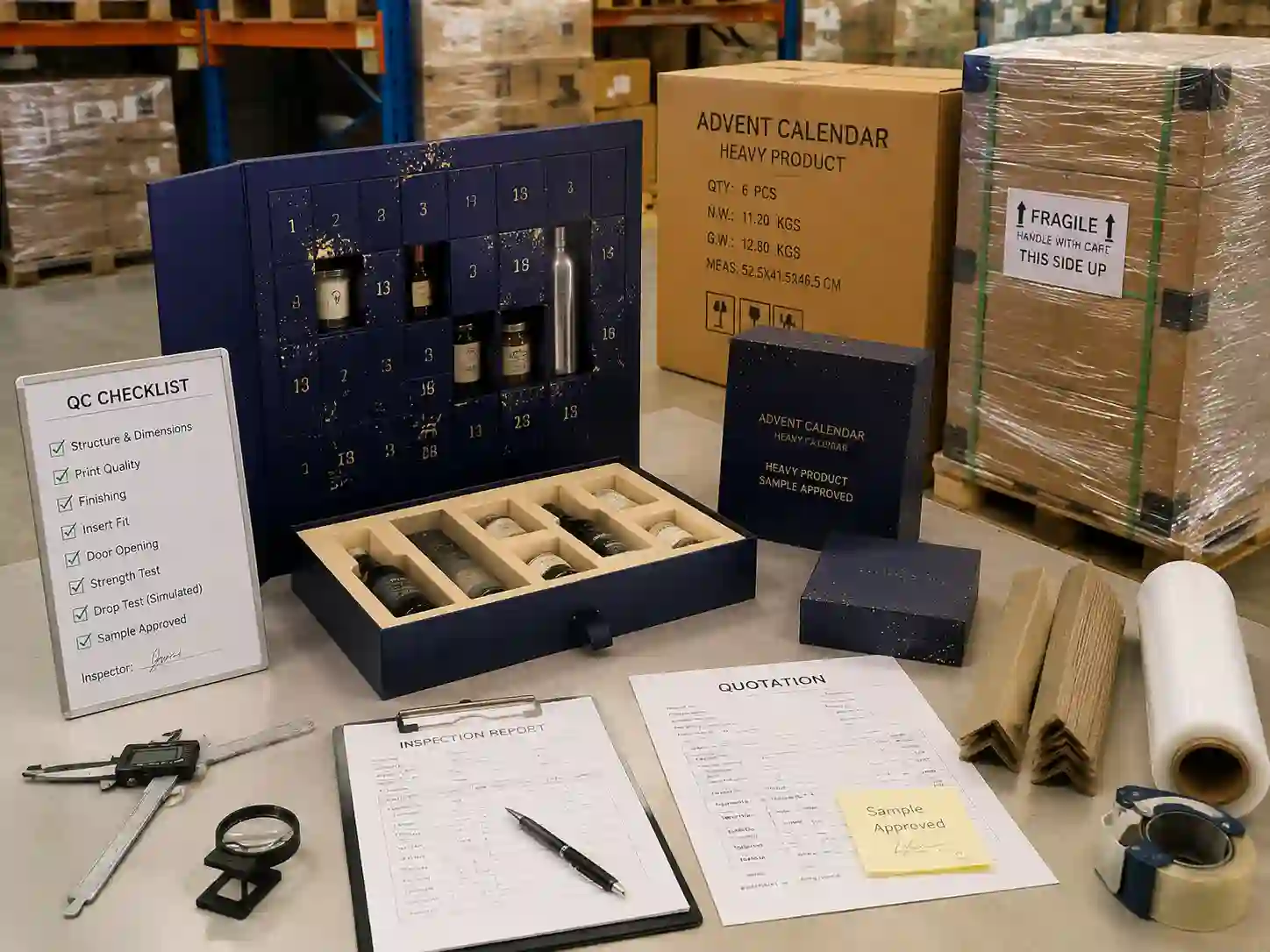
How should heavy advent calendar boxes be packed for export shipping?
Export packing is critical because heavy products create higher stress during transportation. The finished boxes should be protected against compression, moisture, impact, and movement inside shipping cartons.
Export packing checklist for heavy products
- Use suitable export cartons based on box weight and stacking requirements.
- Add corner protectors when necessary for rigid box protection.
- Prevent movement inside cartons with proper internal packing.
- Confirm pallet loading method for large shipments.
- Add correct shipping marks and carton identification.
- Review loading conditions before shipment.
For buyers shipping internationally, it can be useful to review packaging transport guidance from official organizations such as ISTA packaging testing resources when planning distribution requirements.
What mistakes should buyers avoid when packing heavy products in advent calendar boxes?
The most common problems happen when buyers focus on appearance before confirming engineering details.
- Choosing a structure without testing loaded weight: Empty box strength does not represent real performance.
- Using standard inserts for heavy products: Product-specific fitting is usually required.
- Skipping prototype approval: Small tolerance problems become expensive during mass production.
- Ignoring export packing: Strong products can still arrive damaged if cartons are unsuitable.
- Comparing quotations only by price: Materials, QC, and production support should also be evaluated.
Decision guide: How should buyers select a supplier for heavy advent calendar packaging?
The right supplier should provide both packaging production capability and engineering support. Buyers should evaluate the following areas:
| Evaluation Area | Questions to Ask |
|---|---|
| Structure capability | Can the supplier recommend rigid, drawer, folding, or door-opening solutions? |
| Sampling process | Can they create prototypes and support approval before bulk production? |
| Insert engineering | Can they develop paper, EVA, PET, foam, or molded pulp inserts? |
| Production control | Do they check printing, assembly, and final quality? |
| Export experience | Can they prepare cartons, pallet plans, and shipping protection? |
Giftpackpro supports B2B buyers with custom structures, product-fit planning, sampling coordination, and production communication as a Giftpackpro packaging factory serving overseas packaging projects.
FAQ: Packing Heavy Products in Advent Calendar Boxes
Can advent calendar boxes hold heavy cosmetics or gift products?
Yes. Heavy cosmetics, candles, beverages, and gift products can be packed in advent calendar boxes when the structure and insert system are designed for the actual product weight.
Are rigid boxes better than folding cartons for heavy products?
Rigid boxes usually provide stronger support and a premium appearance, but the best choice depends on product weight, quantity, budget, and shipping requirements.
Should buyers send products before requesting a sample?
Providing real products or accurate product specifications helps suppliers create better dielines, inserts, and prototypes. This reduces fitting problems during production.
What should buyers prepare before requesting a quotation?
Prepare product dimensions, weight, quantity, preferred structure, insert requirements, artwork status, finishing requirements, delivery destination, and expected timeline.
What should buyers prepare before requesting a sample or quotation?
Before contacting a supplier, buyers should prepare a clear RFQ package including product details, packaging expectations, artwork files, quantity, and shipping information. This allows faster comparison between suppliers and reduces unnecessary revisions.
- Product photos, dimensions, and weight
- Target box style and compartment layout
- Preferred insert material
- Printing and finishing requirements
- Quantity and MOQ expectations
- Sample requirements
- Shipping destination
If you need a packaging solution for cosmetics, chocolate, candles, jewelry, toys, tea, coffee, beverages, or premium gifts, you can request a custom quote from Giftpackpro with your product specifications and project requirements.
Choosing the right way to pack heavy products in advent calendar boxes requires cooperation between product engineering, structure design, insert development, sampling, QC, and export planning. A well-prepared project reduces production risks and helps brands achieve reliable packaging performance for seasonal campaigns.