Quick answer: Paperboard inserts and EVA inserts serve different packaging purposes. Paperboard inserts are a cost-effective, lightweight solution for organizing products inside custom advent calendar boxes, folding cartons, and gift packaging, while EVA inserts provide a premium, soft-touch fit for fragile, luxury, or high-value items. The right choice depends on product weight, protection requirements, presentation goals, production quantity, insert design complexity, and shipping conditions. Buyers should confirm the product dimensions, insert structure, sample performance, and bulk production tolerance before approving a packaging solution.
For brands sourcing custom advent calendar boxes manufacturer solutions, insert selection affects not only appearance but also assembly, quotation, lead time, and export safety. A well-designed insert helps products stay aligned, reduces movement during transportation, and creates a consistent unboxing experience for retail and e-commerce customers.
What is the difference between paperboard inserts vs EVA inserts?
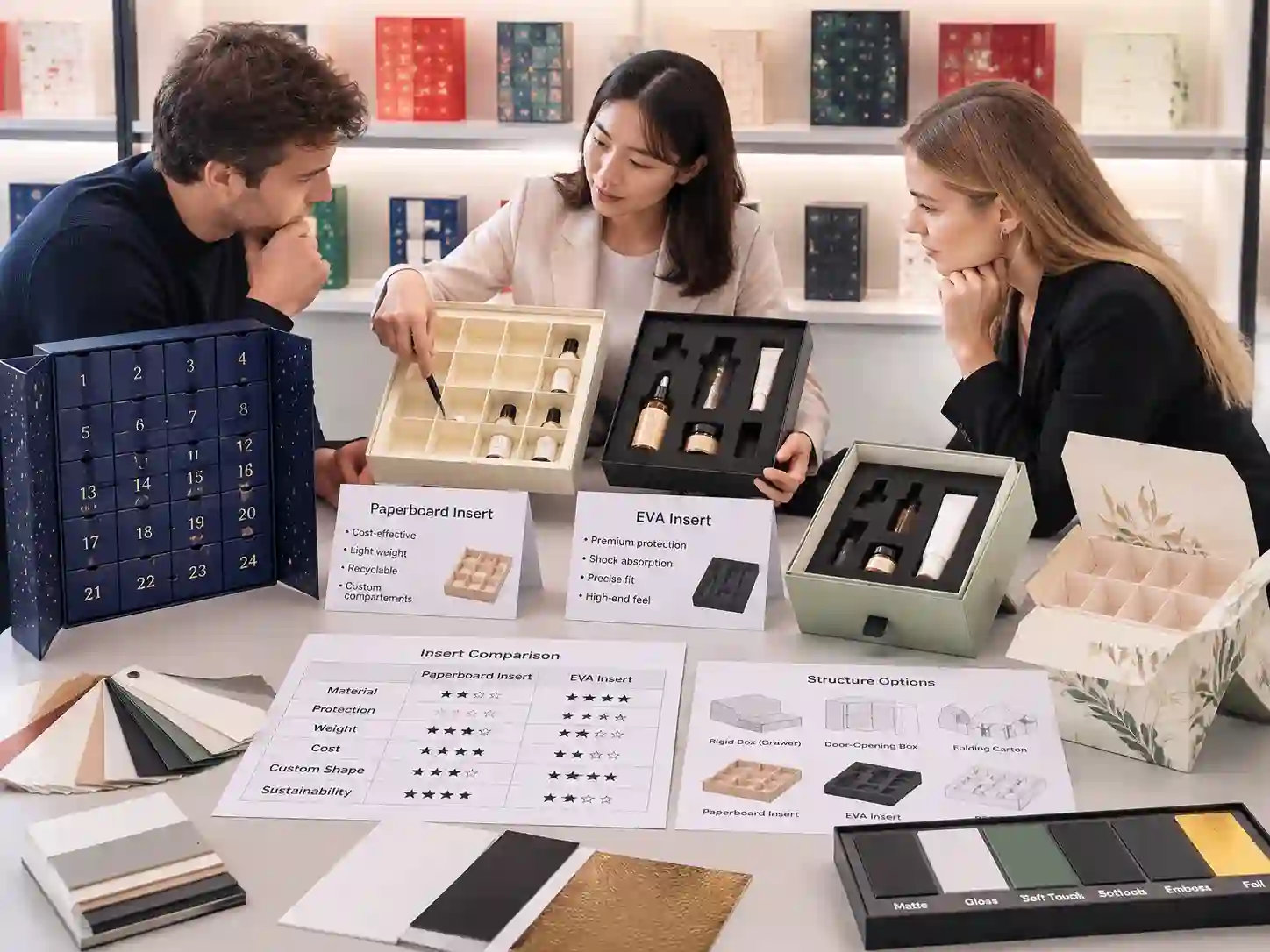
The main difference between paperboard inserts vs EVA inserts is the balance between organization, protection, appearance, and cost. Paperboard inserts are made from folded or layered paperboard structures, while EVA inserts are made from soft expanded foam materials that are cut or molded to hold products securely.
| Comparison Factor | Paperboard Inserts | EVA Inserts |
|---|---|---|
| Primary function | Product organization and compartment separation | Product protection and premium presentation |
| Typical applications | Advent calendar boxes, folding cartons, gift sets, lightweight products | Cosmetics, jewelry, electronics accessories, fragile products |
| Material structure | Folded paperboard, cardboard dividers, paper trays | Expanded EVA foam with precision-cut cavities |
| Protection level | Good for preventing movement and separating items | Higher cushioning and impact resistance |
| Cost impact | Usually lower material and processing cost | Higher tooling and material cost |
| Visual effect | Clean, sustainable, organized appearance | Luxury, soft-touch, premium product presentation |
Buyer tip: The cheapest insert is not always the lowest-cost option. A poorly fitted insert can create higher costs through product damage, rework, customer complaints, and additional quality inspection.
When should buyers choose paperboard inserts for custom advent calendar boxes?
Buyers should choose paperboard inserts when the main requirement is organization, compartment layout, and cost control rather than maximum cushioning. Paperboard inserts are widely used in custom advent calendar boxes because they can create multiple compartments while keeping the overall packaging lightweight.
What products work well with paperboard inserts?
Paperboard inserts are suitable for products such as:
- Small gift items with regular shapes
- Lightweight beauty samples
- Chocolate or confectionery products with suitable food-contact considerations
- Stationery items
- Promotional products
- Seasonal gift sets requiring multiple compartments
For example, a folding carton or rigid advent calendar box with a paperboard insert can separate 12, 24, or other compartment layouts while maintaining efficient production and shipping volume.
What are the advantages of paperboard inserts?
- Lower production cost: Paperboard uses common packaging materials and can often be produced with existing cutting and folding processes.
- Flexible structure: Manufacturers can create dividers, trays, folded pockets, and layered compartments based on the dieline.
- Easy artwork integration: Inserts can match the outer packaging through printing, coating, or simple color matching.
- Efficient shipping: Lightweight inserts help reduce total packaging weight.
However, buyers should consider product weight and movement. A paperboard insert designed without proper tolerance testing may allow products to shift during transportation.
When should buyers choose EVA inserts for premium packaging?
Buyers should choose EVA inserts when product protection, premium appearance, and precise positioning are more important than minimizing cost. EVA inserts are commonly selected for rigid boxes, luxury gift packaging, and products that require a custom cavity fit.
What products need EVA inserts?
EVA inserts are often used for:
- Luxury cosmetics and skincare sets
- Jewelry and accessories
- Watches and small electronics
- Fragile promotional gifts
- Premium retail gift collections
The foam cavity can be cut according to the exact product shape, helping prevent movement and improving shelf presentation.
What are the limitations of EVA inserts?
- Higher material cost compared with paperboard solutions
- More precise sampling requirements
- Greater importance of product measurement accuracy
- Possible longer development time for complex cavity designs
Factory tip: EVA inserts should be developed after receiving accurate product dimensions. Even a small size difference between the approved sample product and the final production product can affect insert fitting.
How do paperboard and EVA inserts affect packaging structure decisions?
The insert choice should match the packaging structure. Rigid boxes, drawer boxes, and door-opening boxes often have different insert requirements compared with folding cartons because they provide different levels of protection and presentation.
| Packaging Structure | Recommended Insert Consideration | Reason |
|---|---|---|
| Rigid box | EVA insert, paperboard tray, premium paper insert | Strong structure supports luxury presentation |
| Drawer box | Paperboard insert or EVA insert depending on product value | Easy product access requires accurate positioning |
| Door-opening box | Layered paperboard insert or foam insert | Requires stable compartment arrangement |
| Folding carton | Paperboard insert or molded pulp insert | Focuses on efficient production and shipping |
Packaging engineers normally review the box structure, insert depth, product weight, closing method, and transportation requirements before finalizing the design.
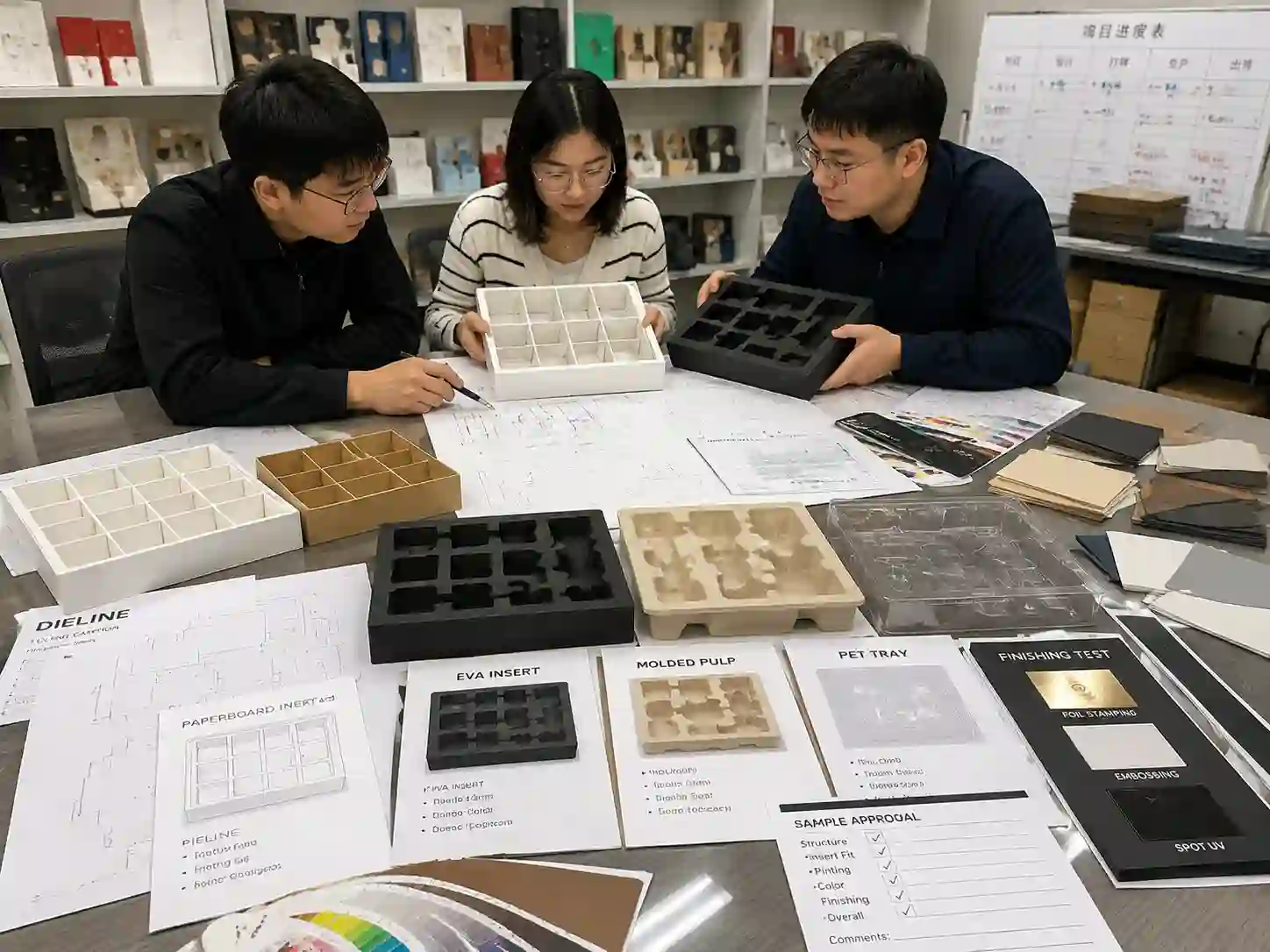
How should buyers compare paperboard, EVA, foam, and molded pulp inserts?
Buyers should compare inserts based on product protection, sustainability goals, cost targets, and production requirements rather than choosing only by appearance.
- Paperboard insert: Best for organized compartments and cost-efficient packaging.
- EVA insert: Best for premium products requiring soft cushioning and exact positioning.
- Foam insert: Useful for protective packaging where cushioning is the priority.
- Molded pulp insert: Suitable for brands seeking fiber-based protective solutions with customized shapes.
Each material requires different sampling methods. A paperboard insert mainly requires dieline accuracy and folding tests, while EVA and foam inserts require cavity testing with actual products.
What should buyers confirm before requesting an insert quotation?
A professional quotation requires detailed product and packaging information. Suppliers cannot accurately calculate insert cost without understanding product size, quantity, structure, and finishing requirements.
Buyer checklist before RFQ preparation
- Product dimensions, weight, and material information
- Number of compartments required
- Preferred insert type: paperboard, EVA, foam, or molded pulp
- Box structure: rigid box, drawer box, door-opening box, or folding carton
- Artwork files and dieline requirements
- Printing needs including CMYK, Pantone, foil stamping, embossing, spot UV, matte lamination, or gloss lamination
- Target quantity and expected MOQ
- Required sample date and production deadline
- Export destination and packing requirements
A complete RFQ helps factories provide more accurate pricing and reduces repeated communication during development.
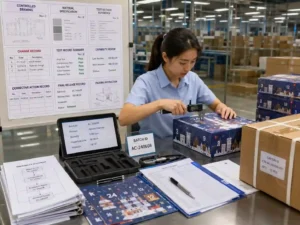
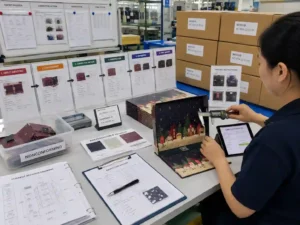
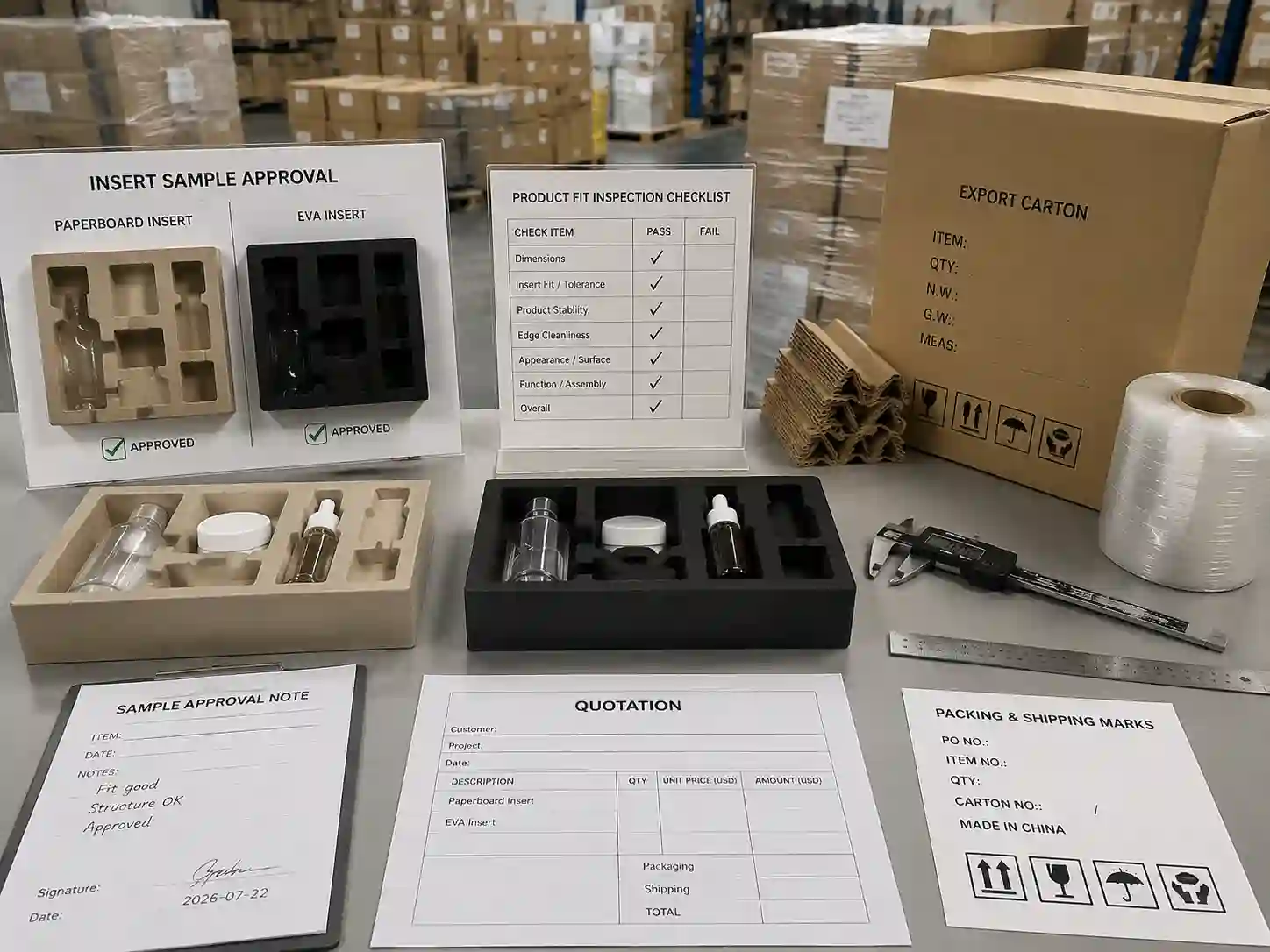
How are insert samples tested before mass production?
Insert sampling is critical because digital drawings cannot fully show real product fitting performance. Buyers should approve a prototype or pre-production sample before starting mass production.
Important sample approval checks include:
- Product fits securely without excessive pressure
- Compartments match the approved layout
- Insert does not damage product surfaces
- Box closing function works correctly
- Products remain stable during handling simulation
- Insert appearance matches the approved specification
QC tip: A supplier should check insert tolerance during sample approval, not after bulk production starts. Fixing insert problems after mass production can create material waste and schedule delays.
How do inserts affect MOQ, lead time, and production cost?
Insert design directly influences MOQ, lead time, and quotation because different materials require different manufacturing processes.
- Paperboard inserts usually have simpler cutting and folding processes.
- EVA inserts may require additional cutting, tooling, and fitting tests.
- Complex compartment layouts require more sampling rounds.
- Special materials or finishes may increase production preparation time.
For seasonal packaging projects, buyers should confirm insert requirements early because sampling, approval, and production scheduling directly affect final delivery timing.
How should buyers check insert quality during bulk production?
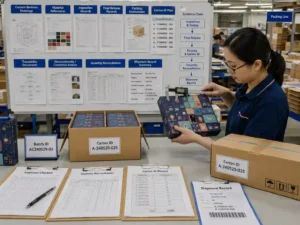
During mass production, buyers should verify that bulk inserts match the approved sample. Quality inspection should cover material consistency, dimensions, assembly, and product fit.
Bulk QC checklist
- Compare production inserts with approved samples.
- Measure critical dimensions and compartment spacing.
- Check cutting edges and folding accuracy.
- Test actual product placement.
- Inspect packaging assembly performance.
- Confirm export packing protection.
Export packing should also be reviewed. Proper export cartons, corner protectors, pallet protection, and shipping marks help reduce damage risk during international transportation.
How can Giftpackpro help buyers choose the right insert solution?
Choosing between paperboard inserts vs EVA inserts requires balancing product fit, packaging structure, appearance, cost, and production requirements. Giftpackpro supports B2B buyers with custom advent calendar box services, including structure development, insert selection, sampling support, and production coordination.
Buyers can review different custom advent calendar box products and work with a packaging team to evaluate suitable insert solutions based on product requirements. Understanding materials and production processes helps buyers avoid incorrect specifications before bulk manufacturing.
Frequently asked questions about paperboard inserts vs EVA inserts
Are EVA inserts better than paperboard inserts?
EVA inserts are not always better. EVA provides stronger cushioning and a premium appearance, while paperboard inserts are often more practical for lightweight products and cost-sensitive packaging projects.
Can one box use both paperboard and EVA inserts?
Yes. Some premium packaging projects combine materials, such as an EVA product holder with a paperboard structure or decorative layer, to balance protection and appearance.
Do inserts affect export shipping performance?
Yes. Proper inserts reduce product movement inside the box and help protect products during transportation. Buyers should test the complete packaging system, including insert, box, and export carton.
What information should I send before requesting a sample?
Prepare product dimensions, quantity, packaging structure preference, insert requirements, artwork information, and target delivery schedule. Buyers can also review additional advent calendar box buying guides before preparing specifications.
What should buyers prepare before requesting a custom insert quotation?
Before contacting a supplier, prepare the product details, packaging structure, insert preference, artwork files, quantity forecast, and delivery requirements. These details allow manufacturers to recommend the correct solution and prepare a more accurate quotation.
For brands comparing insert options for seasonal packaging, Giftpackpro recommends confirming product fit through sampling before moving to bulk production. You can request a custom quote with your product details, packaging requirements, and project timeline.
To learn more about supplier capability and production background, buyers can also review the Giftpackpro packaging factory information page.