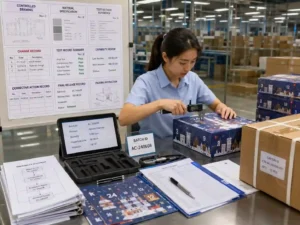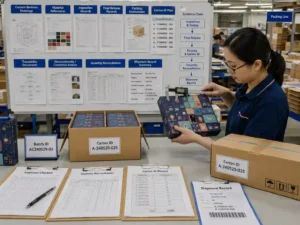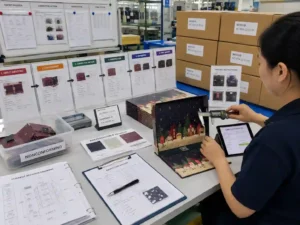
Quick answer: Australian buyers sourcing advent calendar boxes should evaluate the packaging structure, product fit, insert design, print quality, production process, supplier capability, and export requirements before placing a bulk order. The right supplier should help confirm whether a rigid box, folding carton, drawer box, or door-opening box matches the retail, e-commerce, or promotional application. Buyers should prepare product dimensions, artwork files, quantity targets, delivery timing, and quality expectations before requesting samples or quotations.
For brands, wholesalers, and retail purchasing teams, advent calendar boxes Australian buyers need are not simply seasonal packaging items. They are engineered gift packaging solutions that must protect products, create a strong unboxing experience, support campaign launches, and arrive safely through international logistics channels.
Giftpackpro provides B2B support for companies looking for custom advent calendar boxes manufacturer solutions, from structure development and sampling to bulk production and export preparation.
What should Australian buyers understand before sourcing advent calendar boxes?
Australian buyers should first define the commercial purpose of the packaging. A retail shelf product, an online gift set, an influencer campaign package, and a corporate promotional box may require completely different structures and materials.
The first sourcing decision is usually the balance between appearance, product protection, assembly efficiency, and cost control. A luxury cosmetics brand may prioritize a rigid construction with premium finishing, while an e-commerce seller may need a lightweight folding carton that reduces shipping volume.
Buyer tip: Before contacting suppliers, prepare the product category, internal product dimensions, target market, expected sales channel, estimated quantity, and launch date. These details allow factories to recommend practical structures instead of only quoting a basic box size.
Which advent calendar box structures are suitable for Australian retail and e-commerce buyers?
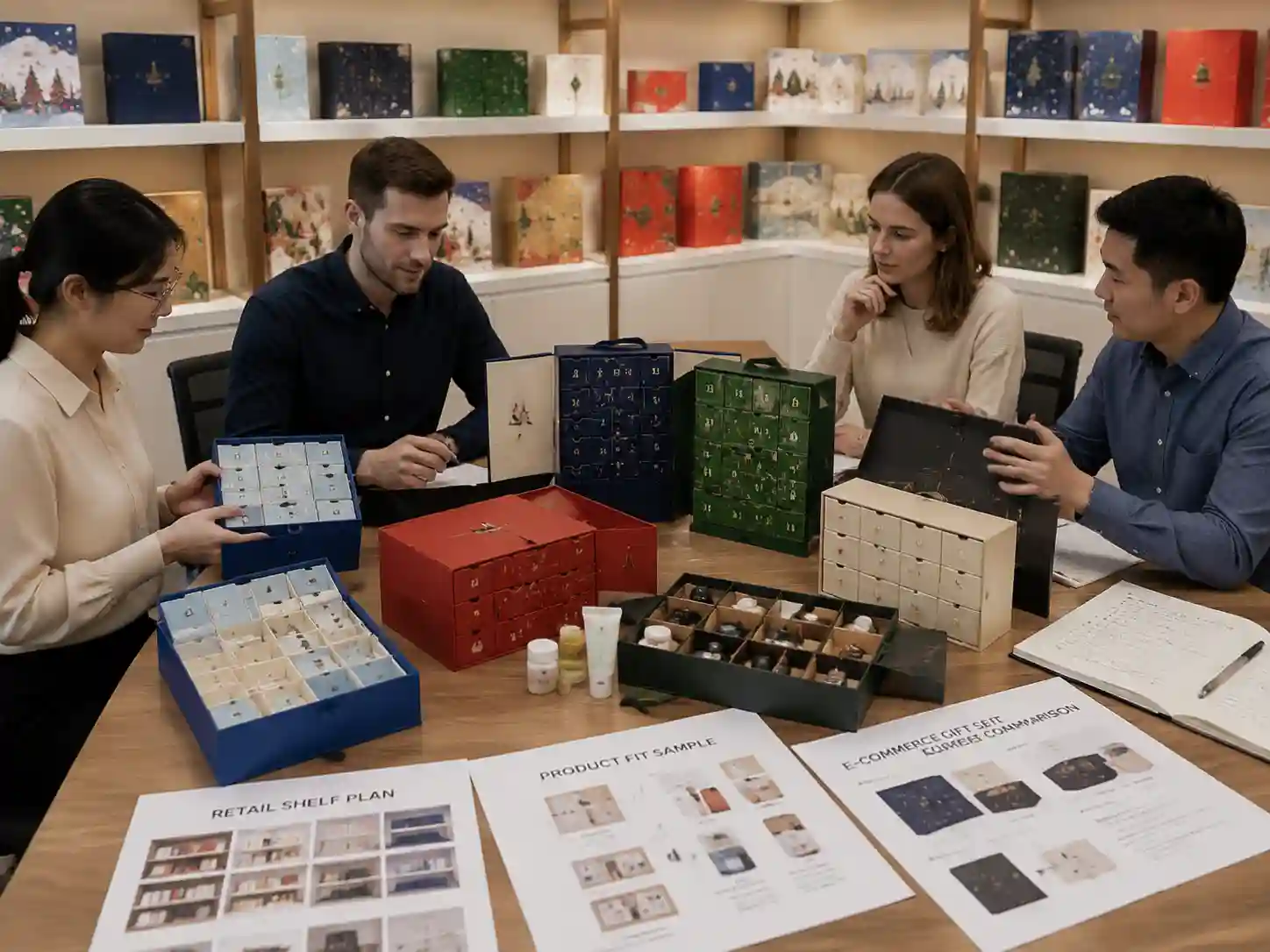
The best structure depends on the product type, shelf presentation requirements, and logistics plan. Australian buyers commonly compare rigid boxes, folding cartons, drawer boxes, and door-opening boxes because each provides different advantages.
| Structure | Best Application | Main Advantages | Buyer Considerations |
|---|---|---|---|
| Rigid advent calendar box | Luxury gifts, cosmetics, premium retail sets | High perceived value, strong protection, premium surface finishing | Higher material cost and shipping weight |
| Folding carton advent calendar | Retail promotions, large campaigns, e-commerce bundles | Cost efficient, lightweight, easier storage and shipping | Requires accurate paperboard selection and structural testing |
| Drawer box advent calendar | Beauty products, small gifts, collectible sets | Smooth opening experience and organized compartments | Drawer clearance and insert tolerance must be tested |
| Door-opening advent calendar box | Interactive gift packaging and premium campaigns | Creates display impact and customer engagement | Hinge strength, door alignment, and opening function require QC |
A supplier should provide structural recommendations based on the actual product. For example, skincare tubes, fragrance cards, tea sachets, candy pouches, coffee capsules, jewelry cards, stationery items, or small accessories may require different compartment layouts and insert solutions.
How should buyers compare inserts and product-fit solutions?
The insert is one of the most important engineering decisions because it controls product protection, presentation, and user experience. Australian buyers should review how each cavity holds the product during transport and customer handling.
Common insert options include:
- Paper insert: suitable for lightweight products and cost-sensitive retail applications.
- PET tray: useful when clear product visibility and precise positioning are required.
- EVA insert: suitable for premium products needing cushioning and secure placement.
- Foam insert: provides protection for fragile or higher-value items.
- Molded pulp insert: an option for buyers considering fiber-based packaging approaches.
Factory tip: Insert design should be tested with the actual product or accurate product samples. A cavity that is too tight can damage products during packing, while a cavity that is too loose can create movement and presentation problems.
What materials and printing options should Australian buyers review?
Material selection affects durability, appearance, cost, and shipping performance. Many custom advent calendar boxes combine greyboard, paperboard, and printed wrapping paper depending on the structure.
Buyers should review:
- Greyboard thickness for rigid box strength.
- Paperboard grade for folding carton durability.
- Paper texture and whiteness for color accuracy.
- Surface protection such as matte lamination or gloss lamination.
- Special finishes including foil stamping, embossing, and spot UV.
Artwork preparation is also critical. Suppliers normally check dieline files, folding positions, panel alignment, and printing requirements before production. CMYK settings, Pantone references, and approved color samples should be confirmed before bulk manufacturing.
For buyers managing multiple seasonal products, working with a supplier that offers structured custom advent calendar box services can simplify artwork review, prototype development, and production coordination.
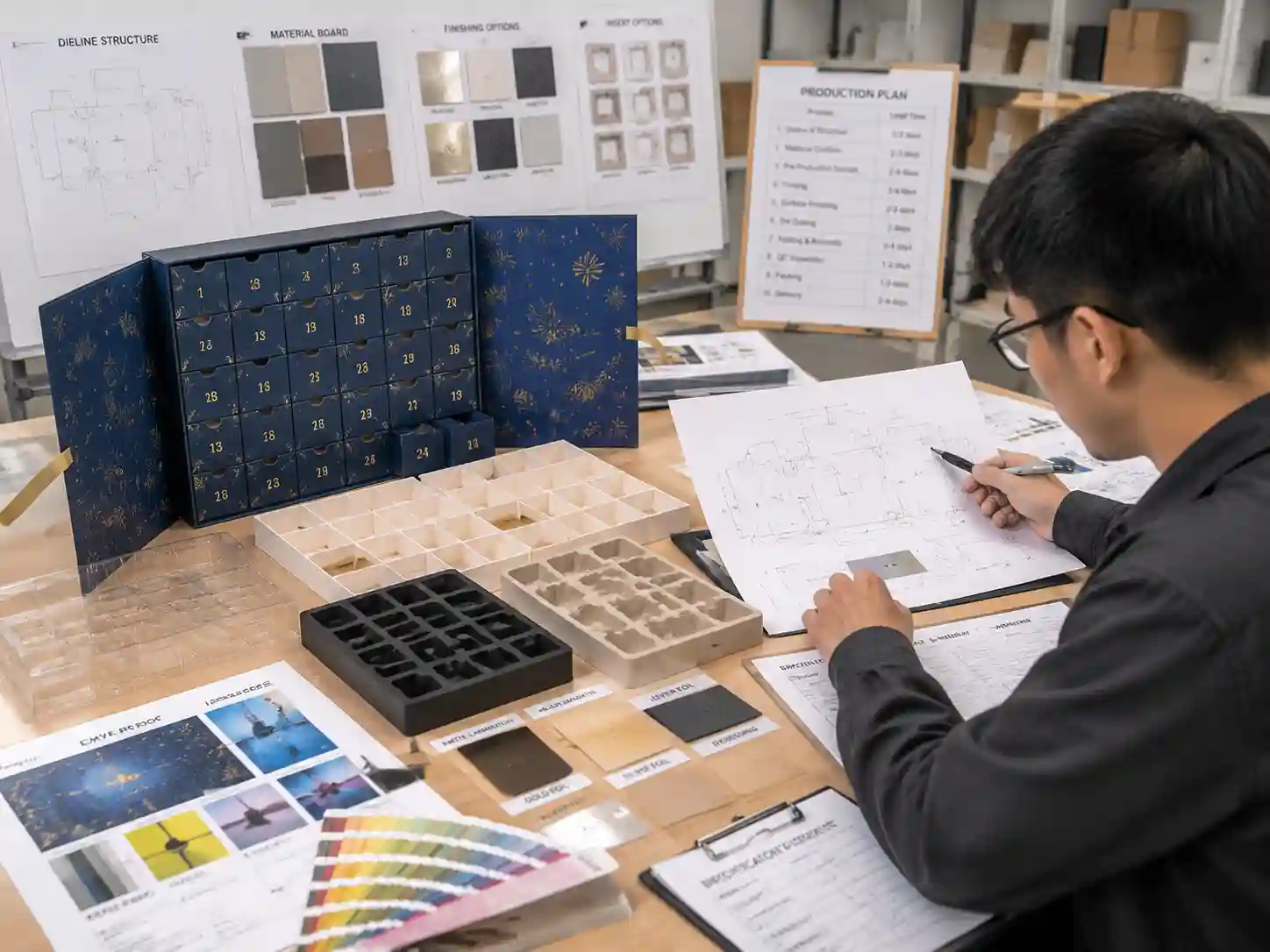
How should Australian buyers manage sampling before bulk production?
A professional sample process reduces production risk. Buyers should not approve bulk production based only on digital artwork because structure, material feel, insert fitting, and finishing quality can only be verified through physical samples.
What should buyers check during the sample approval stage?
- Overall box dimensions and product compatibility.
- Dieline accuracy and folding performance.
- Drawer movement or door-opening function.
- Insert position and product access.
- Color matching against approved references.
- Foil stamping, embossing, and coating quality.
- Assembly appearance and corner finishing.
A pre-production sample is especially important for seasonal campaigns because launch dates are fixed. Any structure adjustment after mass production begins can create delays and additional costs.
What MOQ, lead time, and quotation details should buyers prepare?
MOQ and lead time depend on the structure, materials, finishing requirements, and production workload. Australian buyers should request quotations with complete specifications rather than only asking for a unit price.
Quotation preparation checklist for advent calendar box projects:
- Box structure: rigid box, folding carton, drawer box, or door-opening box.
- Finished dimensions and product size information.
- Material requirements including greyboard, paperboard, and insert type.
- Printing requirements including CMYK, Pantone, and special finishes.
- Estimated order quantity and expected repeat order plans.
- Packaging assembly requirements.
- Shipping destination and export packing expectations.
- Required delivery date and campaign launch schedule.
Buyer tip: A detailed RFQ helps suppliers calculate realistic costs because advent calendar packaging involves multiple production stages including printing, mounting, die cutting, assembly, insert preparation, inspection, and packing.
How can Australian buyers select a reliable advent calendar box supplier?
The right supplier should demonstrate experience across design, production, quality control, and export handling. Buyers should compare suppliers based on manufacturing capability rather than only the lowest quotation.
| Supplier Evaluation Area | Questions Buyers Should Ask |
|---|---|
| Structure development | Can the supplier recommend suitable structures and provide engineering feedback? |
| Sampling | Does the supplier provide prototypes and pre-production approval samples? |
| Production control | How are printing, assembly, and finishing quality checked? |
| Export experience | Can the supplier prepare export cartons, shipping marks, and pallet solutions? |
| Communication | Can the supplier provide clear quotations and production updates? |
Buyers can review a supplier’s factory background, previous packaging capabilities, and project workflow before committing to a large seasonal order. Giftpackpro’s Giftpackpro packaging factory information helps purchasing teams understand the production approach behind custom packaging projects.
What QC checks matter before shipping advent calendar boxes?
Quality control should cover both packaging appearance and packaging function. Seasonal packaging often includes multiple components, so small issues can affect the complete customer experience.
QC tip: Important inspection points include:
- Box dimensions and structural tolerance.
- Print color consistency and finishing quality.
- Insert positioning and product fit.
- Door, drawer, or folding function.
- Surface damage, scratches, and corner quality.
- Carton packing protection before shipment.
Export packing should also be reviewed. Suppliers may use export cartons, protective dividers, corner protectors, pallet wrap, and shipping marks to reduce damage risk during international transportation.
For logistics planning, buyers can also review official packaging and supply chain guidance from organizations such as GS1 product identification standards and ISTA transport packaging resources when preparing international shipments.
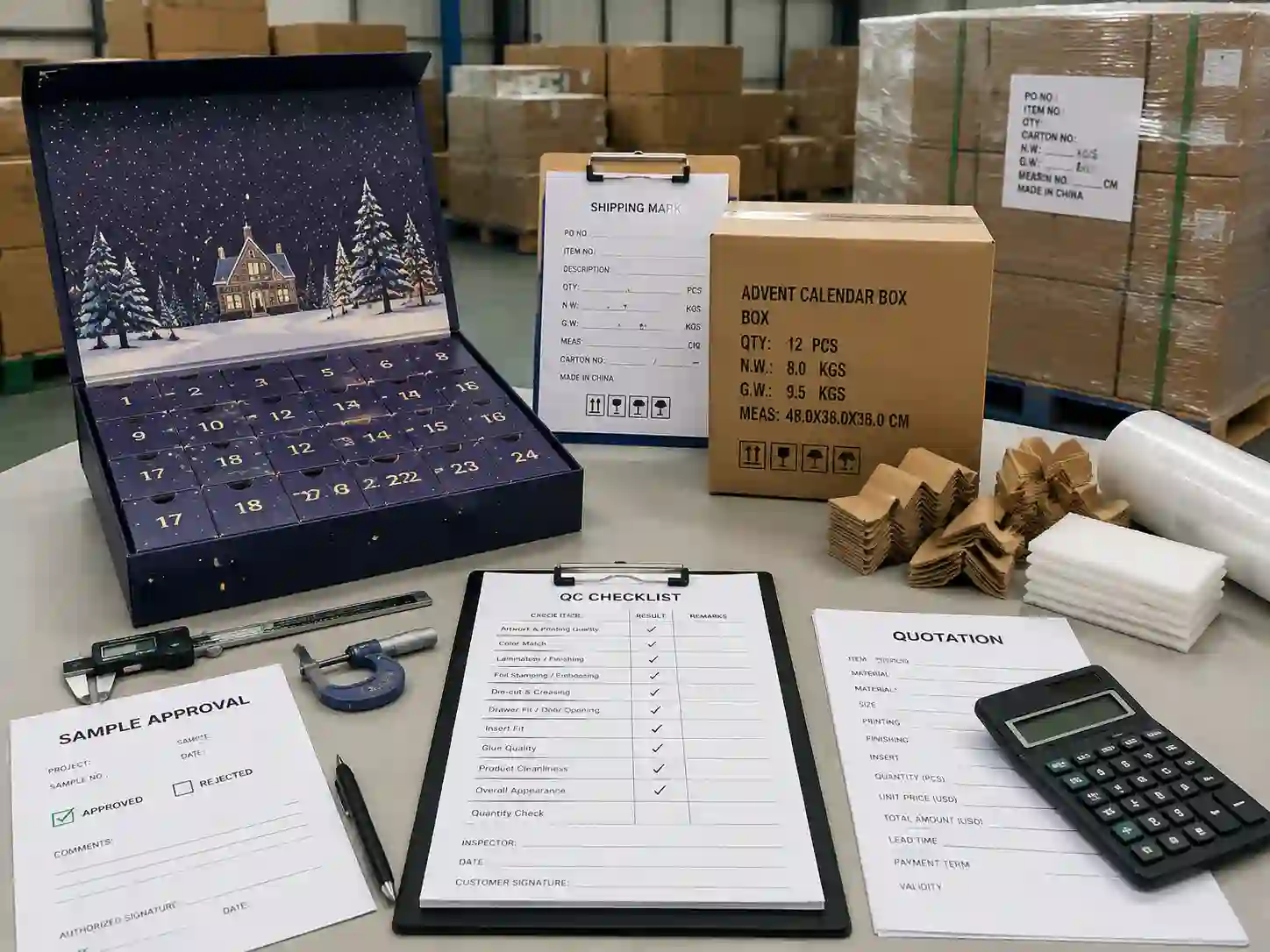
What common sourcing mistakes should Australian buyers avoid?
Many packaging problems happen because important decisions are delayed until after production begins. Buyers can reduce risk by confirming technical details early.
- Choosing a structure without testing the actual product fit.
- Approving artwork without checking the dieline.
- Ignoring insert movement during transportation.
- Comparing suppliers only by unit price.
- Skipping physical sample approval.
- Not confirming export packing requirements.
- Providing incomplete quotation information.
FAQ: Sourcing advent calendar boxes for Australian buyers
Can Australian buyers order custom advent calendar boxes with different compartments?
Yes. Custom compartment layouts can be developed based on product dimensions, quantity of openings, and customer access requirements. The insert design normally changes according to the product size and protection needs.
Should buyers choose rigid boxes or folding cartons?
Rigid boxes are generally selected for premium presentation and durability, while folding cartons are often chosen for larger campaigns where cost, storage, and shipping efficiency are important.
How early should buyers start seasonal packaging projects?
Buyers should plan according to artwork approval, sampling, production scheduling, and shipping requirements. Seasonal campaigns require enough time for prototype approval and possible adjustments before mass production.
What information should buyers send when requesting a quote?
Buyers should provide box structure preference, product dimensions, quantity, artwork status, material requirements, finishing options, destination, and required delivery timing.
How can Australian buyers prepare for a custom advent calendar box project?
Before requesting a sample or quotation, prepare your product specifications, packaging goals, artwork files, target quantity, and campaign schedule. A clear project brief allows suppliers to recommend the right structure, insert, materials, and production method.
Giftpackpro supports overseas brands, retailers, wholesalers, and purchasing teams through custom development, sampling, manufacturing coordination, QC, and export preparation. Buyers can explore additional custom advent calendar box products or browse more advent calendar box buying guides before starting a project.
To discuss your packaging requirements, prepare your product dimensions, preferred structure, estimated quantity, and timeline, then request a custom quote for your advent calendar box project.