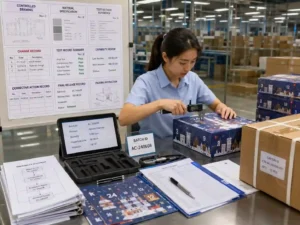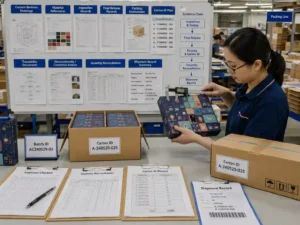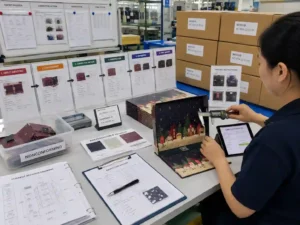
Quick answer: To verify an advent calendar box manufacturer in China, buyers should check more than price or product photos. A reliable supplier should demonstrate control over structure design, material selection, inserts, artwork proofing, sampling, mass production, quality inspection, and export packing. Before placing an order, review the factory’s ability to produce the required box structure, confirm sample approval procedures, test product fit, inspect printing quality, and understand quotation details such as MOQ, lead time, and packing requirements.
For overseas brands, wholesalers, and retail buyers, supplier verification reduces risks such as incorrect dimensions, weak box structures, poor insert fitting, color differences, assembly problems, and shipping damage. Giftpackpro supports buyers looking for custom advent calendar boxes manufacturer solutions with production planning, sampling, and quality control experience.
What should buyers verify before choosing an advent calendar box manufacturer in China?
The first step is verifying whether the manufacturer can control the complete packaging process, not only produce a finished box. A qualified supplier should understand your product size, packaging application, target market, required appearance, and shipping conditions before recommending a structure.
Custom advent calendar boxes often combine multiple production stages:
- Structural design and dieline development
- Paperboard or greyboard material selection
- Insert engineering and product-fit testing
- Printing and finishing approval
- Prototype sampling and revision
- Mass production and assembly inspection
- Export carton packing and shipment preparation
Buyer tip: A manufacturer that only provides catalog images may not have enough experience with customized seasonal packaging. Ask for examples of development work, sample procedures, QC records, and production explanations.
How can buyers compare different types of custom advent calendar boxes?
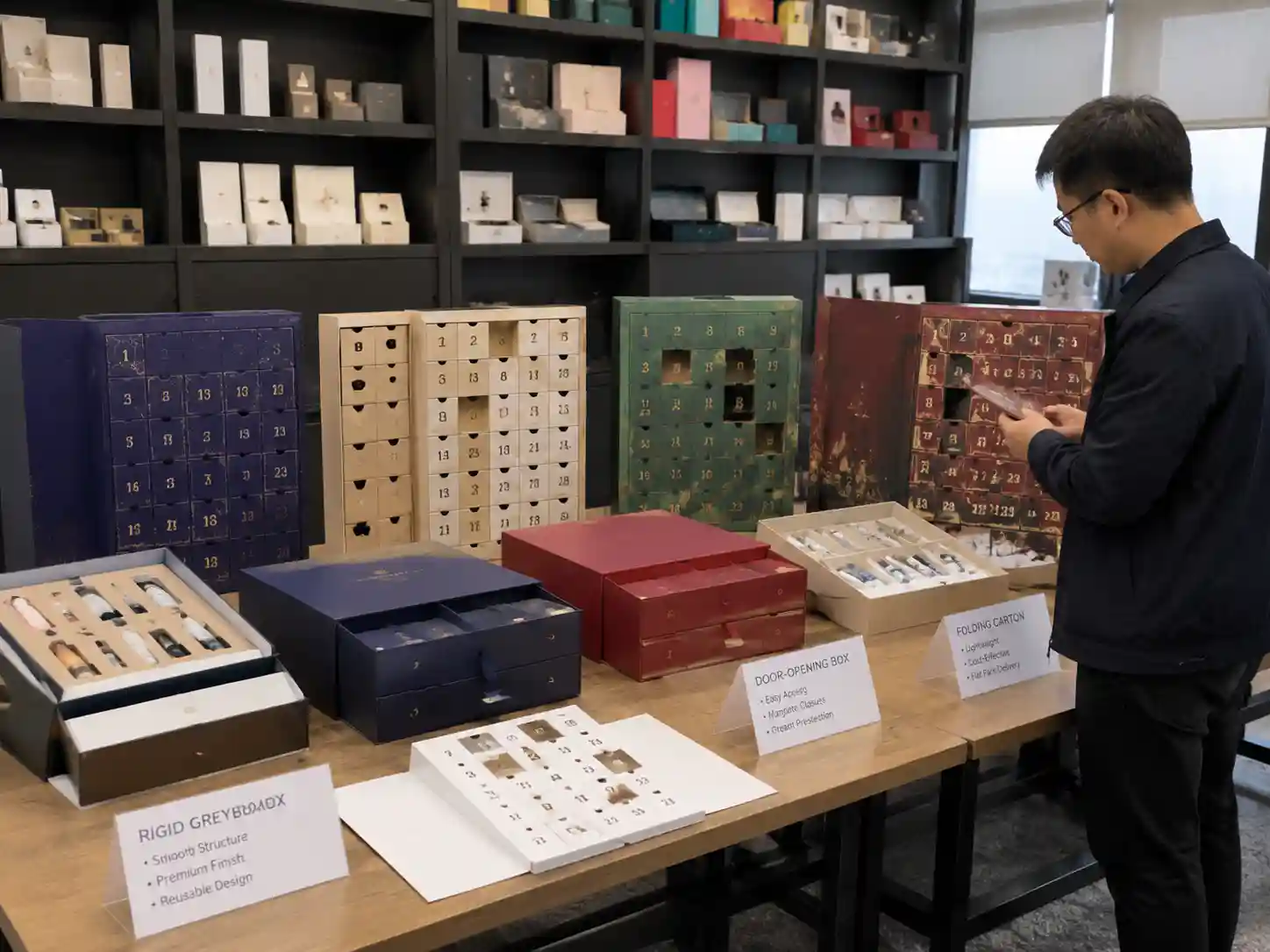
The right structure depends on the product category, customer experience, production budget, and shipping requirements. Buyers should compare box styles based on strength, usability, decoration options, and assembly complexity.
| Box Structure | Best Application | Verification Points |
|---|---|---|
| Rigid box | Luxury gifts, premium cosmetics, corporate gifts | Check greyboard thickness, corner finishing, surface quality, and structural strength |
| Folding carton | Retail products, lightweight seasonal packaging, promotional items | Check paperboard grade, folding accuracy, locking design, and printing consistency |
| Drawer box | Cosmetics, jewelry, small gifts, subscription products | Check drawer movement, clearance tolerance, handle strength, and insert positioning |
| Door-opening box | Interactive gift packaging and premium product displays | Check hinge direction, door alignment, opening performance, and compartment access |
Factory tip: Advent calendar packaging requires more structural control than a standard gift box because multiple compartments, doors, drawers, and inserts must work together after assembly.
How should buyers verify materials, inserts, and product-fit engineering?
Buyers should verify that the manufacturer can recommend suitable materials based on product weight, protection requirements, and brand positioning. The same printed artwork can perform differently depending on the board structure and finishing process.
Common material and insert options include:
- Paperboard: commonly used for folding carton structures requiring efficient production and lower shipping weight.
- Greyboard: used in rigid boxes where stronger walls and premium appearance are required.
- Paper inserts: suitable for lightweight products and environmentally focused packaging solutions.
- PET tray: useful when products require visible positioning and organized compartments.
- EVA insert: suitable for products needing cushioning and premium presentation.
- Foam or molded pulp: considered when additional protection or sustainable packaging requirements apply.
A manufacturer should review product dimensions before production. Important checks include cavity size, product clearance, finger access, insert thickness, and whether the product can be removed easily without damaging the packaging.
QC tip: Request a physical sample with the actual product or a similar-size dummy item inside. A box that looks correct when empty may fail during real product loading.
How do artwork and printing checks verify manufacturer capability?
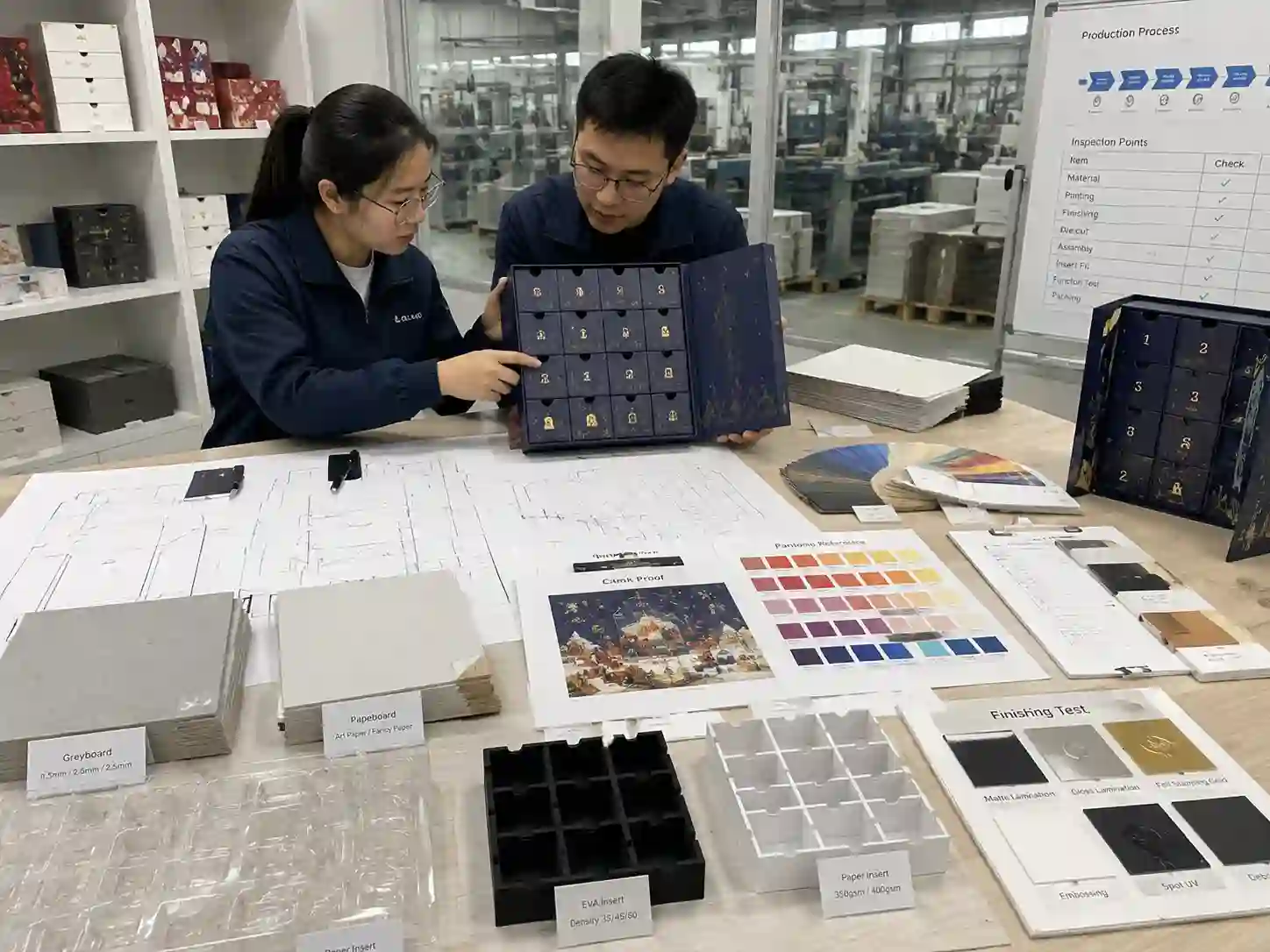
A reliable advent calendar box manufacturer should have a clear artwork approval process before bulk production. Buyers should confirm how the supplier handles dieline files, printing proofs, and finishing samples.
Key verification points include:
- Dieline review to confirm panel size, folding direction, and artwork placement
- CMYK color checking and Pantone reference confirmation
- Printing proof approval before mass production
- Verification of foil stamping, embossing, spot UV, matte lamination, or gloss lamination effects
- Registration checking between printed panels and structural components
Color consistency is especially important for multi-component advent calendar packaging because the outer box, drawers, doors, inserts, and printed cards may be produced through different processes.
What sample process should buyers expect before mass production?
Sampling is one of the most important steps when verifying an advent calendar box manufacturer in China. A professional supplier should provide a clear sample workflow instead of moving directly from artwork approval to bulk manufacturing.
- Structure confirmation: The manufacturer checks dimensions, dielines, opening methods, and assembly requirements.
- Blank sample: A plain sample verifies shape, strength, and product fit before printing.
- Printed prototype: Artwork, colors, and finishing effects are reviewed.
- Revision stage: Problems such as tight drawers, loose inserts, or alignment issues are corrected.
- Pre-production sample approval: The approved sample becomes the reference standard for mass production.
Buyer tip: Do not judge a supplier only by a showroom sample. The verification process should show how the factory develops your specific packaging project.
How can buyers verify production and quality control during manufacturing?
Production verification should focus on whether the manufacturer has checkpoints throughout the process. Final inspection alone cannot fix problems created during cutting, printing, gluing, or assembly.
A practical QC process should include:
- Material inspection before production
- Printing quality inspection after approval
- Die-cutting accuracy checks
- Glue and assembly checks
- Insert fitting tests
- Door and drawer function tests
- Appearance inspection before packing
| Production Stage | Buyer Verification Question |
|---|---|
| Material preparation | Are board thickness, paper type, and insert materials confirmed? |
| Printing | Is the approved color sample used as the production reference? |
| Assembly | Are corners, folds, drawers, and doors checked for tolerance? |
| Final QC | Are appearance defects, missing parts, and functional issues inspected? |
What MOQ, lead time, and quotation details should buyers verify?
A supplier quotation should explain more than a unit price. Buyers need enough information to compare manufacturing options accurately.
Before requesting a quotation, prepare:
- Box structure preference: rigid box, drawer box, door-opening box, or folding carton
- Outer dimensions and compartment requirements
- Product size, weight, and quantity per compartment
- Material preference and insert requirements
- Artwork files or design references
- Printing and finishing requirements
- Estimated order quantity and expected delivery schedule
- Destination country and export packing requirements
Cost drivers usually include material selection, box complexity, insert structure, printing coverage, finishing processes, labor requirements, MOQ, and packing method. A lower quotation may not represent a better supplier if important quality controls are missing.
For buyers preparing a sourcing project, Giftpackpro provides custom advent calendar box services covering development, sampling, production coordination, and packaging solutions.
How should buyers verify export packing and shipping preparation?
Export packing verification is essential because advent calendar boxes often contain complex structures that can be damaged during international transportation.
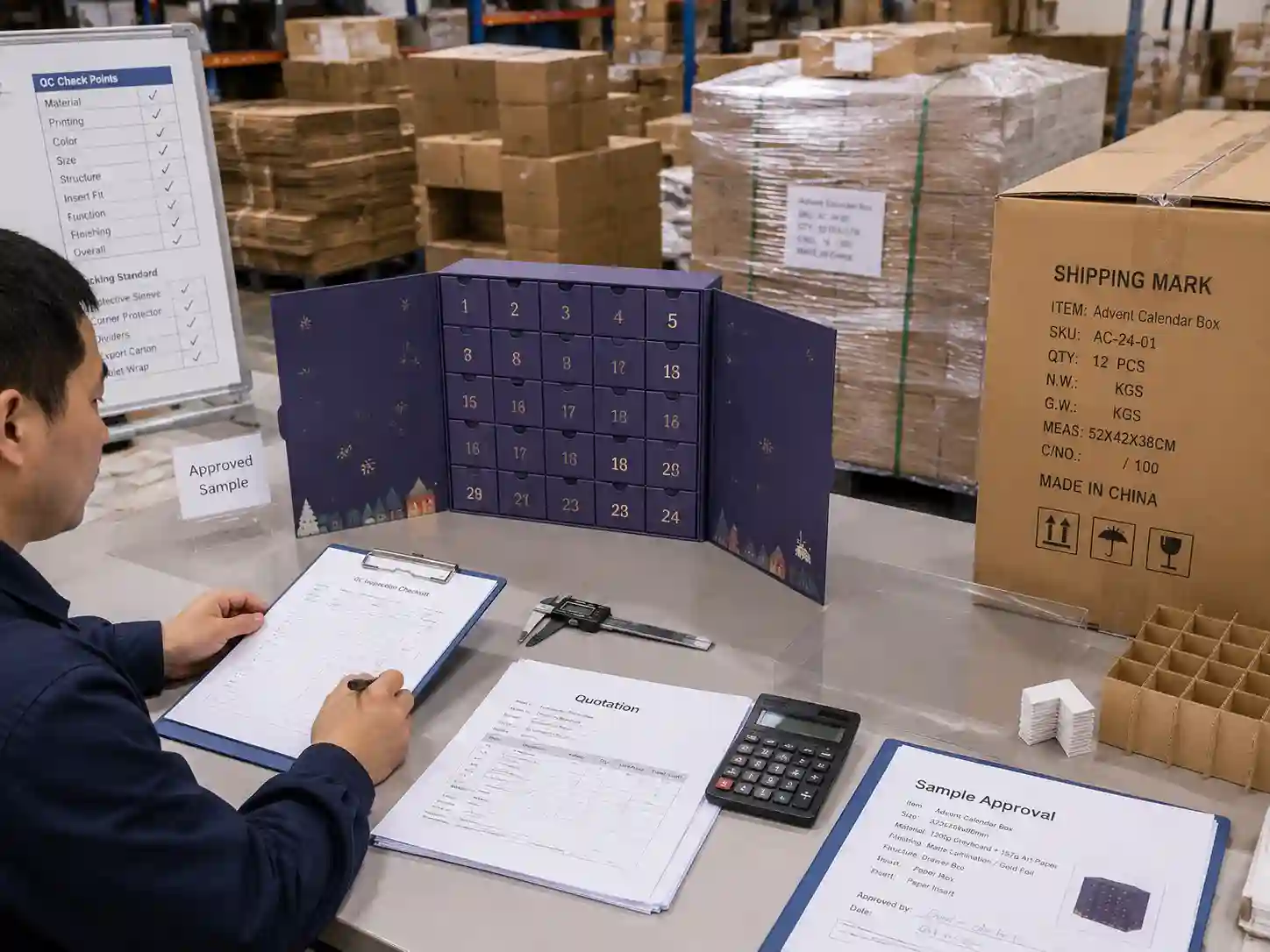
Check whether the manufacturer has a packing plan covering:
- Protective sleeves or separators
- Corner protectors for rigid structures
- Suitable export cartons
- Carton strength and stacking considerations
- Pallet arrangement when required
- Shipping marks and carton identification records
QC tip: Ask for photos or records showing packed cartons before shipment. Common export risks include crushed corners, displaced drawers, bent panels, and damaged doors caused by insufficient protection.
What mistakes should buyers avoid when verifying an advent calendar box manufacturer?
The most common sourcing mistakes happen when buyers evaluate only price instead of production capability.
- Choosing a supplier without checking sample quality
- Approving artwork before confirming the final structure
- Ignoring insert testing with real product dimensions
- Comparing quotations without checking included processes
- Skipping pre-production sample approval
- Not confirming export packing requirements early
Buyer decision guide: how to verify an advent calendar box supplier step by step
| Step | Buyer Action | Expected Result |
|---|---|---|
| 1 | Review manufacturer experience and product range | Confirm the supplier handles similar custom packaging projects |
| 2 | Compare structure options and materials | Select a practical design based on product requirements |
| 3 | Request blank and printed samples | Verify structure, appearance, and product fit |
| 4 | Confirm QC procedures | Understand how production risks are controlled |
| 5 | Approve quotation and production details | Create a clear manufacturing reference |
FAQ: How to verify an advent calendar box manufacturer in China
What documents or information should buyers request from a manufacturer?
Buyers should request product examples, sample procedures, production details, material information, quotation breakdowns, and quality inspection explanations. The goal is to understand how the supplier manages the complete project.
Should buyers always request a sample before placing a bulk order?
Yes. A pre-production sample helps verify structure, printing, insert fit, and assembly performance before mass production begins.
How can buyers check if a factory understands complex advent calendar structures?
Ask specific questions about drawer clearance, door-opening tolerance, compartment layout, insert materials, and assembly control. Detailed answers usually show stronger manufacturing experience.
What information improves quotation accuracy?
Accurate dimensions, product details, quantity, materials, artwork requirements, finishing options, packing requirements, and delivery destination help suppliers prepare a realistic quotation.
How to start a custom advent calendar box project with Giftpackpro
To verify an advent calendar box manufacturer in China successfully, buyers should focus on production capability, sample approval, QC control, and export preparation rather than price alone.
Before contacting Giftpackpro, prepare your product dimensions, preferred box structure, insert requirements, artwork status, estimated quantity, destination market, and timeline. Our team can help review packaging options, sampling requirements, and production planning for custom seasonal packaging projects.
Explore more custom advent calendar box products, learn from additional advent calendar box buying guides, or request a custom quote with your project details.
For buyers who want to understand supplier background and manufacturing capability, visit the Giftpackpro packaging factory information page.