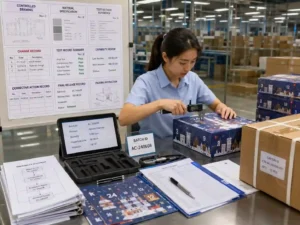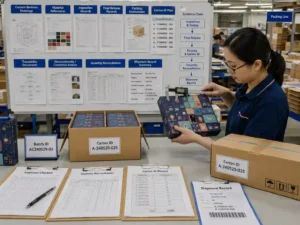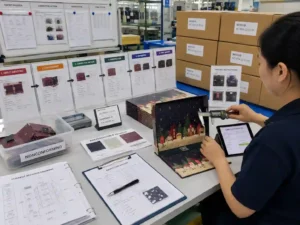
Quick answer: Retail advent calendar boxes should be designed around product fit first, then structure, insert material, printing, sampling, QC, and export packing. For B2B buyers, the most important decisions are whether to use a rigid box, folding carton, drawer box, door-opening box, or fold-out structure; how each product will sit inside paperboard, PET, EVA, foam, or molded pulp inserts; and how the supplier controls dieline accuracy, color proofing, compartment tolerance, assembly strength, and shipping protection before mass production.
For overseas brands, wholesalers, retail buyers, e-commerce sellers, and gift companies, retail advent calendar boxes are not only seasonal display packaging. They are multi-compartment packaging systems that must protect many SKUs, present a campaign story, meet retail shelf requirements, and survive export shipping. A reliable custom advent calendar boxes manufacturer should help buyers turn product dimensions, artwork files, insert requirements, MOQ, sample schedule, carton packing, and inspection standards into a practical production plan.
What should buyers decide before choosing retail advent calendar boxes?
Buyers should decide the product list, retail channel, compartment count, box structure, insert type, artwork process, budget level, and shipping method before requesting a quotation. Without these details, suppliers can only give rough pricing, and the final cost may change after sampling.
The key engineering question is simple: will every item stay in the correct position from assembly to retail display? A 24-door cosmetic calendar, a drawer-style tea calendar, and a fold-out stationery gift calendar may look similar in a catalog, but each requires different board thickness, insert tolerance, glue strength, door opening design, and export carton protection.
Before contacting Giftpackpro or any supplier, prepare product dimensions with length, width, height, weight, material, fragility, and whether the product has a primary pack. A glass vial, paper sachet, coffee capsule, jewelry card, candle tin, candy pouch, and stationery card all need different insert support. Product-fit data is more useful than a general statement such as “small gifts.”
Buyer tip: For retail advent calendar boxes, the insert layout should be confirmed before final artwork. Door numbers, window positions, product names, barcode areas, and promotional messages can shift if the compartment layout changes during sampling.
Which box structure is best for retail display and product fit?
The best structure depends on product weight, retail shelf position, opening experience, assembly efficiency, and shipping risk. Rigid boxes are stronger and more premium, while folding cartons are lighter and usually better for cost-sensitive or high-volume retail programs.
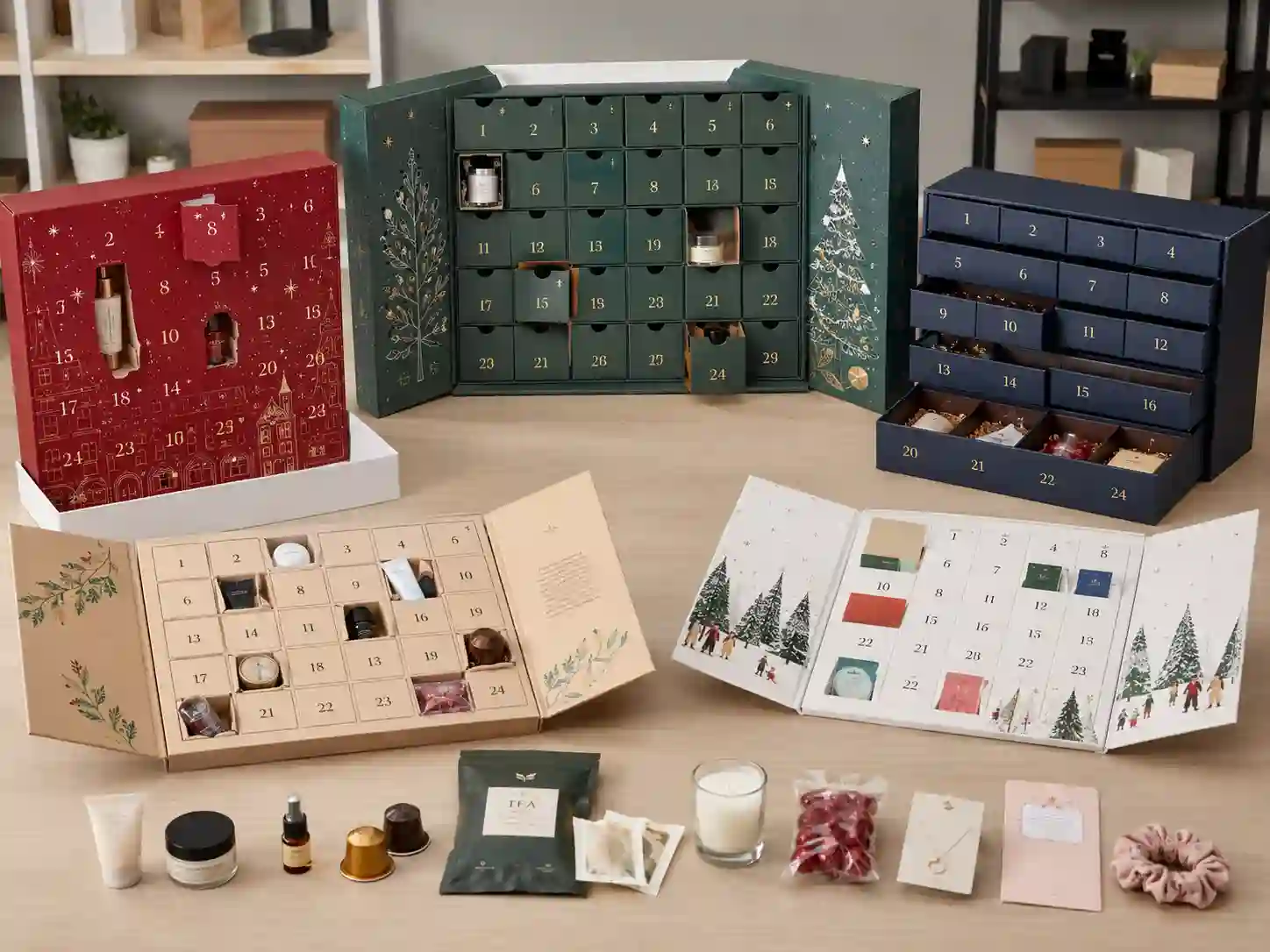
| Structure option | Best for | Buyer advantages | Fit and production concerns |
|---|---|---|---|
| Rigid retail calendar box | Premium beauty, jewelry, candle, gift set, and multi-SKU campaigns | Strong greyboard structure, premium shelf presence, suitable for foil stamping, embossing, spot UV, matte lamination, and magnetic or sleeve designs | Higher unit cost, larger carton volume, longer assembly time, insert tolerance must match box cavities closely |
| Folding carton shelf calendar | Mass retail, lightweight products, candy, sachets, stationery, and promotional sets | Efficient for flat shipping or semi-automatic assembly, lighter paperboard, good for CMYK printing and retail graphics | Lower load-bearing strength than rigid box, needs careful lock structure and door tear-line testing |
| Drawer advent calendar box | Tea, coffee, jewelry, accessories, small candles, and reusable gift programs | Clear product separation, smooth unboxing, good perceived value, flexible drawer sizes | Drawer sliding tolerance, ribbon strength, glue durability, and outer sleeve compression must be checked |
| Door-opening calendar box | Classic retail advent calendar displays with numbered compartments | Strong campaign visibility, easy numbering, good for shelf storytelling and product discovery | Perforation strength, door opening force, insert alignment, and product movement behind doors need testing |
| Fold-out seasonal campaign calendar | Influencer kits, limited seasonal collections, e-commerce gift sets, and brand launch packs | Large visual area for artwork, flexible layout, good for mixed product shapes | Hinge fold strength, magnet or closure alignment, carton packing protection, and opened display stability matter |
For retail shelf programs, buyers should also check the front-facing size, display angle, shelf footprint, barcode label area, and whether the box can stand upright when loaded. A structure that looks attractive in a sample photo may fail if the loaded weight pulls the front panel forward or if drawers slide open during transport.
How should inserts be selected for different products?
Insert selection should be based on product weight, surface sensitivity, fragility, sustainability goals, visual presentation, and assembly speed. The insert is not only a tray; it controls movement, protects finishes, supports door alignment, and affects labor cost during packing.
When should buyers choose paperboard inserts?
Paperboard inserts are suitable for lightweight products such as sachets, cards, candy pouches, small stationery, folded accessories, and secondary-packed items. They are popular because they match paper gift packaging, can be printed, folded, and recycled more easily than many plastic or foam options, depending on local recycling rules.
Paper inserts need accurate slot dimensions and folding structure. If the board is too thin, compartments may collapse during packing. If the board is too thick, assembly becomes slow and the insert may push against door panels. For retail advent calendar boxes with many small compartments, even a 1-2 mm tolerance issue can cause visible misalignment.
When are PET trays useful?
PET trays are useful when products need precise molded cavities, clear presentation, and faster loading during mass production. They are common for cosmetic minis, coffee capsules, molded candies, small bottles, and products with repeated shapes.
Buyers should confirm tray thickness, cavity depth, anti-scratch requirements, and whether the tray will be visible after opening. A thin PET tray may reduce cost, but it can deform if products are heavy or if the export carton is compressed. Buyers should also verify local recycling expectations and packaging regulations for their market.
When should buyers use EVA or foam inserts?
EVA and foam inserts are suitable for fragile, heavy, premium, or high-surface-value items such as glass perfume samples, mini bottles, candle tins, jewelry pieces, and gift accessories. They provide cushioning and clean product positioning, but they increase cost and may affect sustainability claims.
Foam density, cut depth, surface finish, odor, and product removal force should be checked during sample approval. If the cavity is too tight, customers may damage the product while removing it. If the cavity is too loose, products may rotate or fall out behind the door panel.
When is molded pulp a good option?
Molded pulp can be a practical option for brands that want a fiber-based insert with better cushioning than a simple paperboard divider. It is useful for certain candles, jars, bottles, food gift items, and heavier products where molded support is needed.
Molded pulp requires tooling, so it is usually more practical when the product shape and order quantity justify development. Buyers should check surface smoothness, cavity tolerance, color consistency, and whether the natural texture fits the retail positioning of the campaign.
Factory tip: The cheapest insert is not always the lowest-cost solution. If a weak insert slows packing, causes rework, or increases damage during export shipping, the total landed cost may be higher than using a stronger paper insert, PET tray, EVA insert, foam, or molded pulp insert from the start.
How do compartments affect artwork, cost, and assembly?
Compartment design affects almost every part of the project: dieline, insert structure, door numbering, printing registration, assembly time, sample testing, and export packing. Buyers should confirm the compartment map before approving final artwork.
For retail advent calendar boxes, each compartment should have a product assigned to it before the dieline is locked. Mixed-size products may require irregular cavities, stepped inserts, or different drawer heights. If all compartments are forced into the same size, small items may look loose while large items may be difficult to insert.
- Use shallow compartments for flat sachets, cards, stickers, jewelry cards, and stationery pieces.
- Use deeper cavities or reinforced drawers for candles, bottles, jars, capsules, and heavier gift items.
- Use finger notches or pull ribbons when products are hard to remove from tight inserts.
- Keep enough paper bridge width between doors to prevent tearing during opening.
- Avoid placing the heaviest products at the top if the box must stand upright on a retail shelf.
Artwork also depends on compartment engineering. Door numbers should avoid perforation cuts, fold lines, glue areas, and deep embossing positions. If foil stamping or spot UV crosses a die-cut door line, registration control becomes more difficult and the finish may crack or misalign.
What printing and finishing choices matter for retail advent calendar boxes?
Printing and finishing should support retail visibility without weakening the structure or delaying production. CMYK, Pantone color, foil stamping, embossing, spot UV, matte lamination, and gloss lamination should be chosen after the dieline and material are clear.

For retail programs, color consistency is often as important as the design itself. Buyers should request a digital proof for layout checking and, when color accuracy matters, a printed proof or pre-production sample for approval. Pantone references are useful for brand colors, but the final appearance still depends on paper type, lamination, ink coverage, and lighting.
Matte lamination gives a softer premium look and can reduce glare in product photography. Gloss lamination gives stronger shine and can make retail graphics more vivid. Foil stamping is useful for premium seasonal packaging, but buyers should check the stamping area, pressure, registration tolerance, and whether the foil will cross folds or perforations. Embossing can add value, but it may affect board flatness if used too close to doors or glue areas.
Buyer tip: Always approve artwork on the actual dieline, not only on a flat visual mockup. Door cuts, drawer gaps, fold lines, barcode areas, and glue flaps can change how the final printed box looks after assembly.
How should buyers test samples before mass production?
Buyers should test blank samples for structure, printed samples for color and finishing, and pre-production samples for final product fit before mass production. Skipping any of these steps increases the risk of misfit, color disputes, door failure, and export damage.
- Blank structural sample: Check box size, board thickness, insert layout, drawer movement, door opening, standing stability, and product loading.
- Artwork proof: Check dieline placement, door numbers, barcode area, warning text, SKU names, retail claims, and spelling.
- Printed sample: Check CMYK color, Pantone matching, foil stamping, embossing, spot UV, lamination, and print registration.
- Loaded fit test: Place real products in every compartment and shake, tilt, open, close, and remove products as a customer would.
- Pre-production sample: Approve the final material, insert, print, finish, assembly method, and carton packing before mass production starts.
For fragile products, buyers should test not only whether the product fits, but whether it remains stable after vibration, carton stacking, and temperature changes during shipping. Glass bottles, candles, jars, and capsules may need EVA, foam, molded pulp, or reinforced paperboard support. Buyers selling through retail or e-commerce should also consider transit testing. ISTA provides widely used package performance testing resources at ISTA.
QC tip: A sample is not approved only because it looks attractive. It should be approved because the dimensions, insert tolerance, door function, color, finish, loading method, and export packing plan match the buyer’s written requirements.
What are the main cost drivers and MOQ factors?
The main cost drivers are box structure, board grade, insert material, compartment count, printing coverage, finishing process, sample complexity, labor time, order quantity, and export packing volume. MOQ depends on material sourcing, printing setup, tooling, and production efficiency.
Rigid boxes generally cost more than folding cartons because they use greyboard, wrapped paper, more manual assembly, and larger shipping volume. Drawer boxes may require more components and labor. Door-opening boxes need accurate die cutting, perforation testing, and insert alignment. PET trays or molded pulp may require tooling, while EVA and foam inserts require cutting and material selection.
Buyers should compare quotations carefully. A low unit price may exclude sample cost, mold cost, inner packing, export cartons, palletizing, color proofing, or special inspection. A complete quotation should state material, dimensions, insert type, printing, finishing, MOQ, sample lead time, mass production lead time, packing method, carton size, estimated gross weight, payment terms, and shipping terms.
How should buyers compare suppliers for this type of packaging?
Buyers should compare suppliers by engineering support, sample quality, communication accuracy, production control, QC process, export packing experience, and quotation clarity. Price matters, but it should not be the only comparison point for multi-compartment retail packaging.
A capable supplier should ask for product size, product weight, retail channel, insert preference, artwork status, order quantity, delivery market, and packing requirements before quoting final production. If a supplier gives a fixed price without checking the product list, insert structure, or dieline, the buyer may face changes after sampling.
- Ask whether the supplier can create or adjust the dieline based on real product dimensions.
- Check whether they provide blank samples, printed samples, and pre-production samples.
- Review how they control color proofing, door cutting, glue strength, drawer sliding, and insert tolerance.
- Confirm whether they understand export carton strength, pallet loading, shipping marks, and carton labeling.
- Ask for clear lead time by stage: dieline, sample, approval, mass production, inspection, and packing.
Giftpackpro provides custom advent calendar box services for buyers who need structure planning, insert development, artwork support, sample review, and production coordination. Buyers can also review custom advent calendar box products to compare common structure directions before preparing an RFQ.
What QC checks should be included before shipment?
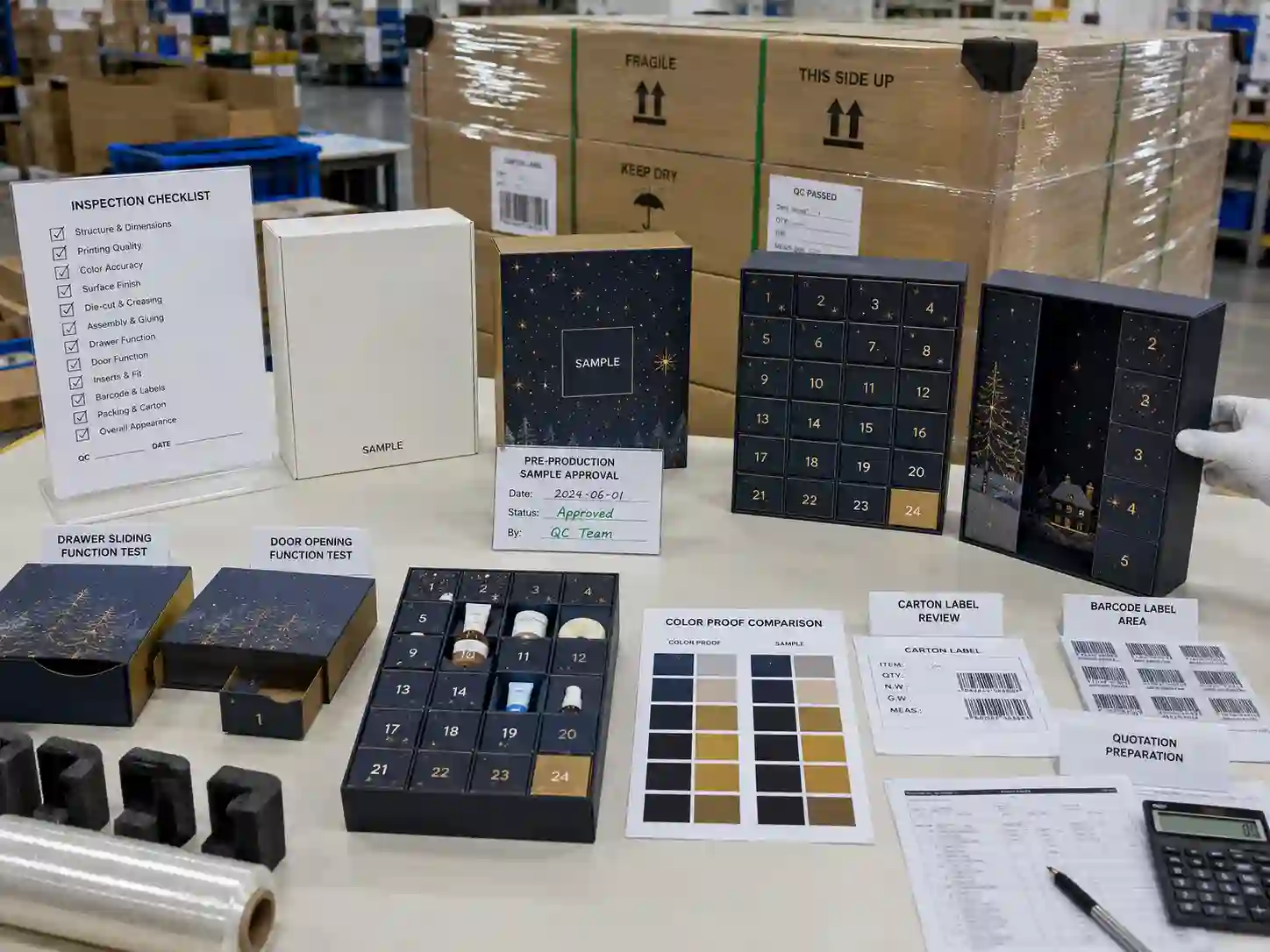
QC should check dimensions, materials, printing, finishing, insert fit, assembly strength, door function, drawer movement, product loading, carton packing, and shipping marks. Final inspection should be based on the approved pre-production sample and written specification sheet.
| QC area | What to inspect | Why it matters |
|---|---|---|
| Dieline and dimensions | Outer size, compartment size, insert cavities, door positions, drawer gaps, fold lines | Prevents product misfit, poor shelf display, and assembly problems |
| Material and structure | Paperboard or greyboard thickness, rigidity, glue strength, folding accuracy, standing stability | Protects products and keeps the retail box functional after loading |
| Printing and finishing | CMYK color, Pantone color, foil stamping, embossing, spot UV, lamination, registration | Ensures brand consistency and avoids visible retail defects |
| Insert performance | Paper insert, PET tray, EVA insert, foam, or molded pulp fit, product removal force, movement control | Reduces breakage, rotation, scratching, and customer complaints |
| Export packing | Inner protection, export carton, corner protectors, pallet wrap, carton label, shipping marks | Reduces compression, moisture, handling, and warehouse identification risks |
For paper-based sourcing, buyers can ask suppliers about responsible fiber sourcing and verify claims through official programs such as FSC when relevant. Do not assume a material claim is valid unless the supplier can provide documents that match the actual order, material, and production batch.
How should export packing be planned for retail advent calendar boxes?
Export packing should be planned according to box size, loaded weight, carton strength, shipping method, pallet loading, destination warehouse requirements, and whether the goods ship empty or pre-filled. Large seasonal boxes need more protection than simple flat cartons.
Retail advent calendar boxes can be damaged by carton compression, corner impact, humidity, rough handling, and pallet overhang. Rigid boxes with premium finishes may need tissue paper, polybag, corner protectors, inner cartons, or stronger master cartons. Folding carton calendars may need support boards or careful carton orientation to avoid crushed doors.
Shipping marks should be generic and accurate: item number, carton number, quantity, gross weight, net weight, carton size, destination, handling marks, and barcode label area if required. Buyers should confirm whether Amazon, retail warehouse, distributor, or third-party logistics labels are needed before mass packing.
Factory tip: Export packing should be approved before final production packing starts. If carton size, pallet height, or shipping marks are decided after goods are finished, repacking can delay delivery and increase labor cost.
What information should buyers prepare for an accurate quotation?
Buyers should prepare product details, structure preference, size target, insert requirement, artwork file, quantity, destination, sample needs, and packing requirements. A complete RFQ helps the supplier quote faster and reduces revision cycles.
Practical RFQ checklist for Giftpackpro
- Target box type: rigid box, folding carton, drawer box, door-opening box, fold-out box, or reference structure.
- Product list: dimensions, weight, material, fragility, and whether each item has primary packaging.
- Compartment count and layout: 12, 24, 25, 31, or custom count with mixed cavity sizes.
- Insert preference: paper insert, PET tray, EVA insert, foam, molded pulp, or supplier recommendation.
- Material preference: paperboard, greyboard, specialty paper, recycled-content request, or cost target.
- Printing requirements: CMYK, Pantone, foil stamping, embossing, spot UV, matte lamination, gloss lamination.
- Artwork status: ready AI/PDF dieline artwork, design concept, or need for dieline support.
- Order quantity and target MOQ range: sample quantity, trial order, or bulk production plan.
- Market and channel: retail shelf, e-commerce, wholesale, Amazon, gift company, distributor, or campaign kit.
- Export packing needs: carton marks, pallet requirement, warehouse labels, barcode area, and shipping method.
- Timeline: sample deadline, approval date, mass production deadline, and required delivery window.
Buyers who need help turning these details into a workable specification can contact the Giftpackpro packaging factory team or request a custom quote with product photos, dimensions, artwork files, and target quantity.
Decision guide: which insert and structure combination should you start with?
Start with the combination that protects the product with the least unnecessary complexity. Premium or fragile products usually need stronger structures and custom inserts, while lightweight retail items can often use folding carton structures with paperboard inserts.
| Product situation | Recommended starting point | Why this works |
|---|---|---|
| Lightweight sachets, cards, stickers, or flat gifts | Folding carton or door-opening box with paperboard insert | Good cost control, efficient packing, and enough support for flat products |
| Cosmetic minis, coffee capsules, or repeated small shapes | Door-opening or rigid box with PET tray | Consistent cavity shape, faster loading, and cleaner product presentation |
| Glass vials, mini bottles, candles, or fragile items | Rigid box or drawer box with EVA, foam, or molded pulp | Better cushioning, position control, and protection during export shipping |
| Mixed gift accessories with different sizes | Drawer box, fold-out box, or rigid box with mixed paper and foam inserts | Flexible cavity planning and better premium unboxing experience |
| Large retail campaign with strict cost target | Folding carton shelf calendar with optimized paperboard insert | Lower material and shipping weight while keeping retail display function |
What common mistakes should buyers avoid?
Buyers should avoid approving artwork before product fit, choosing inserts only by price, ignoring export packing, and comparing supplier quotations without matching specifications. Most problems appear when structure, insert, and production details are treated as separate decisions.
- Mistake 1: Sending only a design image. A visual concept is not enough. The supplier needs real product dimensions, weights, and a compartment plan.
- Mistake 2: Choosing one cavity size for all products. Mixed products need engineered layout planning, or small items will move and large items will be hard to pack.
- Mistake 3: Skipping loaded sample testing. An empty sample can look perfect while the loaded box fails during door opening or shipping.
- Mistake 4: Overusing finishing processes near folds and die cuts. Foil stamping, embossing, and spot UV should be placed with production tolerance in mind.
- Mistake 5: Treating MOQ as the only cost factor. Tooling, sample revisions, insert complexity, labor, carton volume, and pallet loading can change total project cost.
- Mistake 6: Leaving shipping marks and carton labels until the end. Retail and e-commerce logistics requirements should be confirmed before packing.
FAQ: Retail advent calendar boxes for B2B buyers
What is the most important factor in retail advent calendar box design?
The most important factor is product fit. The structure, insert, compartment layout, artwork, and export carton should all be built around the real products that will be packed inside.
Are rigid boxes better than folding cartons?
Rigid boxes are better for premium, heavier, or fragile gift programs, while folding cartons are better for lightweight, cost-sensitive, high-volume retail campaigns. The best choice depends on product weight, retail channel, budget, and shipping method.
Which insert is best for fragile products?
EVA, foam, and molded pulp usually provide stronger protection for fragile products than simple paperboard inserts. However, the final choice should be confirmed through loaded sample testing and export packing review.
Should buyers request a prototype before bulk production?
Yes. Buyers should request at least a blank structural sample and, for retail orders, a printed sample or pre-production sample. This helps confirm dieline, insert fit, color, finishing, assembly, and packing before mass production.
How does MOQ affect retail advent calendar boxes?
MOQ is affected by printing setup, material purchasing, insert tooling, production labor, and structure complexity. A simple folding carton calendar may have a different MOQ from a rigid drawer calendar with EVA inserts or a molded pulp tray.
What should be included in a production specification?
A production specification should include dimensions, material, board thickness, insert type, printing method, finishing, dieline version, artwork version, sample approval status, QC points, packing method, carton size, shipping marks, and delivery requirements.
How can Giftpackpro help buyers prepare a reliable project?
Giftpackpro helps overseas brands, wholesalers, retail buyers, gift companies, and packaging purchasing teams develop retail advent calendar boxes from product-fit planning to sample approval and export packing. The most efficient projects begin with clear product information, artwork expectations, quantity, timeline, and destination requirements.
Before asking for a sample or quotation, prepare product photos, dimensions, weight, desired compartment count, preferred structure, insert expectations, printing and finishing ideas, order quantity, and target delivery date. Buyers can review more advent calendar box buying guides, compare structure references, and then use the request a custom quote page to send RFQ details. A clear RFQ helps Giftpackpro recommend suitable custom advent calendar boxes, reduce sampling revisions, and support smoother mass production.