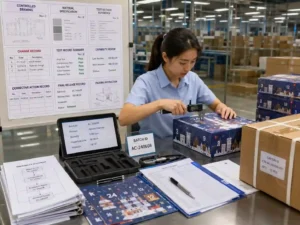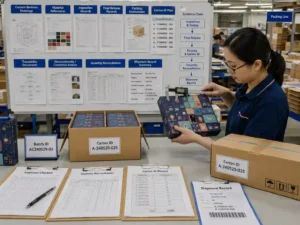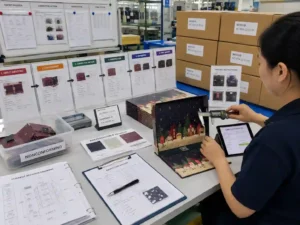
Quick answer: Bracelet advent calendar boxes need more than attractive seasonal artwork. B2B buyers should confirm the box structure, bracelet insert, material thickness, printing method, sample approval process, carton packing method, pallet plan, and shipping marks before mass production. For export orders, the biggest risks are crushed corners, loose bracelets, drawer misalignment, torn doors, color variation, and carton compression during shipping. A reliable supplier should test bracelet fit, confirm the dieline, review artwork, prepare pre-production samples, control assembly tolerance, and design export cartons that protect both the finished calendar box and the retail presentation.
What should buyers understand before ordering bracelet advent calendar boxes?
Buyers should understand that bracelet advent calendar boxes are both retail packaging and protective shipping units. The box must display a seasonal campaign clearly, hold bracelets securely, open smoothly, and survive international transport without damaging the calendar structure or the products inside.
Bracelets create different packaging challenges from cosmetics, tea, or chocolate. Chain bracelets can tangle, bangles need larger cavities, charm bracelets may be heavier on one side, bead bracelets can roll inside compartments, and bracelet cards require flat support. This means the insert, cavity depth, and export packing method must be designed around the actual bracelet assortment, not only the outer box size.
For overseas brands, wholesalers, retail buyers, Amazon sellers, and gift companies, the most important early decision is whether the calendar will ship flat, semi-assembled, or fully assembled. This affects unit cost, labor, carton quantity, warehouse handling, damage risk, and delivery schedule.
Giftpackpro works as a custom advent calendar boxes manufacturer for buyers who need seasonal paper gift packaging with practical structure, insert, printing, sample, QC, and export packing support.
Which box structure is best for bracelet advent calendar boxes?
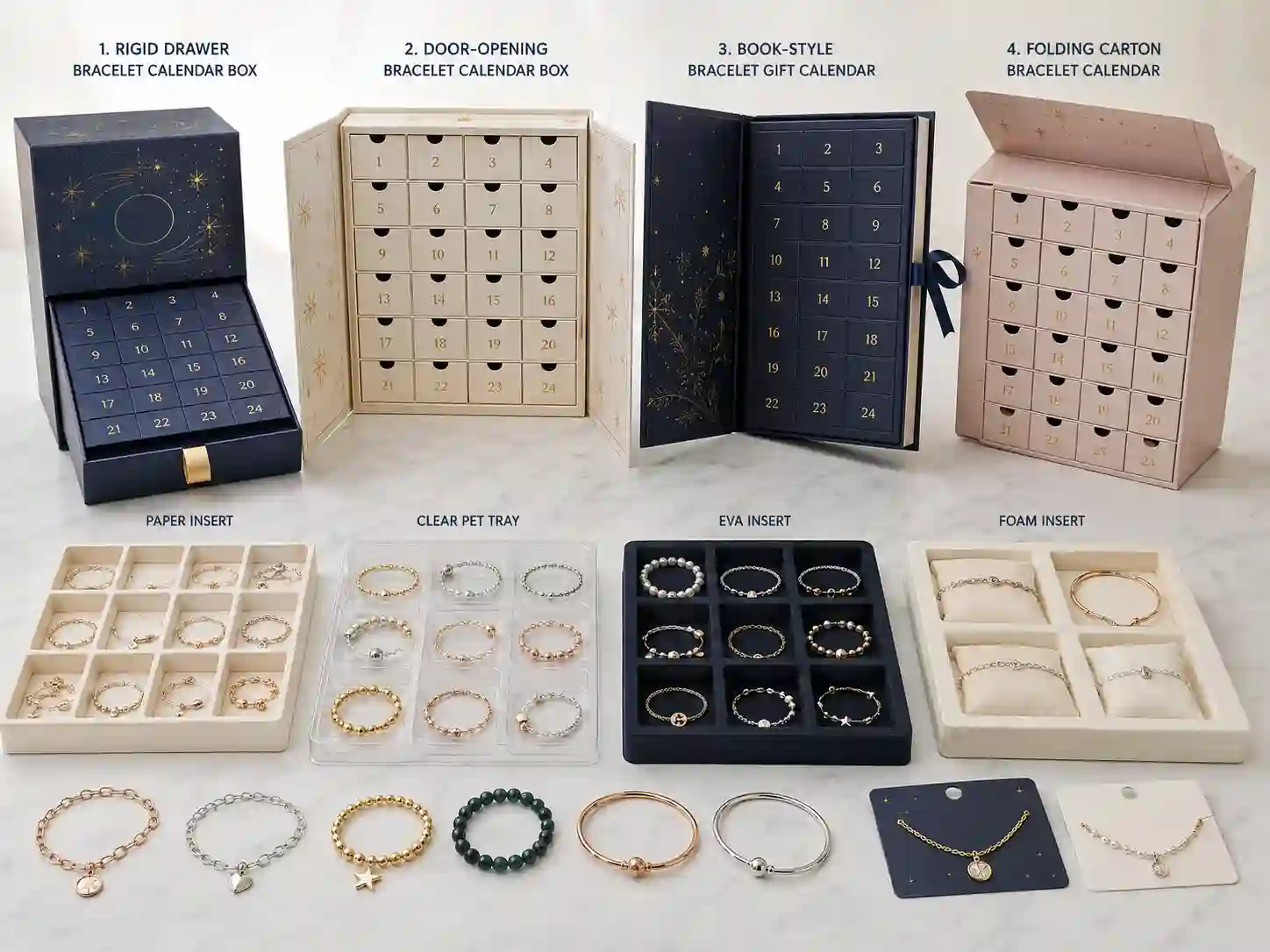
The best structure depends on bracelet weight, retail positioning, assembly method, and shipping plan. Rigid drawer boxes and door-opening boxes are common for premium campaigns, while folding carton calendars are useful when cost control and flat packing are priorities.
| Structure option | Best use case | Bracelet fit considerations | Export packing impact |
|---|---|---|---|
| Rigid drawer box | Premium bracelet gift sets, luxury retail campaigns, influencer or VIP gift programs | Good for chain bracelets, charms, bangles, and bracelet cards if each drawer has a fitted insert | Usually ships assembled; needs strong master cartons, corner protection, and compression control |
| Door-opening advent calendar | Seasonal retail displays with daily reveal doors | Needs accurate perforation or cut line control so bracelets do not fall out when doors open | Doors can dent or tear during rough handling; front panel protection is important |
| Book-style rigid box | Premium bracelet collections, jewelry gift sets, brand storytelling layouts | Works well with paperboard, EVA, foam, or velvet-covered inserts for mixed bracelet styles | Magnetic closure and spine area must be protected from pressure during carton stacking |
| Folding carton calendar | Higher-volume retail or e-commerce campaigns where unit cost and freight volume matter | Better for lightweight bracelet cards or small chain bracelets than heavy bangles | Can support flat packing, but requires buyer-side or co-packer assembly planning |
Buyer tip: Do not choose the structure from a catalog photo alone. Ask the supplier to confirm inner cavity size, bracelet loading direction, insert thickness, open-and-close function, and whether the finished calendar can pass carton stacking without drawer or door deformation.
When should buyers choose flat packing?
Flat packing is suitable when the structure can be assembled easily at the buyer’s warehouse or by a co-packer. It can reduce shipping volume, but it transfers part of the assembly responsibility from the packaging factory to the buyer’s operation.
For bracelet advent calendar boxes, flat packing works best with folding carton calendars, simple paper insert systems, or outer sleeves that do not require complex gluing. It is less suitable for rigid drawer boxes, magnetic book-style boxes, or calendars with precise drawer alignment unless the supplier provides a tested assembly guide.
When should buyers choose assembled packing?
Assembled packing is better when appearance, structure stability, and fast retail loading matter more than freight volume. The factory can control glue strength, drawer alignment, insert placement, and visual presentation before export.
Assembled packing is often recommended for premium bracelet gift sets, retail launch campaigns, and complex door-opening calendars. The tradeoff is higher carton volume, higher freight cost, and stricter master carton protection requirements.
How should bracelet inserts be designed for product fit and shipping safety?
Bracelet inserts should hold each product in place during handling, carton movement, and final customer opening. A good insert prevents tangling, scratching, rolling, sliding, and pressure marks on the bracelet or bracelet card.
The insert decision should be based on the bracelet type, not only on the box appearance. Chain bracelets need anti-tangle cavities or card slots. Bangles need circular or curved support. Charm bracelets need enough cavity depth for raised charms. Bead bracelets need a secure groove so the product does not roll under the calendar panel.
| Insert material | Advantages for bracelet calendars | Limitations to check |
|---|---|---|
| Paper insert | Cost-effective, recyclable direction, suitable for bracelet cards and lightweight chain bracelets | Needs crease strength and accurate slot cutting; may not protect heavy bangles well |
| PET tray | Clear product positioning, stable cavities, useful for repeatable mass production fit | Tooling and tray thickness should be checked; sustainability requirements vary by market |
| EVA insert | Good cushioning, clean premium presentation, useful for charms, bangles, and mixed bracelet sets | Can increase cost and thickness; surface marks and odor should be checked during sampling |
| Foam insert | Soft support for delicate bracelets and plated surfaces | May not match all sustainability policies; compression recovery should be tested |
| Molded pulp insert | Paper-based protective option for brands seeking plastic reduction | Surface texture and dimensional tolerance may not suit very delicate jewelry finishes |
QC tip: Insert testing should include a shake test, tilt test, open-door test, drawer pull test, bracelet removal test, and repacking test. A bracelet that looks secure on a photo may still move during export shipping if the cavity depth or slot angle is wrong.
Which materials and printing choices affect export durability?
Material and printing choices affect not only appearance but also carton resistance, edge strength, rub resistance, and final shelf presentation. For bracelet advent calendar boxes, buyers should balance premium look with the physical stress of export cartons, palletizing, and retail handling.
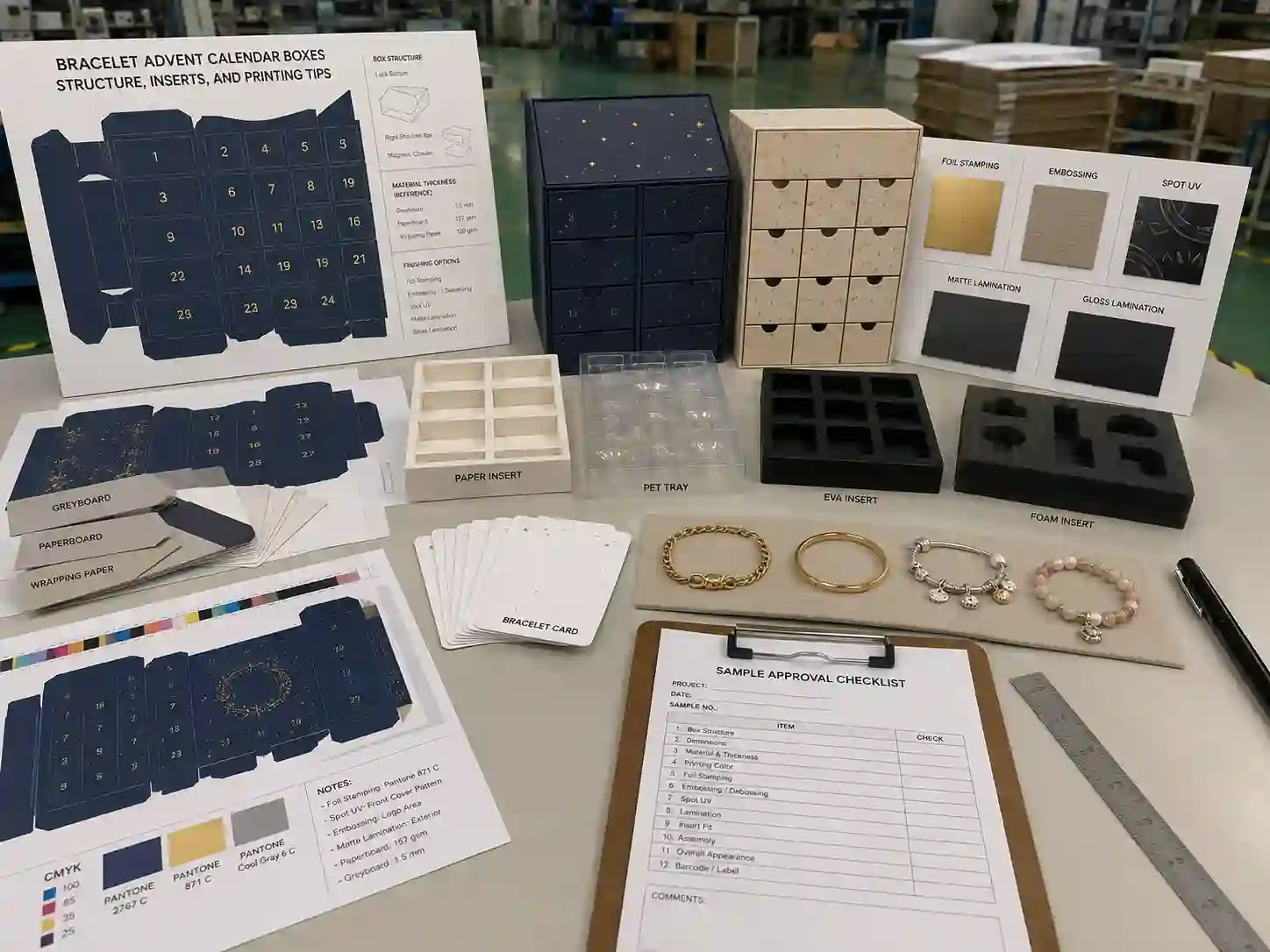
Rigid boxes usually use greyboard wrapped with printed paper. Folding carton calendars usually use paperboard with die-cut windows, doors, or compartment panels. The supplier should recommend material thickness after checking the bracelet weight, finished box size, insert type, and shipping method.
For artwork, buyers should prepare a dieline-based file with CMYK values, Pantone references where needed, bleed, safe zones, barcode placement, opening-door numbers, and finishing layers. Foil stamping, embossing, spot UV, matte lamination, and gloss lamination can improve retail appeal, but each process adds cost, production steps, and QC checkpoints.
What printing checks should be completed before mass production?
Printing should be checked before full production because seasonal packaging often has strict campaign colors, numbered doors, and retail shelf requirements. Buyers should approve color, text, dieline position, finishing position, and barcode readability before the factory starts bulk printing.
- Confirm CMYK and Pantone color references on the artwork proof.
- Check whether foil stamping and embossing layers are correctly separated in the file.
- Review door numbers, bracelet descriptions, warning text, and country-specific labeling.
- Check barcode position and quiet zone if retail scanning is required. Buyers can reference official GS1 barcode standards when preparing barcode requirements.
- Confirm matte lamination, gloss lamination, or anti-scratch film based on retail handling expectations.
- Approve the pre-production sample before mass production starts.
Factory tip: A dieline is not only an artwork template. It is the manufacturing map for cutting, creasing, gluing, insert placement, door opening, drawer movement, and carton packing. Small dieline changes can affect tooling, sample timing, MOQ, and final export packing volume.
How do MOQ, sampling, and lead time affect the buying decision?
MOQ, sampling, and lead time are connected because custom bracelet advent calendar boxes require material purchasing, dieline development, printing setup, finishing, insert production, assembly, QC, and export packing. Buyers should not compare quotations by unit price only.
A lower unit price may come from thinner paperboard, fewer finishing steps, simpler inserts, flat packing, or reduced carton protection. A higher price may include stronger greyboard, custom EVA insert, printed drawers, protective lamination, pre-production sample control, reinforced export cartons, and better packing labor.
What sample stages should buyers expect?
Buyers should expect at least a blank structural sample and a printed sample or pre-production sample for serious seasonal programs. The blank sample checks size, insert fit, drawer movement, and bracelet positioning. The printed sample checks artwork, color, finishing, barcode placement, and retail appearance.
- Dieline confirmation: Confirm outer size, compartment count, bracelet cavity size, door or drawer layout, and assembly method.
- Blank prototype: Test structure, insert, bracelet fit, opening function, and packing method without full printing.
- Printed sample: Review CMYK or Pantone color, foil stamping, embossing, spot UV, lamination, and artwork position.
- Pre-production sample: Confirm the final material, print, insert, assembly, and export packing before mass production.
- Mass production QC: Inspect printing, gluing, drawer alignment, door function, insert fit, carton labels, and shipping marks.
Buyers can review related advent calendar box buying guides to compare structure, inserts, printing, and sourcing topics before preparing a final RFQ.
How should export packing be planned for bracelet advent calendar boxes?
Export packing should be planned before mass production, not after the finished boxes are assembled. Bracelet calendars can be damaged by corner impact, carton compression, moisture, loose inserts, and pallet movement during international transportation.
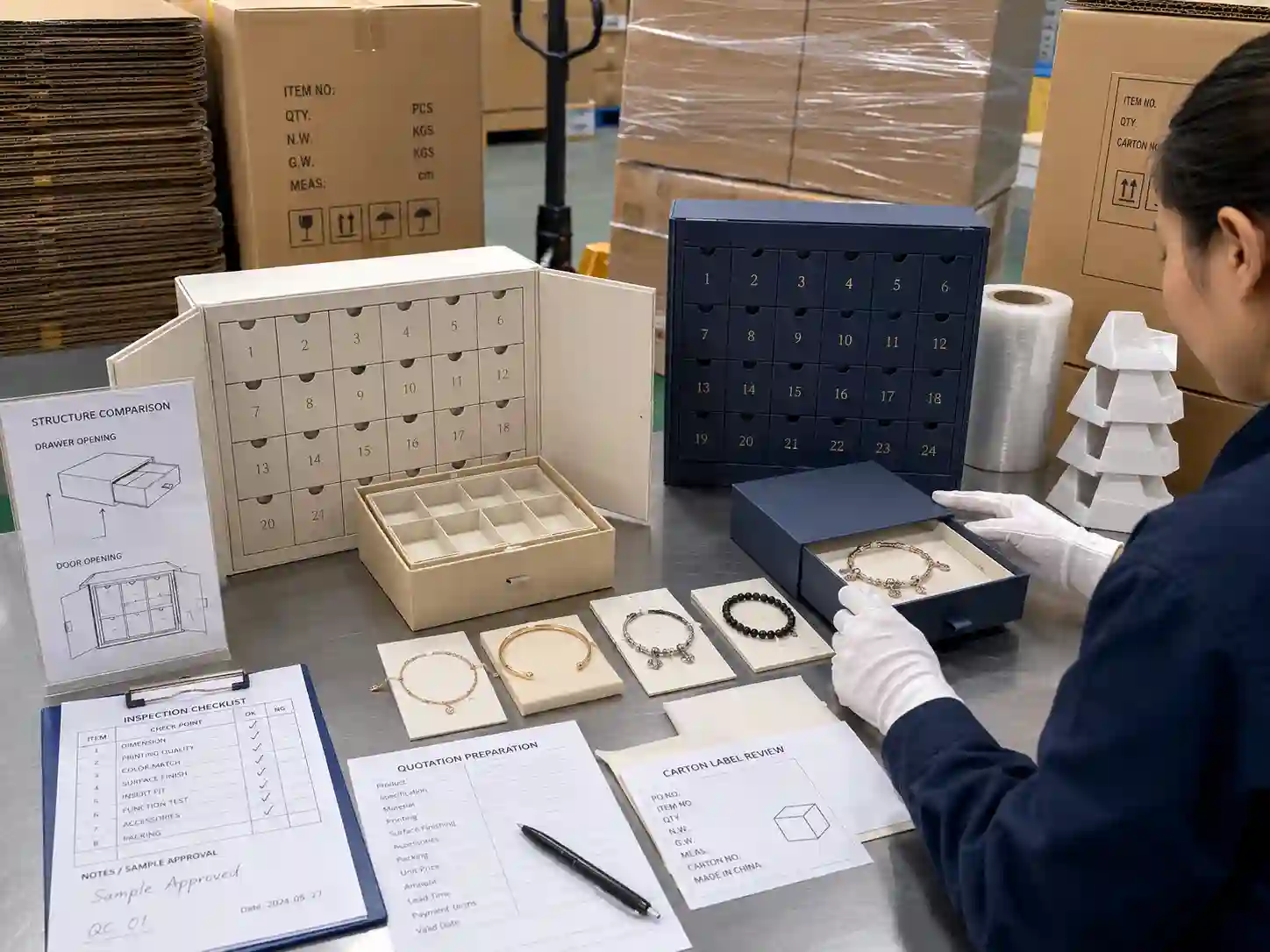
The supplier should confirm whether the goods are flat packed, semi-assembled, or fully assembled. Each method requires a different master carton size, inner protection, carton quantity, gross weight, pallet layout, and loading plan.
| Packing method | Advantages | Risks | Best control point |
|---|---|---|---|
| Flat packing | Lower freight volume, useful for folding carton structures, easier bulk storage | Buyer must handle assembly quality; risk of incorrect folding or insert placement | Provide assembly instruction, carton sequence, and sample assembly video or guide |
| Semi-assembled packing | Balances freight efficiency and factory-side quality control | Some parts may still deform if not separated or protected correctly | Use dividers, sleeves, inner cartons, and clear packing sequence |
| Fully assembled packing | Best for premium appearance and ready-to-fill or ready-to-sell programs | Higher volume and higher compression risk in transit | Use reinforced export cartons, corner protectors, proper carton weight limits, and pallet wrap |
What should be checked on master cartons?
Master cartons should protect the retail box without becoming too heavy for safe handling. The carton specification should match the finished calendar size, packing quantity, product weight, and shipping route.
- Confirm carton dimensions, quantity per carton, gross weight, and net weight.
- Check edge crush strength or carton strength requirements when stacking is expected.
- Use inner protection such as poly bags, tissue paper, corner protectors, dividers, or foam sheets where appropriate.
- Confirm carton labels, shipping marks, SKU codes, PO number, destination, and handling symbols.
- Review pallet size, pallet height, pallet wrap, corner boards, and loading method.
- Consider transport testing guidance such as the official ISTA resources when buyers require formal distribution testing.
Quotable B2B statement: Export packing is part of the product specification for bracelet advent calendar boxes, not a warehouse detail. If the carton size, pallet height, and inner protection are not confirmed early, the final packaging may look approved in the sample room but fail during international shipping.
What QC points reduce damage before shipment?
QC should focus on the points most likely to cause retail rejection: damaged corners, poor printing, incorrect door numbers, loose inserts, drawer friction, glue failure, and inaccurate shipping marks. Final inspection should check both the individual calendar box and the export carton system.
Practical QC checklist for bracelet advent calendar boxes
- Structure: Confirm outer size, drawer alignment, door opening, spine strength, magnetic closure if used, and standing stability.
- Insert fit: Test chain bracelets, bangles, charm bracelets, bead bracelets, and bracelet cards in their actual cavities.
- Artwork: Check CMYK color, Pantone matching, text, door numbers, barcode, logo position, and seasonal graphics.
- Finishing: Inspect foil stamping, embossing, spot UV, matte lamination, gloss lamination, scratches, bubbles, and edge lifting.
- Assembly: Check glue marks, drawer pull force, door tear line, insert placement, and compartment consistency.
- Carton packing: Verify quantity per carton, orientation, inner protection, carton label, shipping marks, and pallet plan.
- Pre-shipment review: Compare bulk production with the approved pre-production sample before release.
Buyers who need coordinated design, sampling, production, and export preparation can review Giftpackpro’s custom advent calendar box services and discuss QC expectations before confirming the order.
How should buyers compare suppliers for export-ready production?
Buyers should compare suppliers by engineering support, sampling accuracy, communication quality, QC process, export packing experience, and quotation clarity. The cheapest quote is not always the best value if it does not include insert testing, pre-production sample approval, or reliable carton protection.
| Supplier comparison point | What to ask | Why it matters |
|---|---|---|
| Structure engineering | Can you recommend drawer, door-opening, rigid, or folding carton structures for our bracelet assortment? | Prevents choosing a box that looks good but fails in assembly or shipping |
| Insert development | Can you test our chain bracelet, bangle, charm bracelet, bead bracelet, and bracelet card sizes? | Reduces movement, tangling, scratching, and product loading problems |
| Artwork control | Can you check dieline, CMYK, Pantone, finishing layers, barcode, and door numbers before printing? | Reduces reprint risk and seasonal launch delays |
| Sampling process | Do you provide blank samples, printed samples, and pre-production samples? | Allows buyers to approve structure and appearance before mass production |
| Export packing | Can you recommend carton size, pallet layout, shipping marks, and corner protection? | Protects finished boxes during ocean, air, express, or truck transport |
| Quotation detail | Does the quote show material, size, insert, printing, finishing, MOQ, sample cost, lead time, and packing method? | Makes supplier comparison more accurate and avoids hidden cost changes |
Buyers can visit the Giftpackpro packaging factory page to understand the factory-side approach before comparing custom packaging suppliers.
Decision guide: how should buyers choose structure, insert, and packing method?
Buyers should choose based on bracelet type, sales channel, campaign positioning, assembly resources, and shipping route. A premium retail launch normally needs stronger structure and assembled packing, while a high-volume promotional campaign may prioritize folding carton design and flat packing.
| Buyer situation | Recommended direction | Reason |
|---|---|---|
| Premium bracelet set with charms and bangles | Rigid drawer box or book-style rigid box with EVA or foam insert | Better presentation, stronger support, and improved product separation |
| Lightweight chain bracelets on bracelet cards | Door-opening paperboard or folding carton calendar with paper insert | Controls cost and supports retail-friendly seasonal layout |
| E-commerce shipment to individual customers | Compact rigid or reinforced folding carton with strong outer mailer testing | Reduces corner damage and improves unboxing consistency |
| Large wholesale order with buyer-side co-packing | Flat-packed folding carton calendar with assembly guide | Reduces freight volume and allows destination-side loading |
| Retail display requiring immediate shelf readiness | Fully assembled calendar packed in reinforced export cartons | Minimizes store-side labor and protects visual presentation |
What information should buyers prepare before requesting a quotation?
Buyers should prepare product dimensions, bracelet weight, target box structure, insert preference, artwork requirements, order quantity, shipping method, and packing expectations before asking for a quotation. Clear RFQ information helps the supplier recommend realistic cost, MOQ, sample timing, and lead time.
Quotation preparation checklist
- Target quantity and expected reorder plan.
- Bracelet types: chain bracelet, bangle, charm bracelet, bead bracelet, bracelet card, or mixed assortment.
- Product size, weight, and photos or samples for fit testing.
- Required calendar count, such as 12-day, 24-day, or custom compartment layout.
- Preferred structure: rigid box, drawer box, door-opening box, book-style box, or folding carton.
- Insert preference: paper insert, PET tray, EVA insert, foam, molded pulp, or supplier recommendation.
- Artwork file status, dieline needs, CMYK or Pantone requirements, and finishing plan.
- Retail requirements, barcode requirements, carton label requirements, and shipping marks.
- Packing preference: flat packing, semi-assembled packing, or fully assembled packing.
- Destination country, shipping route, pallet requirement, and requested delivery date.
A complete RFQ allows the supplier to quote the same specification that buyers expect to receive. Without this information, suppliers may quote different materials, different inserts, different carton quantities, or different packing methods, making price comparison unreliable.
What common mistakes should buyers avoid?
The most common mistakes are choosing the structure too late, approving artwork before insert testing, ignoring carton packing, and comparing prices without checking what is included. These mistakes can create delays, rework, damage, and unexpected cost increases.
- Using one cavity size for all bracelets: Bangles, chains, charms, and bead bracelets need different support methods.
- Approving only digital renderings: Physical samples are needed to test opening function, insert fit, and material strength.
- Ignoring export carton size: A beautiful box can still arrive damaged if carton compression and pallet height are not planned.
- Overusing finishes: Foil stamping, embossing, and spot UV look premium but require accurate registration and added QC.
- Changing artwork after sample approval: Late changes can affect dieline, color proofing, production lead time, and cost.
- Not confirming shipping marks: Incorrect carton labels can cause warehouse confusion, customs delays, or retail distribution problems.
- Comparing only unit price: A quote without sample, insert, carton, pallet, or QC details may not reflect the real landed cost.
FAQ: buyer questions about bracelet advent calendar boxes
Are bracelet advent calendar boxes usually shipped flat or assembled?
Both options are possible. Folding carton calendars are often easier to flat pack, while rigid drawer boxes, book-style boxes, and premium door-opening calendars are usually safer when assembled by the factory. Buyers should compare freight savings against assembly labor and quality risk.
Which insert is best for mixed bracelet sets?
Mixed bracelet sets usually need a customized insert rather than a single standard tray. Paper inserts can work for bracelet cards and light chains, while EVA, foam, PET trays, or molded pulp may be better for bangles, charms, and heavier items.
Can the same dieline be used for different bracelet collections?
The outer dieline may sometimes be reused, but the insert often needs adjustment. Even small changes in bracelet diameter, charm height, or card thickness can affect cavity fit, door closing, and drawer movement.
What affects the MOQ for custom bracelet calendar boxes?
MOQ is affected by material purchasing, printing setup, finishing process, insert tooling, box structure, and assembly labor. A simple folding carton with paper insert may have a different MOQ from a rigid drawer box with EVA insert and foil stamping.
How can buyers reduce shipping damage?
Buyers can reduce damage by confirming carton strength, packing orientation, corner protection, pallet height, pallet wrap, inner dividers, and shipping marks before mass production. The approved sample should also include the intended export packing method when possible.
Should buyers request a pre-production sample?
Yes. A pre-production sample is important for custom bracelet advent calendar boxes because it confirms the final structure, insert, printing, finishing, assembly, and packing direction before the factory produces the full order.
CTA: how to prepare your bracelet advent calendar box project for Giftpackpro
Before you request a custom quote, prepare bracelet photos, bracelet dimensions, target quantity, preferred structure, insert requirements, artwork status, finishing expectations, destination country, delivery date, and packing method. If you are still comparing options, share your bracelet assortment and sales channel so Giftpackpro can suggest practical custom advent calendar box products from the custom advent calendar box products range.
For B2B buyers, the best bracelet advent calendar boxes are designed as a complete system: structure, insert, artwork, sample, MOQ, QC, export carton, pallet, shipping marks, lead time, and quotation details should work together. When those details are confirmed early, the final packaging is easier to produce, inspect, ship, and launch on schedule.