
Good advent calendar box compartments are not only about how many doors a box has. For B2B buyers, the real question is whether each compartment can protect the product, support fast packing, pass bulk production checks, and survive export shipping.
This guide explains how to plan compartment size, insert material, packing method, master cartons, palletizing, shipping marks, and damage reduction before you request a quotation. It is written for overseas brands, wholesalers, gift companies, retail buyers, and purchasing teams comparing custom seasonal packaging options.
If you are preparing a new project, it is helpful to review your box structure together with custom advent calendar box services, product size data, artwork files, sample requirements, and final shipping method before confirming bulk production.
Why Advent Calendar Box Compartments Affect the Whole Project
Advent calendar box compartments decide how products sit inside the box, how the doors open, how the insert is assembled, and how much protection is needed during transport. A small change in compartment depth can affect board thickness, insert cost, outer carton size, pallet loading, and freight efficiency.
For example, a 24-day chocolate calendar, a skincare sample calendar, and a candle gift calendar may all look similar from the front. However, their internal compartments need different tolerances, dividers, paperboard strength, and packing methods.
Buyers can browse custom advent calendar box products to compare common structures, but the best compartment plan should always start from the actual product dimensions and shipping route.
Start With the Product List Before Drawing the Compartments
Before designing advent calendar box compartments, prepare a simple product list. This list should include product name, quantity, size, weight, packaging status, fragile level, and whether the item needs to face a certain direction.
A compartment that fits one item may not work for another item with the same length and width if the weight, cap shape, or surface material is different. Bottles, tubes, sachets, jars, paper cards, ornaments, and mini accessories all need different support points.
Basic Product Data to Share With the Factory
| Item to Confirm | Why It Matters | Quote Preparation Advice |
|---|---|---|
| Product size | Determines compartment length, width, and depth. | Provide exact dimensions in mm, not only product photos. |
| Product weight | Affects insert strength, board thickness, and drop-test risk. | Share single item weight and total packed box weight. |
| Product shape | Round, flat, tall, or irregular items require different fixing methods. | Mark items that may roll, tilt, or scratch easily. |
| Product fragility | Fragile items may need deeper cavities or softer insert materials. | Tell the supplier if glass, ceramic, or delicate finishes are included. |
| Packing method | Flat packing and assembled packing require different structural planning. | Confirm whether the factory packs the finished set or only supplies boxes. |
Choose the Right Compartment Structure
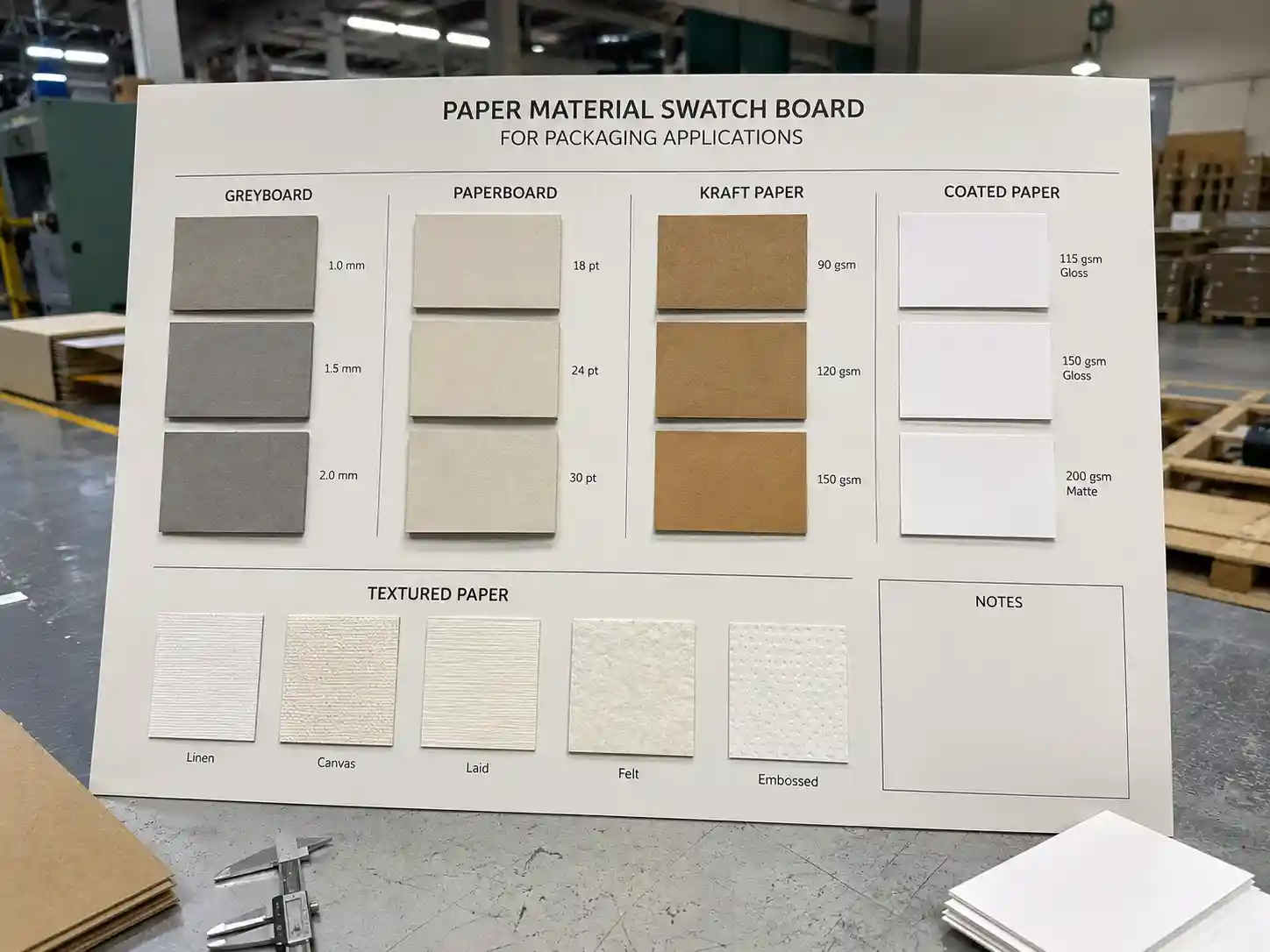
The most common advent calendar box compartments use paperboard dividers, die-cut insert trays, rigid greyboard structures, drawer-style cavities, or molded pulp inserts. Each option has a different cost level, production speed, and protection ability.
Paperboard dividers are often used for lightweight items. They are cost-effective and suitable for flat packing. Rigid greyboard compartments feel more premium but usually take more space and may increase shipping volume. Molded pulp can be useful for sustainability-focused projects, especially when the product shape is stable and repeatable.
Giftpackpro can help buyers review structure options through its custom advent calendar boxes manufacturer page and related factory support, but buyers should always confirm product fit with a real sample before bulk production.
Common Compartment Layout Examples
A 12-day calendar usually allows larger cavities and more flexible artwork spacing. A 24-day calendar needs tighter planning because the front panel, doors, internal grid, and insert strength must all work together. A mixed-size product calendar may need several compartment sizes instead of one repeated grid.
For skincare or beauty sample calendars, it is common to combine vertical cavities for tubes with square cavities for jars. For confectionery calendars, shallow paperboard compartments may be enough if each item is individually wrapped. For candle, glass, or premium gift sets, the compartment walls may need extra thickness and tighter movement control.
Design Tolerance: Do Not Make Compartments Too Tight
A common mistake is designing advent calendar box compartments exactly the same size as the product. In mass production, this can cause packing delays, product scratches, crushed corners, or doors that do not close smoothly.
Paper packaging needs reasonable tolerance because board thickness, lamination, folding pressure, glue position, hand assembly, and product size variation can all affect the final fit. The right tolerance depends on product material, surface finish, and whether the item will be inserted manually or by a packing line.
Practical Tolerance Advice
For paperboard inserts, allow enough space for easy loading while still stopping the product from moving too much. For fragile products, use support points instead of simply making the cavity tighter. For premium products with printed or coated surfaces, avoid rough contact between the item and raw paper edges.
When requesting a sample, ask the factory to test the actual product inside the compartment, not only an empty box structure. This makes the sample more useful for checking insert fit, door opening, product removal, and export packing risk.
Match Insert Material With Product Value and Shipping Risk
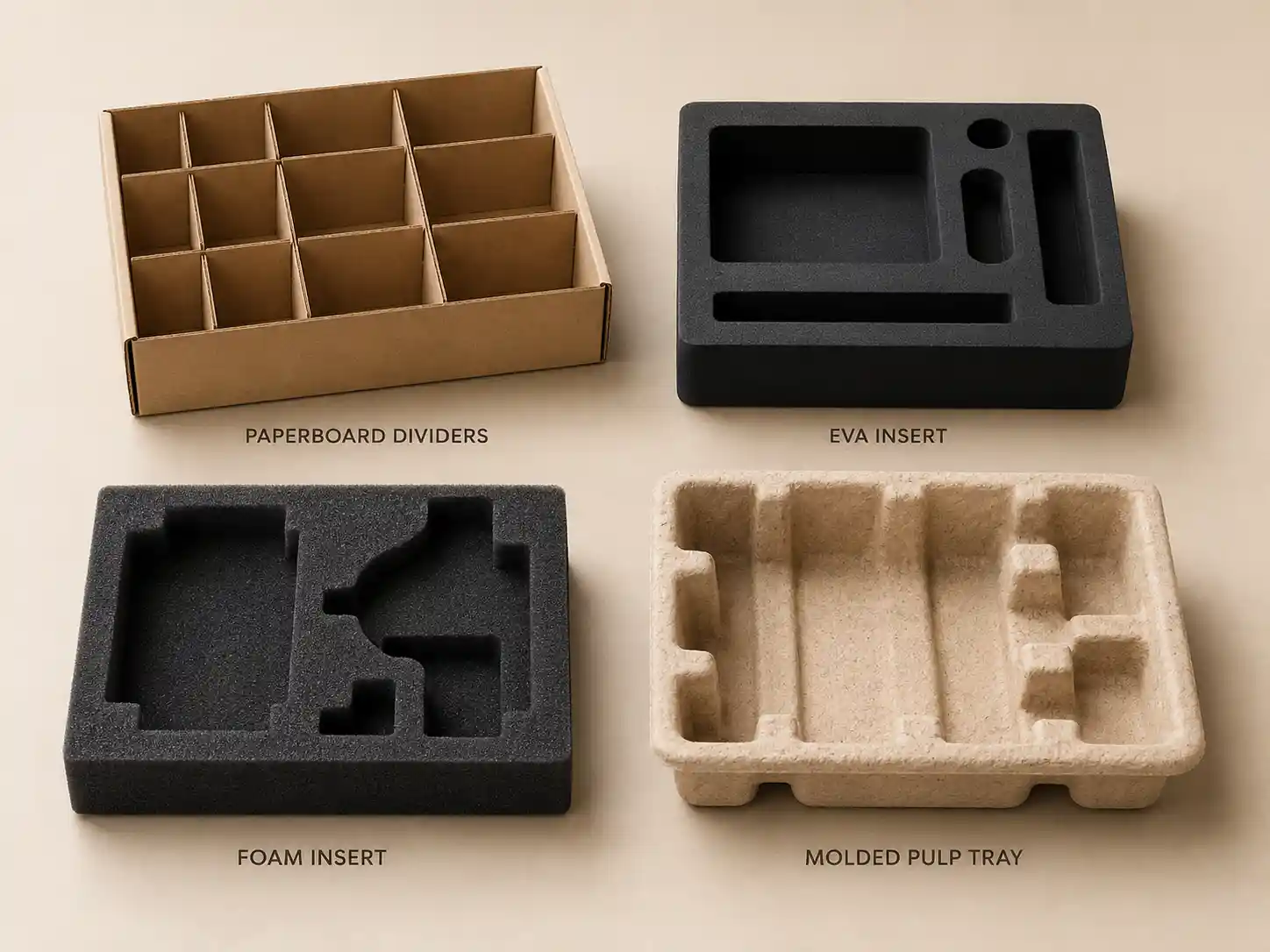
Insert material should be selected based on product weight, value, surface finish, sustainability goals, and shipping method. A low-cost paperboard insert may work well for lightweight items, while EVA, foam, or molded pulp may be better for delicate or premium products.
For projects that need sustainability documentation, buyers may also review responsible paper sourcing information from FSC. For broader packaging and environmental planning, the official European Commission packaging waste page can be useful for teams selling into the EU market.
Paperboard Insert
Paperboard inserts are widely used for seasonal paper gift packaging. They are suitable for lightweight products, flat packing, and projects where cost control is important. They also allow printing, folding, and easy recycling communication when the material selection supports it.
EVA or Foam Insert
EVA and foam inserts provide stronger cushioning and a cleaner premium presentation. They are often used for glass bottles, fragile items, electronics accessories, or high-value gift sets. However, they may increase cost, sample time, and sustainability review requirements.
Molded Pulp Insert
Molded pulp is useful when buyers want a more paper-based protective insert. It works best when the product shape is confirmed early because the tooling and cavity design need accurate product data. It may not be ideal for very small mixed-size items unless the design is carefully tested.
Plan Flat Packing or Assembled Packing Early
The Month 09 export packing and shipping angle is important because compartment design directly affects how the finished boxes are packed for export. Buyers should not wait until bulk production is finished to decide whether the advent calendar boxes will ship flat or assembled.
Flat packing usually reduces shipping volume and freight cost. It works better for foldable structures, paperboard inserts, and projects where the buyer or local co-packer will complete assembly. Assembled packing saves local labor time but increases carton volume and may require stronger outer cartons and better internal protection.
Flat Packing Considerations
Flat packing needs clear assembly logic. The factory should check folding lines, insert locking points, glue areas, and whether the buyer can assemble the structure without damaging the printed surface. A complicated compartment system may reduce the benefit of flat packing if assembly takes too long.
If your team needs help comparing flat packing and assembled packing, contact the supplier through request a custom quote and provide target quantity, product list, destination country, and whether you have a local packing partner.
Assembled Packing Considerations
Assembled packing is often used when the factory completes product filling, final set packing, or retail-ready preparation. In this case, compartment strength must be tested after the products are loaded. The master carton should prevent compression, corner damage, and internal movement during export handling.
Buyers can also read more advent calendar box buying guides to compare structure, inserts, artwork, and production planning before confirming the final packing method.
Master Cartons, Palletizing, and Shipping Marks
Once the compartment structure is confirmed, the next step is export packing. A good compartment design can still fail if the master carton is too weak, too heavy, poorly marked, or palletized without load stability.
Master cartons should be designed according to finished box size, product weight, destination, loading method, and handling risk. For large advent calendar boxes, fewer pieces per carton may reduce crushing risk. For smaller flat-packed boxes, carton quantity can be higher if the carton strength and stacking plan are suitable.
What to Confirm on Master Cartons
Confirm carton size, carton material, pieces per carton, gross weight, net weight, carton marks, and whether inner protection is needed. For assembled boxes, add corner protection or separators if the printed surface may rub during transport.
For flat-packed boxes, check whether inserts, sleeves, doors, and accessories are packed in the same carton or separated by component. Mixed components may reduce missing-part risk, but separated packing may improve carton efficiency for some projects.
Shipping Marks for Bulk Orders
Shipping marks should be simple and consistent. Common information includes item number, PO number, carton number, quantity, gross weight, net weight, carton size, country of origin, and handling symbols when needed. The buyer should confirm shipping mark format before mass packing starts.
For retail buyers and purchasing teams, it is better to send shipping mark requirements together with artwork confirmation and purchase order details. This helps avoid relabeling, carton rework, or warehouse receiving issues.
Damage Reduction Starts From the Compartment Design
Damage reduction is not only an export carton issue. It starts from the compartment structure. If the product can move too much inside the cavity, the master carton cannot fully solve the problem. If the insert is too tight, the packing team may damage products during loading.
Useful checks include shaking the filled sample, opening and closing all doors, removing the product by hand, checking surface scratches, and reviewing whether the box deforms under normal stacking pressure.
QC Checks Before Bulk Production
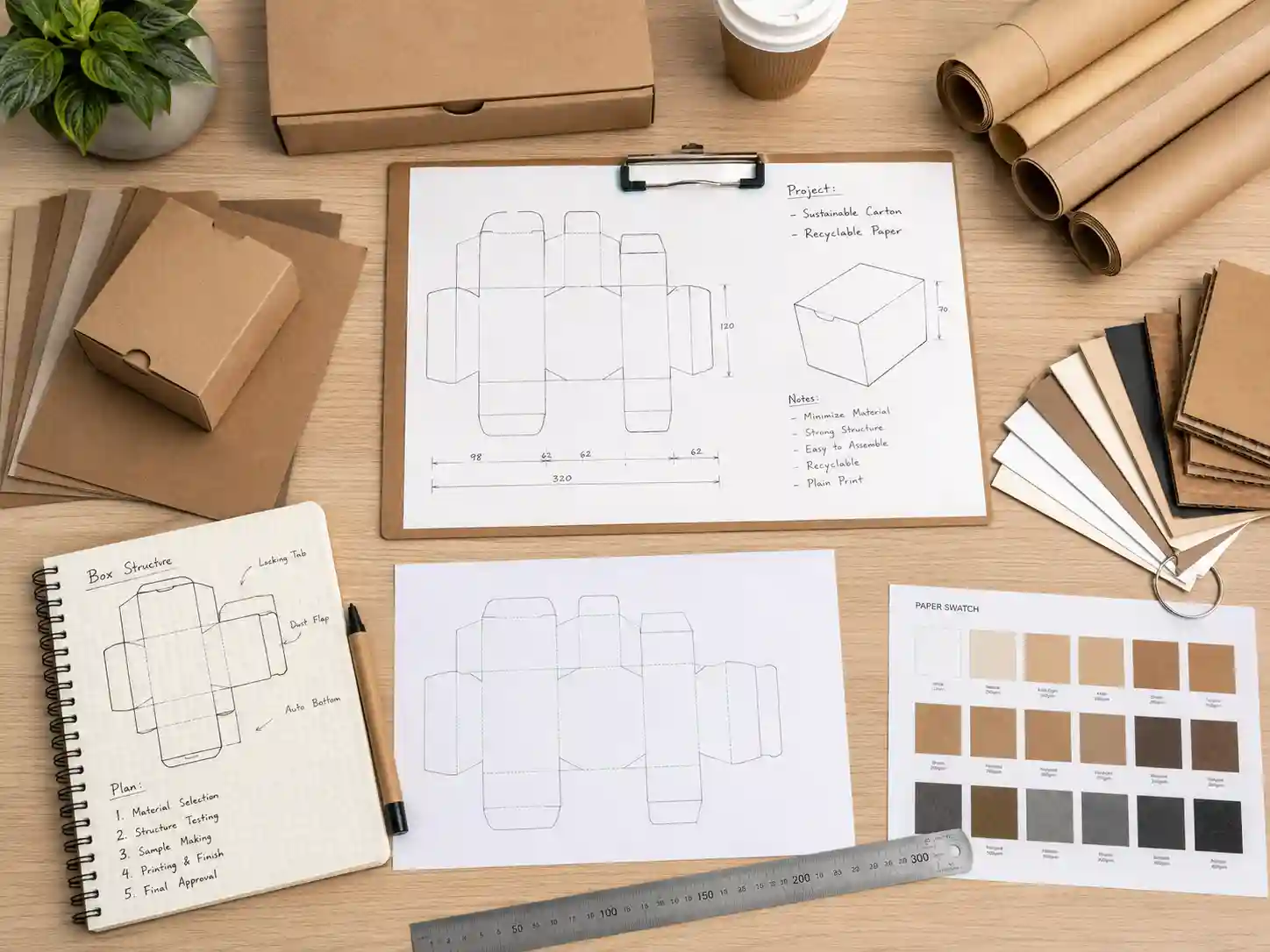
Before bulk production, request a pre-production sample using real materials, real compartment dimensions, and final artwork finishing when possible. Check door alignment, insert fit, glue strength, surface finish, color consistency, and product loading process.
During production, quality control should include material inspection, printing inspection, die-cutting accuracy, folding line check, insert assembly check, finished box inspection, carton packing inspection, and final random checks before shipment.
Buyers who want to understand factory capability can review the Giftpackpro packaging factory page before sending technical requirements and order details.
How to Prepare a Clear Quotation Request
A clear quotation request saves time and reduces misunderstanding. Instead of asking only for a unit price, prepare the full project information so the supplier can quote the correct structure, insert, printing, sample cost, production lead time, and export packing method.
Information to Include in Your RFQ
Send the target box size, number of compartments, product list, product dimensions, product weight, preferred insert material, artwork status, quantity, destination country, packing method, carton requirements, pallet requirements, and target delivery schedule.
If the final product list is not ready, provide estimated sizes and mark them as temporary. The supplier can offer a rough structure direction first, but the final advent calendar box compartments should not be locked until the product dimensions are confirmed.
Questions to Ask the Supplier
Ask whether the supplier can make a blank structural sample before printed sampling. Ask whether the sample can be tested with real products. Ask how the boxes will be packed in master cartons. Ask whether palletizing can be arranged for export orders. Ask whether the quotation includes flat packing, assembled packing, or both options.
You can also compare options through custom advent calendar box services or send project files directly through request a custom quote if you already have product dimensions, artwork, and quantity details.
Final Thoughts for B2B Buyers
Well-designed advent calendar box compartments help protect products, improve packing efficiency, support better presentation, and reduce shipping damage. The best results come from early coordination between product data, insert design, sample testing, export packing, and quotation planning.
For brands, wholesalers, gift companies, and retail purchasing teams, compartment design should be treated as a technical packaging decision, not only a visual layout decision. Use real product data, test samples carefully, and confirm flat packing, assembled packing, master cartons, palletizing, and shipping marks before bulk production.
For more practical seasonal packaging topics, visit the advent calendar box buying guides section or review available custom advent calendar box products before starting your next project.


