Importing seasonal packaging is not only about finding a low unit price. For overseas brands, wholesalers, gift companies, and retail buyers, the real challenge is making sure the box structure, inserts, artwork, sample approval, production timing, and export packing are all clear before bulk production starts.
If you plan to import custom advent calendar boxes from China, this guide explains the practical sourcing steps buyers usually need to confirm before requesting a quote or placing an order.
1. Start with the Advent Calendar Box Structure
The first sourcing question is not color or printing. It is structure. Different advent calendar box structures require different materials, tooling, assembly methods, packing sizes, and production lead times.
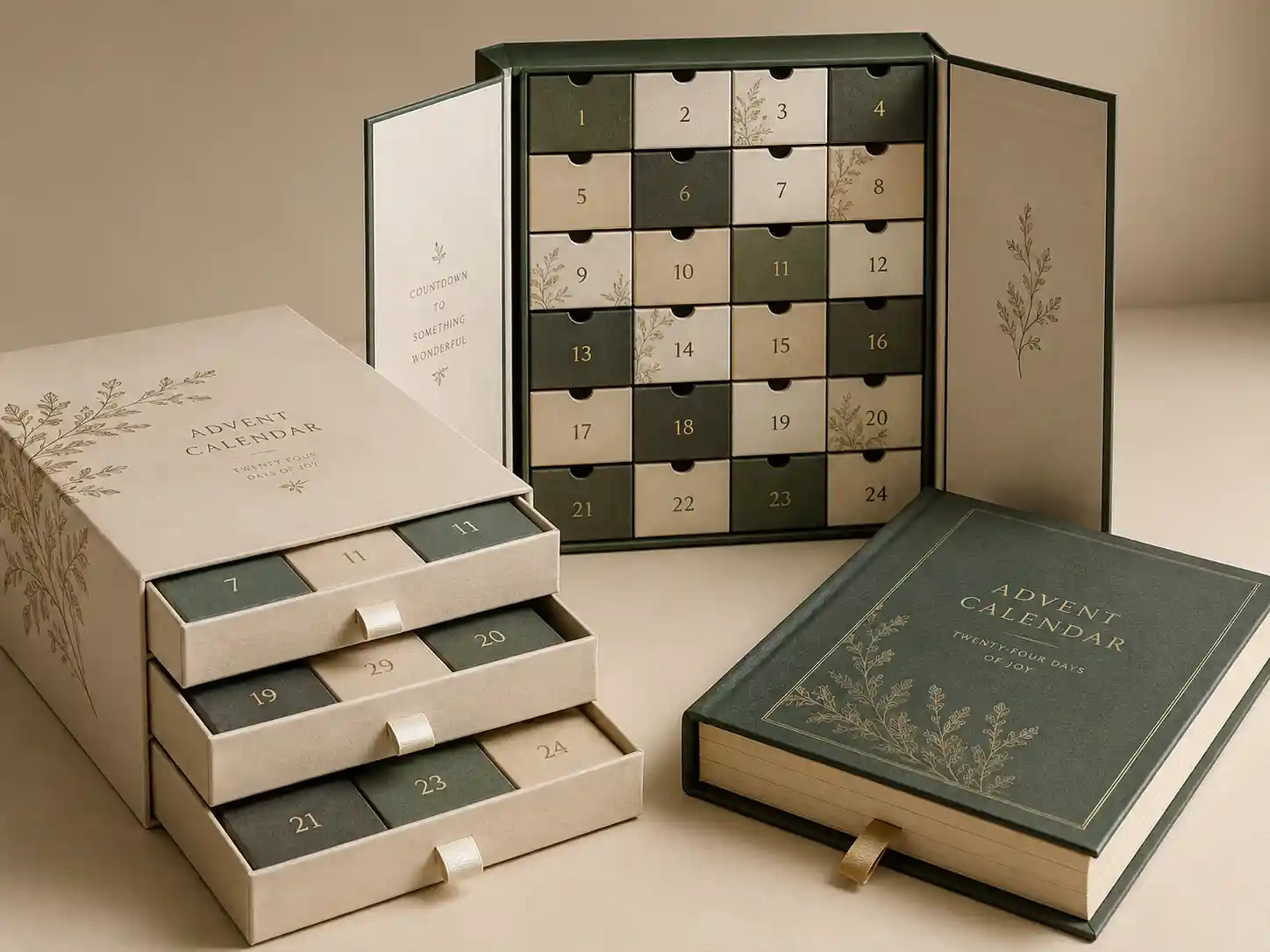
Common B2B structures include drawer advent calendar boxes, door-opening calendar boxes, rigid advent calendar gift boxes, folding carton calendar boxes, book-style boxes, and paperboard tray systems. You can review typical structure directions from a custom advent calendar boxes manufacturer before preparing your project brief.
What structure should buyers confirm first?
Before asking for pricing, prepare a simple structure description. For example: “24-drawer rigid advent calendar box for skincare samples” or “12-door folding paperboard calendar box for confectionery gifts.” This helps the supplier judge material, insert style, labor cost, carton size, and sample feasibility.
If you are still comparing box formats, the custom advent calendar box products page can be used as a starting point for structure references.
| Box Type | Typical Use | Buyer Notes |
|---|---|---|
| Drawer advent calendar box | Beauty, jewelry, tea, gifts, premium sets | Higher perceived value, but more assembly and packing work |
| Door-opening calendar box | Chocolate, candy, small toys, retail promotions | Good for lightweight products and seasonal shelf display |
| Rigid book-style box | Luxury seasonal gift sets | Needs accurate insert design and stronger export protection |
| Folding paperboard calendar box | Large retail volume and lighter products | Can reduce freight volume, but structure testing is important |
2. Prepare Product Size, Weight, and Insert Requirements
Many quotation delays happen because the supplier does not know the product size or weight. Advent calendar boxes usually need multiple cavities, drawers, trays, dividers, or paperboard inserts. A small difference in product height may affect the full structure.
For a useful quote, prepare product dimensions, product weight, number of items, cavity quantity, display direction, and whether each item needs a separate compartment. If the products are still under development, provide estimated sizes and mark them as provisional.
Example buyer brief
A skincare brand may need a 24-day advent calendar box with mixed sample bottles, tubes, and sachets. In this case, the supplier needs the largest item size, total filled weight, preferred insert material, and whether the box must stand upright on a retail shelf.
For more support on structure, sample, artwork, and production planning, buyers can review custom advent calendar box services.
3. Confirm Materials, Printing, and Surface Finishing
Material choice affects cost, strength, weight, and appearance. Rigid greyboard, coated paperboard, corrugated board, art paper wrap, kraft paper, and specialty paper can all be used depending on the box structure and product value.
Common finishing options include matte lamination, gloss lamination, soft-touch coating, foil stamping, embossing, debossing, spot UV, ribbon pull tabs, magnetic closure, and custom printed sleeves. These should be confirmed before sampling, because finishing can change both cost and production time.
If sustainability claims are important for your market, confirm paper sourcing and certification requirements early. Buyers can also review official information from the Forest Stewardship Council when discussing FSC-related packaging requirements with suppliers.
4. Build the Artwork and Dieline Process Correctly
Artwork errors are one of the most common causes of delayed seasonal packaging projects. Advent calendar boxes often have many panels, windows, drawers, numbers, icons, and inner surfaces. A small layout mistake can become expensive after printing.
The usual process is simple: confirm structure, create dieline, place artwork, check bleed and safe area, review text and numbering, approve digital proof, then proceed to physical sample or pre-production sample.

Artwork checklist before sample production
Check the box size, panel direction, drawer sequence, number placement, barcode position, warning text, retail label area, and country-specific requirements. For food, cosmetics, toys, or other regulated categories, the buyer should confirm labeling rules with their own compliance team before mass printing.
Giftpackpro can support dieline preparation and sample review as part of its custom advent calendar box services, but buyers should still provide final artwork files and approved legal text.
5. Understand MOQ, Sample Cost, and Lead Time
MOQ depends on structure, material, printing method, finishing, and assembly complexity. A simple folding carton calendar box may have a different MOQ from a rigid drawer-style advent calendar box with many components.
Sampling also takes time. A white sample can check structure and size. A printed sample can check color, finishing, assembly, and presentation. For seasonal packaging, buyers should not leave sample approval too close to the selling season.
Typical timeline planning
For a new custom project, allow time for quotation, dieline, artwork, sample production, sample shipping, revision, bulk production, QC, export packing, and international shipping. If the project has many SKUs or strict retail launch dates, start earlier.
You can also read more advent calendar box buying guides to compare planning questions before sending a final RFQ.
6. Plan Quality Control Before Bulk Production
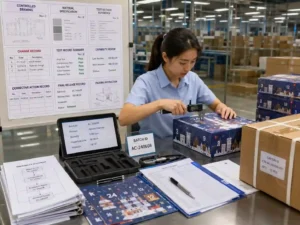
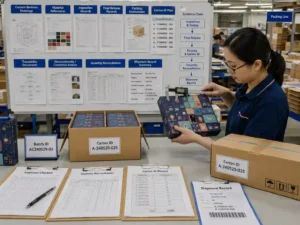
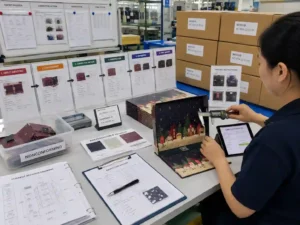
Quality control should not be discussed only after production is finished. Buyers should define inspection points before placing the order. For advent calendar boxes, key checks usually include structure strength, drawer fit, door opening, color consistency, glue quality, finishing accuracy, insert position, carton labeling, and export packing method.
If you need a formal quality management reference, the ISO 9001 quality management page is a useful non-competitor source for understanding general quality management principles.
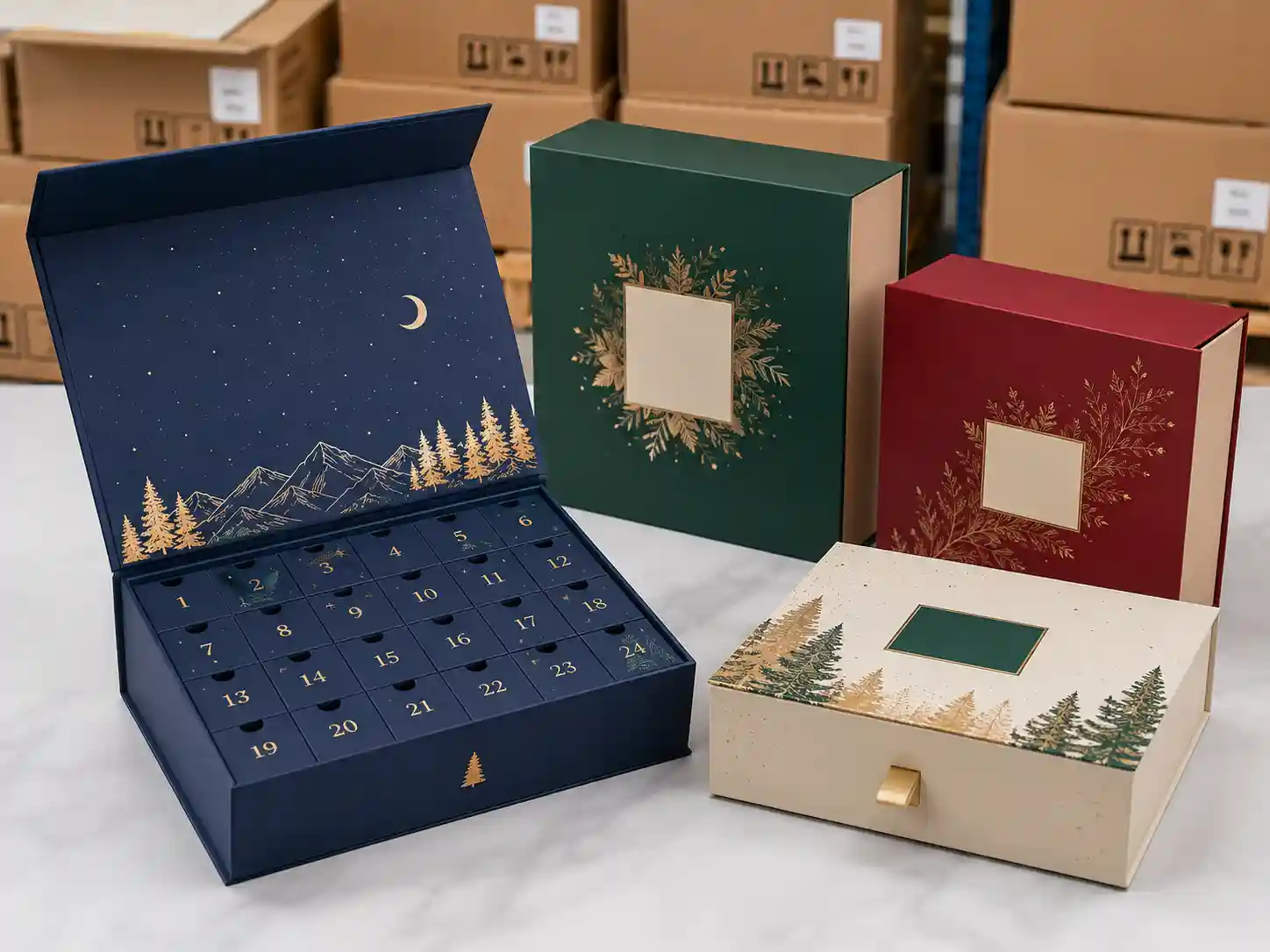
Important QC details for advent calendar boxes
Ask whether the supplier will check random finished boxes, carton drop resistance, drawer opening smoothness, visible glue marks, color deviation, foil alignment, and inner tray fit. For heavier products, ask for a filled sample test instead of checking only an empty box.
Buyers who want to understand factory capability can review the Giftpackpro packaging factory page before starting a custom project.
7. Confirm Export Packing and Shipping Details
Advent calendar boxes can be large, delicate, and seasonal. Poor export packing may cause crushed corners, scratched surfaces, loose drawers, or damaged gift packaging before the goods reach the warehouse.
Confirm whether the boxes will be shipped assembled or flat packed. Assembled rigid boxes look premium but increase carton volume. Flat packed structures may reduce freight cost, but the buyer or retailer may need assembly support.
What to include in the shipping discussion
Ask for carton size, carton weight, packing quantity per carton, pallet option, shipping marks, inner protection, moisture protection, and whether the supplier can support mixed SKU packing. These details help buyers estimate freight cost and warehouse handling needs.
8. What Should Buyers Prepare Before Requesting a Quote?
A clear RFQ saves time and reduces misunderstanding. Instead of asking only “How much is one advent calendar box?”, provide a short but complete project brief.
Include box type, final size, product size, product weight, quantity, material preference, insert requirement, printing colors, finishing, sample requirement, target delivery date, destination country, and whether the goods need assembled packing or flat packing.
If you are ready to compare options, you can request a custom quote with drawings, product photos, or reference structures. A complete brief helps Giftpackpro give more useful advice on structure, MOQ, lead time, and export packing.
9. Common Problems When Importing from China
Problem: The sample looks good, but bulk goods are delayed
This usually happens when artwork approval, material confirmation, or deposit payment is late. Confirm the production schedule in writing after sample approval.
Problem: The box is too large for shipping cost control
Ask the supplier to compare assembled packing and flat packing. Sometimes a small structure adjustment can reduce carton volume.
Problem: The insert does not fit the product well
Send actual product samples or accurate 3D dimensions before final insert design. Do not rely only on estimated product size for a complex gift set.
Problem: Retail launch date is close
Reduce unnecessary finishing, confirm artwork faster, and avoid too many sample revision rounds. For urgent seasonal projects, simple structures are usually safer.
10. Final Checklist Before Ordering
Before placing a bulk order, confirm the final dieline, artwork, sample approval, material, finishing, MOQ, unit price, tooling cost, sample cost, lead time, packing method, carton information, payment terms, QC standard, and shipping plan.
Working with a focused supplier helps buyers reduce communication gaps. Giftpackpro provides custom advent calendar box development for overseas brands, wholesalers, gift companies, retail buyers, and purchasing teams that need practical support from structure planning to export packing.
For more project preparation advice, visit the advent calendar box buying guides, compare available custom advent calendar box products, or request a custom quote for your next seasonal packaging project.